
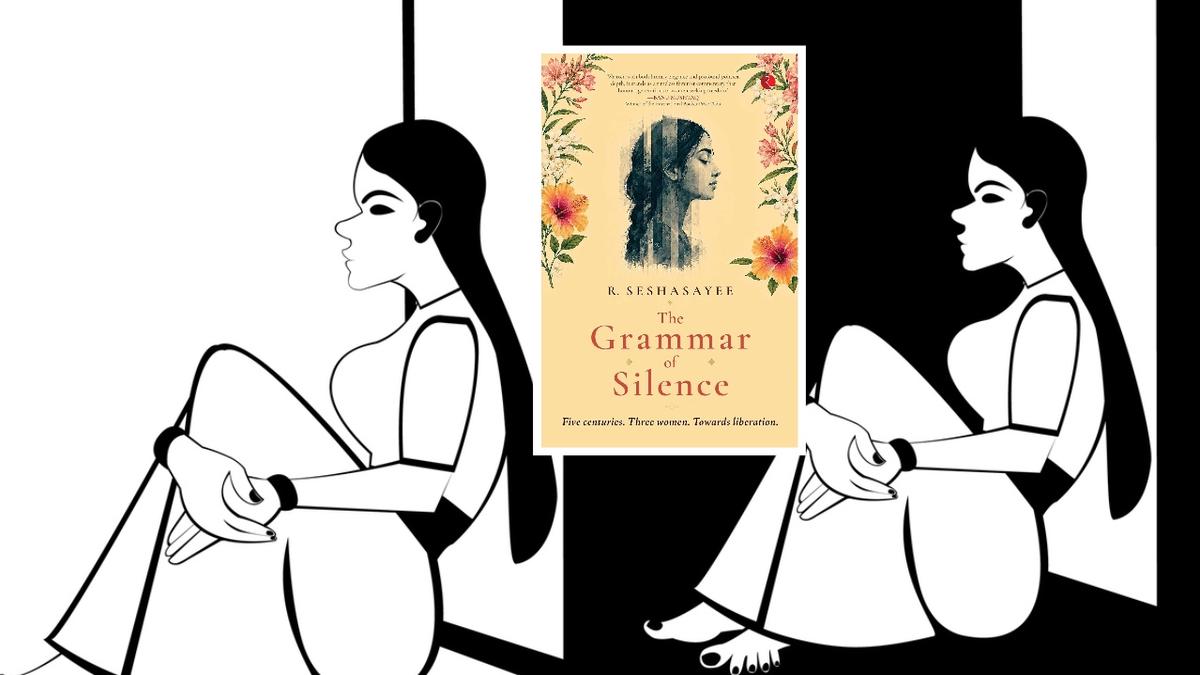
A sense of sorority binds together these women across the centuries. | Photo Credit: Getty Images/ iStock Senior business leader R. Seshasayee’s new novel, The Grammar of Silence, is an account of the lives of Tamil women navigating various systems within society. The women are trapped by these structures but find ways to overcome them through a characteristic, mindful defiance of convention — this is achieved silently, and without fanfare.The book is a journey through different centuries, anchored by three women whose unique yet, in some ways, similar experiences illuminate the lives of women from different strata of society in the Thanjavur landscape.There is Dharma, intelligent and accomplished in the arts but trapped by child marriage, abandonment and later, widowhood. She’s an anomaly in her ritual-bound Brahmin household. Even her brother, an acclaimed scholar, knows she is smarter than him, but will never acknowledge the fact.Fiction offers her the latitude to enter the world of Vinodhini, a courtesan living in the Thanjavur Maratha palace. Vinodhini inhabits a liminal space, at a moment when the traditional devadasi, once respected for her cultural accomplishments, is slipping into moralistic ignominy, forcing her to grapple with a changing social order.The third strong female presence in this book, filled with characters of all hues, is Muthu, who becomes Mary Amelia. Born to a lower-caste woman, she negotiates structural barriers, with a dash of luck, to scale heights once unimaginable to her.Recreating a bygone eraIt is silence and a sense of sorority that binds together these women across the centuries, as also their lived experiences. Their triumphs, like those of other men and women of their era, have largely fallen by the wayside, swept away by time. Yet these heroines stand out, as though time itself has separated the wheat from the chaff.Embedded in their accomplishments are aspirational stories and cues for women in similar circumstances, even in the modern era. The understated yet cleverly divergent paths they forge for themselves tell a tale of courage and resilience.The narrative is an open and unapologetic critique of patriarchy, bringing together various strands under the broader theme of the routine exploitation of women. It takes on several weighty issues, including child marriage, widowhood in a conservative setup and the centuries-old stigmatisation of devadasis. It is so intense a critique that the author deliberately leaves little room for redeeming qualities among most of the male characters. Even when they are good, they have flaws that immediately place them at a disadvantage. Author R. Seshasayee | Photo Credit: Bijoy Ghosh As a novel rooted in Tamil Nadu’s historical past, it offers an impressive reconstruction of a bygone, almost black and white era, lending authenticity to the narrative and reflecting the time and effort the author has invested in his research. His prodigious knowledge of the nuances of Carnatic music further lends an air of authenticity to these sections.Perhaps because of the vast canvas the author has attempted to cover, there seems to be a great deal of emphasis on the early parts of the book, which are richly detailed, while the latter parts seem to go by in a rush. This shift can unsettle a reader who has already settled into the slower rhythm established in the earlier era. The transition, therefore, is not as seamless as one might expect from an otherwise well-crafted narrative. The Grammar of Silence: Five Centuries. Three Women. Towards Liberation R. SeshasayeeRupa Publications₹395ramya.kannan@thehindu.co.in Published - September 05, 2026 01:02 pm IST
Review | ‘The Grammar of Silence’ by R. Seshasayee is an unapologetic critique of patriarchy
Full Article
Original Source
Read the full article at Thehindu →KhanList aggregates and links to publicly available news content. We do not host full articles from third-party sources. Always verify important information with original sources.