
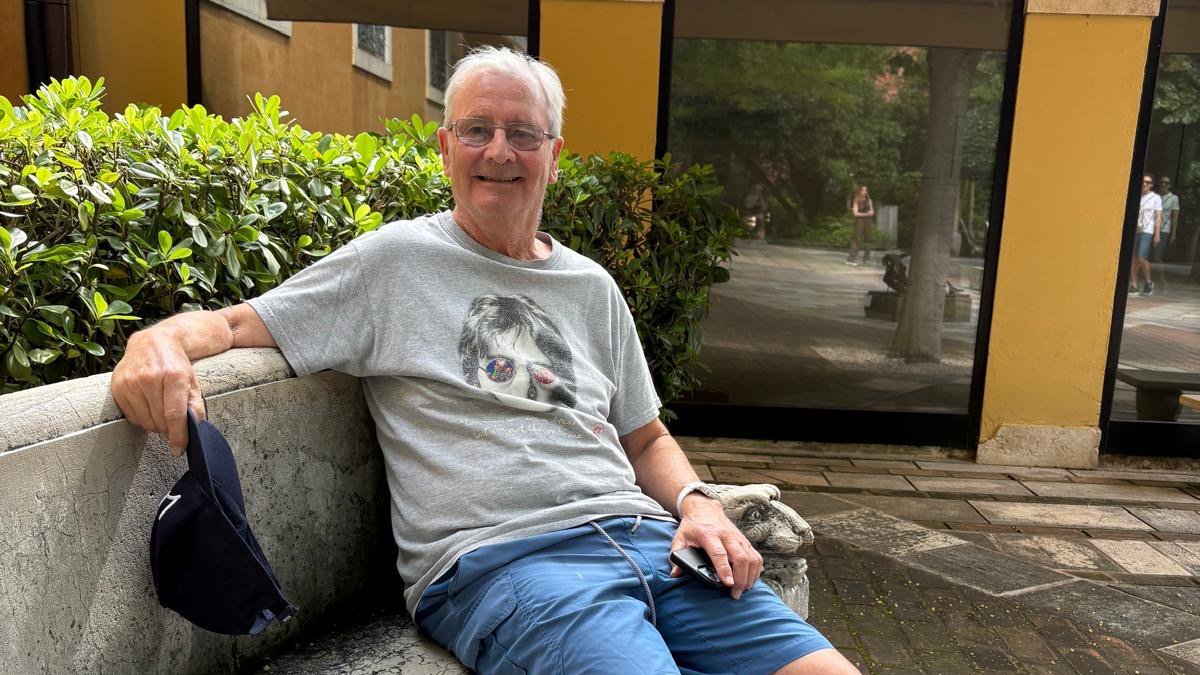
For generations, retirement has meant a clean break. You worked until a certain age, collected your pension and walked away from the working world. Increasingly though more people are reaching their 60s, 70s and even 80s and deciding that retirement doesn’t necessarily mean stopping work. The number of people aged 65 and over in work has risen dramatically. ONS figures show that the employment rate for this age group roughly doubled between 1993 and 2018, with around 1.2 million people aged 65 and over working by 2018. For some, the reason is financial. With people living longer and the cost of living putting pressure on household finances, continuing to earn can make retirement more comfortable. But for others, it is more about the structure, social contact and purpose that employment brings. Shorts William Dennis, from Surrey, is one of the retirees who wasn’t ready to let go of the sense of meaning that work gave him. At 73, he has a pension, a paid-off house and adult children that no longer depend on him, but still he is working, for the first time since his twenties, as a criminal lawyer. He had trained in criminal law in the 1970s but had instead travelled the world working in different sectors. “I lasted two years [in criminal law] because I couldn’t make a living. It is the unsexy, not very remunerative end of the legal profession and I simply couldn’t make ends meet, so I packed it in after two years and decided to work abroad and joined the foreign service.” Across his career he was worked for the British Trade Commission in Hong Kong and in independent investment banks that covered the UK, Australia, Asia, Nigeria and the US. At 67, when he was made redundant from his final role for the Association for Financial Markets in Europe. He could have retired. Instead, he reached out to 10 law firms in Sussex and Surrey asking for a job, three of which offered him an interview and one, a role. Five decades after he first trained in law, he retrained, brought himself up to date, took out professional insurance and began working on a case-by-case basis. “I am completely useless sitting around at home doing nothing, and it drives my wife insane because I just mooch around the house looking bored. I wanted something to do.” The small amount he earns helps fund holidays with his wife, who is retired from her most recent job as a part-time food taster, but money isn’t his main motivation. “It is genuinely just rewarding work,” he says. “I feel I’m actually making a difference now at a level of society which most people don’t realise exists in our rather affluent country.” Their extra income helps fund holidays and Dennis and his wife enjoy skiing as often as they can “I’ve met an awful lot of fascinating people who need help. Virtually none of my clients would have a lawyer if it wasn’t for somebody like me being able to provide my services at legal aid rates.” Dennis, who is also a chair at his local parish council, has never been conventional in the way he works. “I’ve never been in a job for more than 10 years. Lots of people of my generation tended to have one job which lasted for very many years, and then they retired, and they didn’t really know what to do. I’ve never had that problem. I’ve always been moving on from one thing to another.” For 75-year-old Paul Armitage, based in Surrey, retirement was different. After 40 years in the casino industry, including as operations director for Grosvenor Casinos, he retired at 67 expecting to enjoy the freedom. “I loved every minute of work,” he says. “It was a real passion, but I’d gone beyond the retirement age of 65 years and I was just starting to feel a little bit drained.” Retirement wasn’t what he had hoped. “It was like falling off the edge of a cliff because you went from being fully engaged 24/7 to absolutely no phone calls coming through, no requests for meetings, no requests for analysis of situations. It was like hitting a brick wall. I stopped being relevant or critical, and I hadn’t realised how much of an impact that would have on me.” His eventual answer was not to return to the career he had spent four decades building, but to football – a lifelong passion that took him back to his Yorkshire roots. “When I was a kid my dad took me to the football games in Bradford. Your hometown football club stays in your heart if you’re a football supporter.” When he retired, he would return to his home city and visit a game with his dad every month. “Sometimes he would be in a wheelchair and sometimes we would just walk arm in arm to watch the game.” When he was talking to the owner of the club during one game about disability access and business, Armitage was asked to be a director there at the age of 71. He has now helped them expand their facilities from a bar, food outlet to also delivering education to 14 to 16-year-olds. Although his work is voluntary and unpaid, he has built meaning through visiting the club every six weeks and having a Zoom call at least once a week with the other directors. He also helps in his local village, helping other locals to look after the woodland, help with open days and was the chairman of the playing field committee. “I’m now quite happy in my own company. The most difficult time was immediately post-retirement, where it was quite a shock in the end not to be on the end of the phone. It took me a year or two to get fully used to that and throw it out of my head as they don’t need me anymore.” Like Dennis, Armitage’s living expenses are covered by his private pension, but retirement is much more enjoyable now he has a purpose. His wife is a botanical artist and still works on her artwork. “It’s like having hobbies that occasionally pay,” he says. “I don’t think that you can plan easily for retirement. I think you have to take it as it comes and find your solutions to the change.”
Retirement was boring so I retrained as a lawyer at 67 – it pays for ski holidays
Full Article
Original Source
Read the full article at Inews →KhanList aggregates and links to publicly available news content. We do not host full articles from third-party sources. Always verify important information with original sources.