
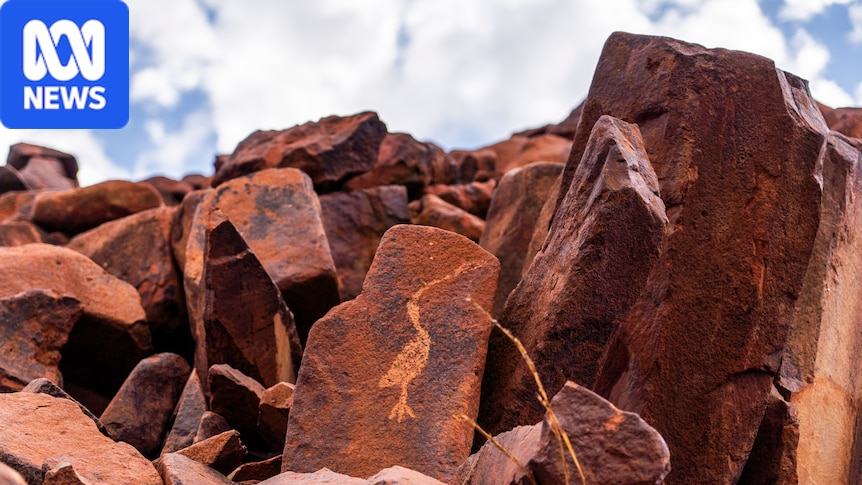
Pollutants from industry have damaged a larger area of ancient rock art in Western Australia's north than previously thought, but current activity in the area is not believed to be speeding up its deterioration.These are some of the findings from a major scientific study of the impacts of air emissions on engravings as old as 50,000 years on Murujuga, or the Burrup Peninsula, more than 1,500 kilometres from Perth.Now in its third year, the Rock Art Monitoring Report, which is compiled by members of the peninsula's five Aboriginal language groups and a team of more than 50 Curtin University scientists, doubled down on its previous findings that the carvings closest to these projects had degraded at a faster rate.The Murujuga rock art petroglyphs are up to 50,000 years old. (ABC News: Alistair Bates)It also suggested the damage — suspected to be a result of historical emission levels — is more extensive than was previously known.There are tens of thousands of the petroglyphs scattered across the rocky Pilbara peninsula and its surrounding archipelago, depicting animals, spiritual figures and stories sacred to traditional owners.Since the 1950s, Murujuga has doubled as one of WA's largest industrial precincts and export ports — home to a major fertiliser plant and Woodside's North West Shelf gas facilities.The world's largest urea plant, owned by the multinational Perdaman, is also slated to begin operating there next year.Effect of burning fuelLead scientist Ben Mullins said the report found the strongest evidence yet that sulphur dioxide emissions were having the "most significant effect" on the petroglyphs, largely caused by the burning of fuel."Transport fuels, shipping fuels industry all have some level of sulphur in their fuel," he said. A petroglyph of a lizard at Deep Gorge (Nganjarli) on the Burrup Peninsula in Murujuga National Park. (ABC News: Alistair Bates)"There's a lot of evidence that that was a lot higher in the 70s and 80s, and even since 2010, shipping fuels have massively reduced sulphur levels and sulphur dioxide emissions."WA Environment Minister Matthew Swinbourn acknowledged the larger area of damage, but said he was satisfied it was not getting worse. Matthew Swinbourn says the report is "very good science". (ABC News: Kimberley Putland)He defended its trustworthiness after a key statistician raised concerns about last year's report."It remains very good science and the work that's undertaken by the entire Curtin team as I say is a credit to Western Australia," he said.Woodside reviewThe release coincided with federal Environment Minister Murray Watt's long-awaited first visit to the region since approving a 40-year extension of Woodside's North West Shelf and Murujuga's inscription on the UNESCO World Heritage List. Murray Watt was joined by Matthew Swinbourn, Ben Mullins, Kevin Michel, Dorinda Cox and Audrey Cosmos. (ABC News: Kimberley Putland)Mr Watt's decision to extend the life of Australia's biggest gas project until 2070 was mired by controversy, with critics claiming it would not adequately protect the rock art and would accelerate climate change.Mr Watt said said his department would review the latest monitoring report and update the conditions of the North West Shelf approval if needed. Traditional owners sadMurujuga Aboriginal Corporation (MAC) deputy chair Audrey Cosmos said her people were "always going to be sad about industry".Murujuga Aboriginal Corporation's Belinda Churnside and Audrey Cosmos. (ABC News: Kimberley Putland)"We want to secure and protect what we've got now," she said.Ngarluma director on the MAC board Belinda Churnside called on the state government to honour its pledge to support the rock art monitoring project beyond its fourth and final year.A rock monitor perches up at Murujuga. (ABC News: Kimberley Putland)A memorandum of understanding is in place to fund long-term monitoring past 2026 but final negotiations have not been settled.
Report finds rock art damage more extensive than thought
Full Article
Original Source
Read the full article at Abc →KhanList aggregates and links to publicly available news content. We do not host full articles from third-party sources. Always verify important information with original sources.