
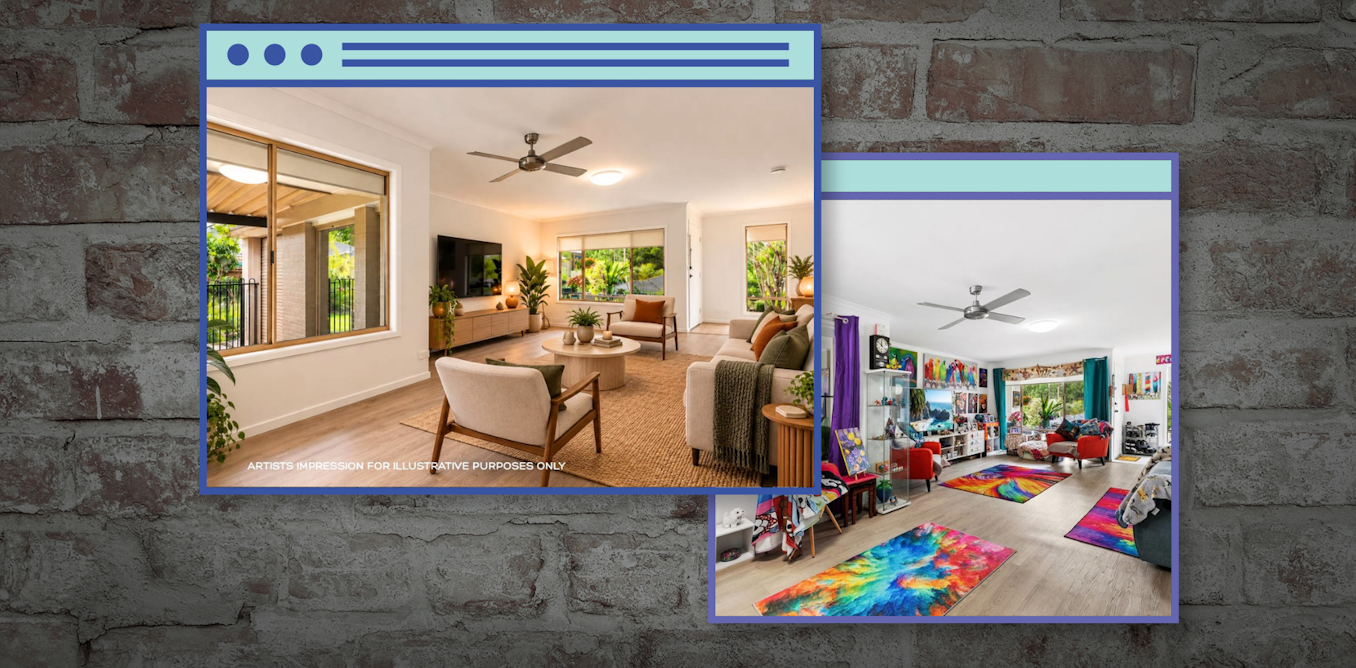
A photograph of a house is supposed to tell you what a house looks like. That sounds obvious. But increasingly, it’s becoming a question, rather than a fact. Real estate agents are using artificial intelligence (AI) to brighten rooms, add furniture, improve gardens, remove unattractive elements and, in some cases, create features that don’t even exist. The practice has even been given a new name, “housefishing”. From 2027, New South Wales will require real estate agents to disclose when images in rental advertisements have been digitally altered, or generated using AI, where they could mislead prospective tenants. Should other states follow suit? Does the garden even exist? Photography has never been an entirely neutral record of reality. Photographers choose the angle, the lens, the time of day, the lighting, and what is in the frame. Digital editing tools such as Photoshop have been around for decades. A wide-angle lens can make a room look bigger, while editing can make a garden look greener. AI, then, seems to simply be the next step. The nuance here is that generative AI actually moves beyond simply improving a photograph to constructing a kind of plausible alternative reality. In other words, AI can move very quickly from making a garden look greener to creating a garden that doesn’t actually exist. So, the obvious regulatory response is disclosure. It sounds sensible. If potential tenants are told technology is being used to create a more attractive version of a property, they can make an informed choice. A Queensland property listing showing a concept for a renovation. We have added the AI disclaimer. realestate.com.au Does AI labelling work? This approach assumes that knowing an image has been altered leads to better consumer decisions. But a generic label tells buyers that something has changed, not what. Disclosure is only useful if it explains the alterations that affect how buyers or renters judge the property. Research on disclosure has shown the availability of information does not necessarily mean that consumers can process or understand it. Read more: Consumers don’t understand smartphone contracts In the context of AI, the research is not conclusive. In some cases, AI disclosure can reduce engagement. But consumers’ existing attitudes towards AI may shape their response as much as, or even more than, the disclosure itself. Concerningly, other research has found AI disclosure increases perceptions of transparency and trust. Indeed, for some consumers it can lead to more favourable attitudes toward the advertisement. While the research does not establish whether disclosure is good or bad, it does show disclosure is an intervention that changes consumer behaviour. What is actually being disclosed? There is also an important difference between telling consumers how an image was produced (such as “This is an AI-altered image”) versus telling them what has been changed (“The garden has been digitally enhanced and is not representative of the property’s current condition”). From a consumer protection perspective, the second label is much more relevant. Disclosure should not become a substitute for the more fundamental obligation not to mislead consumers in the first place. The parliamentary debate around the NSW legislation also recognised that disclosure does not necessarily turn an otherwise misleading image into acceptable advertising. Prospective tenants can take some practical steps to check a listing. They can: search for older advertisements of the property contact the agent to ask whether features have been digitally altered or added and inspect the property in person. Current and proposed regulations The NSW model adds another layer to existing consumer protections. Most states already have rules against misleading property advertising. NSW’s new legislation, due to start in 2027, says, in effect, if digitally altered imagery is reasonably likely to mislead, then the agent must disclose the alteration. Victoria’s existing rules prohibit misleading property advertising, including photographs, digitally enhanced to hide undesirable features or otherwise give the wrong impression, without requiring a specific AI label. Queensland and Tasmania have brought in protections against misleading property representations. These technology-neutral approaches focus on whether an advertisement misleads, regardless of how the image was produced. The question is whether the NSW’s additional disclosure requirement will meaningfully improve protection. And the reality is we have been asking this question about the effectiveness of disclosure for decades. The lessons from insurance, financial services, telecommunications, and now AI advertising is that information does not become useful merely because it has been disclosed. Putting the onus on consumers The deeper issue is not whether consumers should be told that an image has been altered. It is whether we should place the burden on consumers to identify and interpret misleading information in the first place. Disclosure, while seen as empowering, simply shifts responsibility onto consumers to regulate and manage themselves. My earlier research on disclosure in home insurance and telephone contracts found that providing consumers with more information does not necessarily mean they understand it, process it, or use it to make better decisions. Much consumer protection is implicitly built around an idealised consumer: a person with infinite time, attention, knowledge, and cognitive capacity to scrutinise information, identify what matters, and protect themselves from poor outcomes. That consumer is a fantasy. AI may make misleading images easier to produce, but disclosure is simply not enough. AI does not require us to invent a new consumer test. It requires us to enforce the old one: those responsible for the advertisement should be accountable for getting it right.
Renters and home buyers are seeing AI-‘enhanced’ property photos. Now NSW is changing the rules
Full Article
Original Source
Read the full article at Theconversation →KhanList aggregates and links to publicly available news content. We do not host full articles from third-party sources. Always verify important information with original sources.