
Donald Trump’s Swiss Army knife is national security. He uses it for everything. If judges block his plan to remodel the East Wing of the White House to build a ballroom that dwarfs the presidential residence, he cites national security to keep the work going. When obstacles arise to building a gigantic triumphal arch in Washington to honor himself, he says national security reasons justify it. If a judge questions him about deploying the National Guard in American cities, it’s for national security. Sued for banning certain media outlets, the answer is the same. And if he can’t find other grounds to impose tariffs, he invokes national security.National security has become the U.S. president’s go-to argument to unblock the most contentious matters that face legal challenges or fail to win congressional support.The latest maneuver in this strategy has been to hide behind national security to justify barring journalists from CNN, Politico and MS NOW. The president has denied them access to White House grounds so they cannot carry out their reporting on matters of state.After news organizations sued him, alleging a violation of the First Amendment, which guarantees freedom of the press, the Department of Justice filed a document in court laying out its reasons for rejecting the media’s lawsuit.“The President determined that Plaintiffs have failed to maintain minimum professional journalistic standards by publishing classified and national security information,” the administration’s representative wrote, even though in his first justification for the ban Trump cited those outlets for publishing news he disliked. During the oral argument held in court Wednesday to try to resolve the lawsuit, the lawyer representing the media outlets told the judge that the administration’s strategic shift does not hold up. “I guess the lightbulb went off and they all said, ‘Start talking about national security,’” he said.During the hearing, the court sided with the media’s arguments. Federal District Judge Timothy Kelly questioned whether the ban was based on national security grounds and noted that the administration had not followed due process. A few hours later, early Thursday morning, he issued an order directing the White House to restore the press credentials of the media outlets banned by Trump.Dozens of projectsIt is nothing new for U.S. presidents to resort to this ploy to try to assert their authority, but Trump has abused this tactic during his second term, even on matters that have little to do with national security.Besides using the argument to justify banning reporters, he has leaned on it to send agents from U.S. Immigration and Customs Enforcement (ICE) to airports to arrest migrants, to cancel offshore wind farm construction on the East Coast, to deploy the U.S. military to the border with Mexico to deter irregular crossings, to freeze union rights for thousands of federal employees, or even to roll back environmental requirements for fracking projects in the Gulf of Mexico.He has also invoked national security to justify indiscriminate strikes against alleged narco-boats in Caribbean waters, or to try to rationalize expansionist ambitions in Greenland.Many of these projects are part of his ideological agenda against renewable energy and in favor of fossil fuels, the targeting of migrants, or the downsizing of the federal government.The Arch of Triumph: from monument to arsenalThe most surprising twist in this strategy came last weekend when he invoked national security to defend building a 250-foot-tall Independence Arch that will dwarf the White House in a highly symbolic location between Arlington Cemetery and the Lincoln Memorial.The monument, intended to glorify the president, as he himself said months ago, had met resistance from historical preservation groups, civil rights organizations, and several Democratic members of Congress.In a move to try to clear those obstacles, Trump announced on his social network Truth that the Independence Arch would house a depot for drones and weapons and serve as a key position for Secret Service snipers.“At the strong request of the United States Military, and for National Security purposes, I have agreed to convert the magnificent Triumphal Arch, planned since the Civil War Era many years ago, at the Receptive Circle adjoining the Arlington Memorial Bridge, into a top grade Military Complex/Triumphal Arch to house, store, and have the rapid ability to use large numbers of drones, plus Snipers, on both the roof and plaza areas, and additionally have and hold large quantities of sniper ammunition in storage,” the Republican president wrote in a strange reimagining of the monument’s purpose.The White House ballroom as a bunkerWhen he unveiled the project at a fundraising dinner a year ago, the president did not hesitate to say the arch would be a tribute to himself. When reporters asked whom the monument would honor, the president bluntly replied: “Me. It’s going to be beautiful.”In the months that followed — as historical and civil associations opposed the monument’s construction — the White House pointed out that Congress had given authorization because in 1925 the Capitol had already allowed the construction of two ornamental 50-meter-tall columns next to the rotunda of the Arlington Memorial Bridge, where Trump now plans his monument. But faced with opposition to the project, the Republican changed strategy.Something similar happened with the construction of the new White House ballroom, which has a $400 million budget. The project required demolishing part of the East Wing of the residence.Complaints from members of Congress and civil-society groups in the courts led a judge to temporarily halt the work. But the administration argued the space would house national security facilities, including a military bunker underground and a drone staging area on the roof of a building whose initial proposed use was as a new ballroom for presidential receptions.To justify the new project, it was leaked that it would include a five-story underground structure with missile-resistant columns and beams. Judges partially accepted that argument and allowed construction of the shelter and Pentagon facilities underground to continue, but they maintained the ban on surface-level work.After the White House appealed, the Supreme Court narrowly allowed the full renovation to proceed. In fact, Chief Justice John Roberts voted against that decision, arguing the construction was likely illegal.Those same national security claims are what the Trump administration used to bar reporters from CNN, Politico and MS NOW from the White House. Whether this time the judge will swallow the president’s go-to argument remains to be seen.Sign up for our weekly newsletter to get more English-language news coverage from EL PAÍS USA Edition
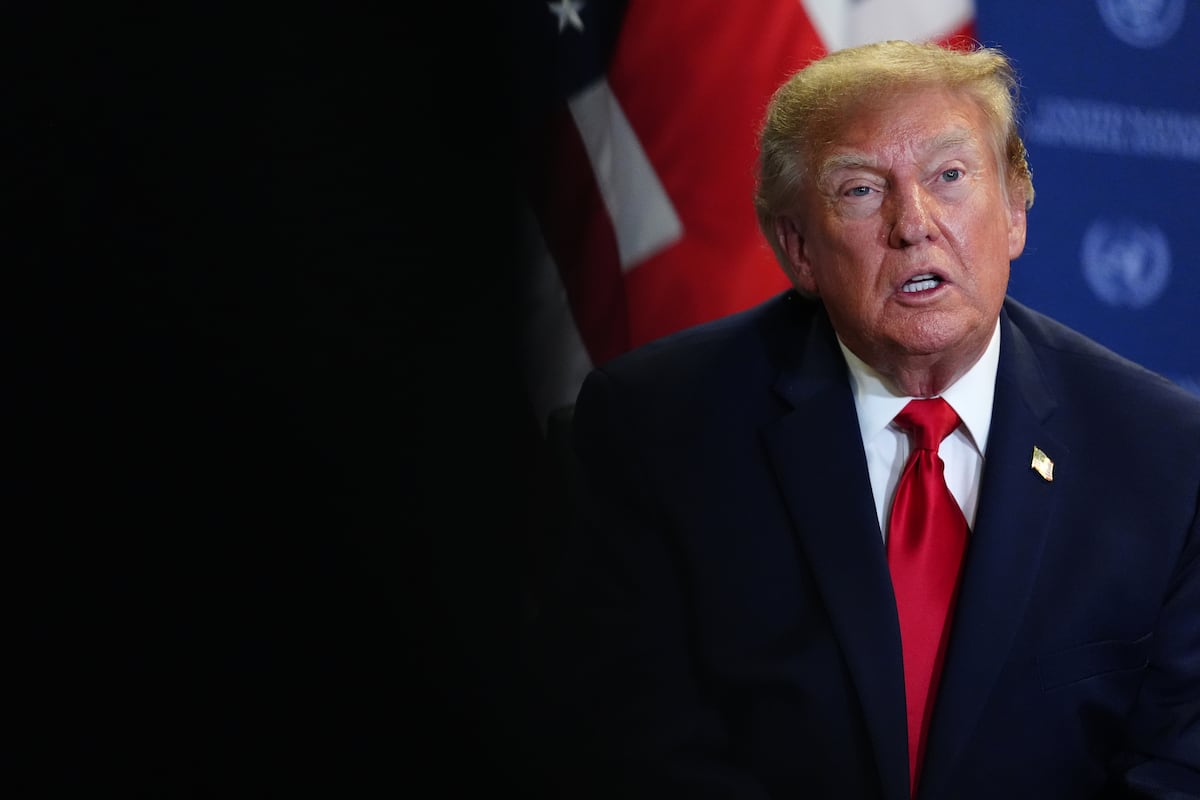
Renovating the White House or banning journalists: Trump invokes national security to push through his most controversial plans
Full Article
Original Source
Read the full article at English →KhanList aggregates and links to publicly available news content. We do not host full articles from third-party sources. Always verify important information with original sources.