
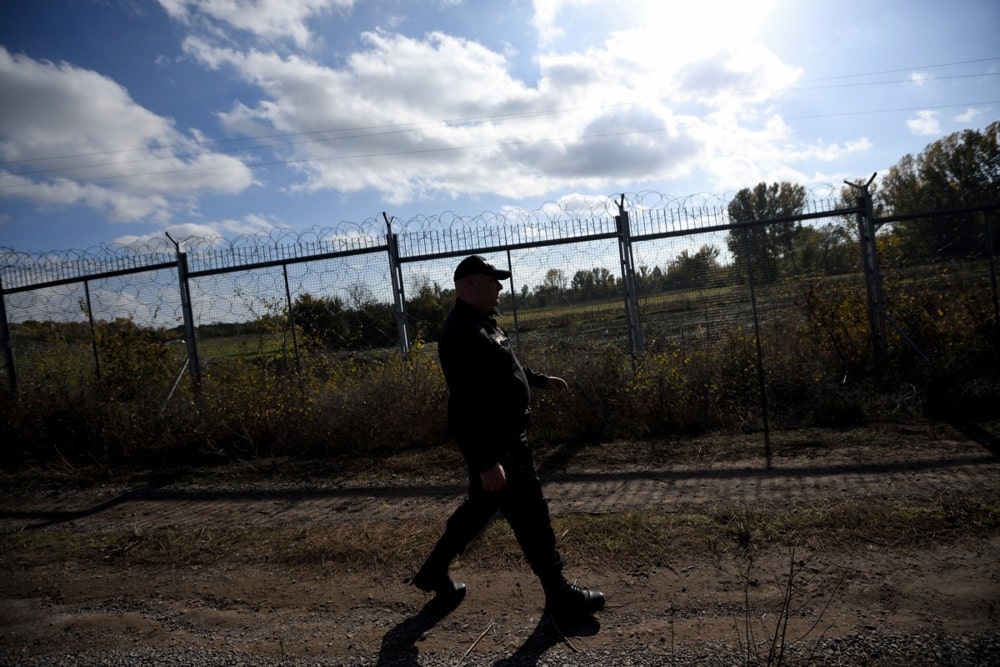
A young man is slumped against a wall in the corner of a room, next to a bunk bed. The floor in front of him is covered in blood, as are his face and legs. The disturbing scene features in footage viewed by BIRN, among several videos and images documenting the aftermath of what detainees describe as mass police violence at the Pastrogor detention centre in southeastern Bulgaria, near the Turkish border. Three men currently held there told BIRN that a special police unit beat detainees all over the facility, leaving some with broken hands and fingers and head wounds. Sources who spoke to BIRN allege the violence took place on July 26 after two people escaped from the detention center during a protest. The same event was also described in an August 7 press release issued by the activist collective, Collettivo Rotte Balcaniche. Some 28 kilometres from the Turkish border and located in the vicinity of other migrant hosting centres, Pastrogor had served as an open camp since 2012, processing asylum applications, until December last year, when it was transformed into a detention centre under the European Union’s new European Pact on Asylum and Migration. The pact entered into force on June 12. Since then, when there were just a few people in the camp, its population has soared to more than 220, activists say. Under the new pact, the vast majority of those arriving irregularly at the EU’s external borders will be detained for anywhere between seven days and 12 weeks while they undergo screening and asylum procedures. In some cases, such as those of people awaiting repatriation or transfer to a third country, their detention may drag on even longer. Expressing deep concern about the accounts of violence, Italian MEP Cecilia Strada told BIRN: “This isn’t the first time we’ve heard reports of violence against migrants by Bulgarian police forces.” What went on? A satellite image of the Pastrogor detention centre. Photo: © 2026 Airbus/Google Earth.Before the alleged violence, activists say protests had been going on for weeks against conditions at Pastrogor and the act of detention. According to Collettivo Rotte Balcaniche, “in reaction, at least one person was beaten up by a police officer, detained at the police station, and forced to sign a pledge not to take part in any future protests”. The situation came to a head on July 26, when Collettivo Rotte Balcaniche organised a demonstration outside the centre. Refugees and migrants joined in from inside. One of the videos seen by BIRN shows nine migrants in a small room screaming “open camp” and a number of activists standing on top of a car near the perimeter of the facility. The protest was peaceful, the activists say. Speaking on condition of anonymity, a Moroccan detainee told BIRN that two men – from Turkey and Tunisia – escaped. Other sources confirmed this. “Then a policeman came and spoke to me in English, telling me to tell my friends to go back to their rooms upstairs because the rapid response team was coming, and if they found us in the square, things would get worse,” the Moroccan man said. “Everyone understood the situation. It was dangerous, so we returned to our rooms quietly.” It is unclear which police unit the man meant by ‘rapid response team’. However, descriptions offered by migrants and refugees suggest the officers may have been part of the Bulgarian Gendarmerie. According to BIRN sources inside the detention centre, the officers were dressed in full anti-riot gear, with masks, batons and stun guns. They were accompanied by regular policemen. The sources say there were around 30 to 40 in total. “My friend and I were in the first room,” the Moroccan man said. “One of the masked men, holding a weapon, opened the door and said, ‘Get down! Get down!’ When I laid down on the floor, about 15 policemen entered the room and started beating us with batons. I thought it was the end. They beat me until I lost consciousness. They injured my friend’s head. They beat us mercilessly. I’ve never been beaten like that in my life. They went through all the rooms like that.” Two other detainees, from Morocco and Pakistan, confirmed the account. All sources BIRN spoke to stressed that beatings were meted out indiscriminately, across the facility. Collettivo Rotte Balcaniche said that surveillance cameras were turned off before the violence began, but offered no evidence. Drenched in blood Photographs and video stills sent to BIRN by detainees at Pastrogor show the aftermath of alleged mass police violence at the detention centre. Illustration: BIRN/Tommaso Siviero.The second Moroccan man said officers also destroyed any phone they found, “so that we don’t publish photos of the beating”. But images and videos have emerged. Those seen by BIRN show at least eight different people with serious injuries, including two with bleeding head wounds. One man was drenched in blood. The Pakistani detainee said he knew of at least 18 injured. “They treated us brutally, as if we were criminals and not asylum seekers,” he said, speaking, like the others, on condition of anonymity. After the beatings, the first Moroccan man said he and 11 other people were taken outside. “They started hitting and cursing and pouring water on us,” he said. “I felt hysterical, I felt like I was suffocating.” He said the physical and verbal abuse continued at a nearby police station until the following day. “They said, ‘If you don’t like the food, don’t eat it. Don’t do this. Don’t speak.’ They forced us to sign pledges and told us, ‘If you don’t like this treatment, go back to your country.’” ‘European standards’ Turkish border soldiers monitor the repair of a protective fence at the Bulgarian-Turkish border near the village of Matochina, November 2021. Photo: EPA/VASSIL DONEVBulgaria’s State Agency for Refugees told BIRN that the Interior Ministry, under which the agency operates, is responsible for security at the Pastrogor centre, but stated that “the material and living conditions at the Temporary Accommodation Centre (TAC) in the village of Pastrogor meet the established European standards”. Without addressing the allegations of police violence, the State Agency for Refugees said it “recognises the existing risk of escalating tensions between different communities, which may be primarily triggered by differences in the ethnic and/or religious backgrounds of the persons accommodated, and timely measures are being taken in this regard.” Pastrogor’s mayor Ilian Iliev and the local police did not respond to requests for comment. In comments to the local website e-svilengrad.com, Iliev confirmed reports of unrest, but suggested the protest might have been a stunt to help a detainee escape. The Pakistani detainee told BIRN: “We don’t know what our crime is or why we are being kept here.” “We understand that if a person wants to apply for asylum in a country, they have the right to seek asylum. But keeping people in a closed detention camp like this is extremely cruel and unfair.” In the run-up to implementation of the European Pact on Asylum and Migration, critics warned about access to the new facilities for human rights monitors. The warnings proved prescient, said Strada, the Italian MEP. “If serious violations can already take place in these centres within European territory without witnesses, imagine what can happen when you move them outside.”
Refugees, Migrants Tell of ‘Merciless’ Mass Beatings at Bulgarian Detention Centre
Full Article
Original Source
Read the full article at Balkaninsight →KhanList aggregates and links to publicly available news content. We do not host full articles from third-party sources. Always verify important information with original sources.