
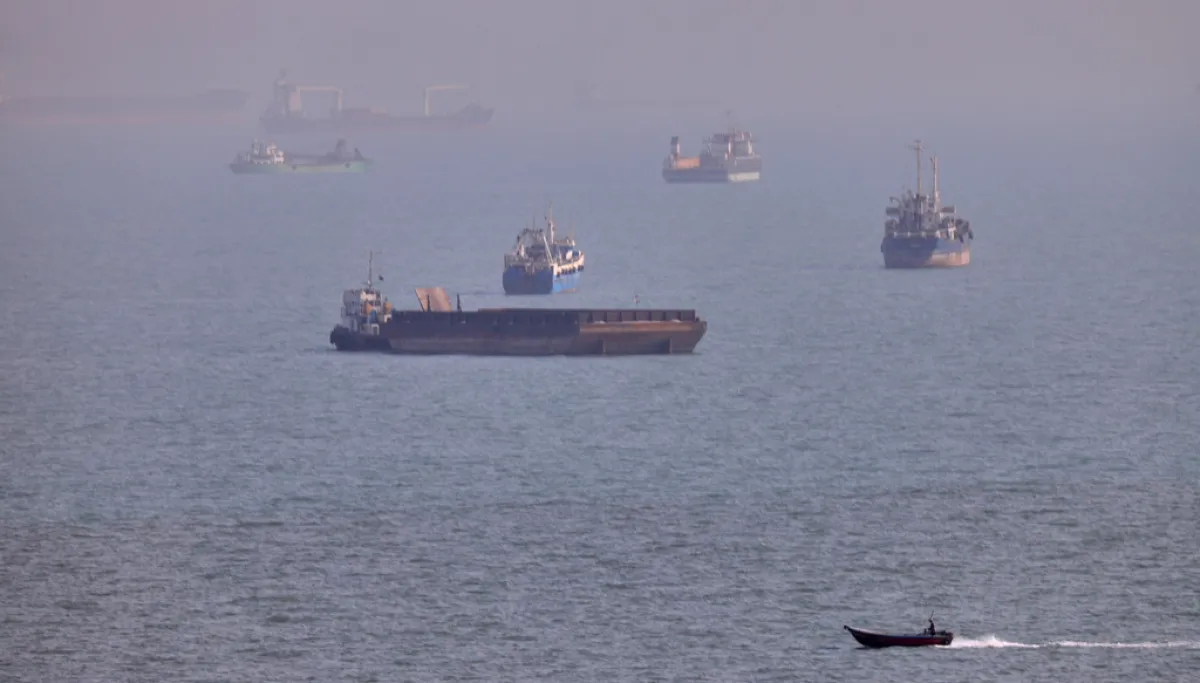
Oil just broke $100 a barrel. Diesel has surged past $6 a gallon in parts of the country. Yet this week the Federal Reserve responded to the pain American families are feeling at the pump by raising interest rates for the first time since 2023 by a quarter of a percentage point.There’s just one problem: the Fed didn’t cause this inflation, and higher interest rates won’t fix it. This isn’t America’s post-COVID inflation, topping out at over 9% in 2022, after the Fed’s rates were close to zero for two years.Price increases are concentrated in the energy sector, and in sectors that use energy. That’s because fewer tankers are moving through the Strait of Hormuz, and Iran-backed drone strikes have knocked out pumping stations for Saudi Arabia’s 750-mile East-West pipeline, forcing its closure. At the same time, the Houthis, with Iranian support, have imposed a maritime embargo in the Bab el-Mandeb Strait. This has choked off another critical shipping lane while the Strait of Hormuz remains effectively shut amid the broader U.S.-Iran conflict.That is why prices of energy, particularly oil, diesel, and gasoline, are rising. It has nothing to do with how much money is circulating in the American economy.Economists call this a supply shock, and it is fundamentally different from the kind of inflation the Fed’s tool kit was built to address. Interest rate hikes work by cooling demand, making borrowing more expensive so consumers and businesses spend less.This can rein in inflation when the problem is too much money chasing too few goods. It is counterproductive when the problem is too few barrels of oil reaching the market because a pipeline is on fire and a strait is closed.Fed Chairman Kevin Warsh said on Wednesday, “The Fed has a role in sustaining the economic progress happening in America right now, and the rising opportunities that come with it. Those who are least well off have the most to gain from a durable expansion, a solid labor market, and stable prices.”He’s right that Americans without financial assets or home equity benefit more from price stability than from asset returns. But those same Americans are also the first to lose their jobs or their hours if higher rates slow hiring and business investment, and many rely on credit card debt. Raising rates doesn’t help them if it costs them their jobs.Furthermore, the Fed can raise rates all it wants, but the rate increase will not produce a single additional barrel of oil out of the Middle East. That is a job for the Department of War, through naval deterrence in the strait and additional pressure on Tehran, not the Fed.Oil is not the only nonmonetary force pushing prices higher. The Trump administration is trying to make America more self-sufficient by shrinking imports from other countries through tariffs, and reducing available visas for foreign workers.Tariffs raise prices on imports, and some of the cost is passed through to consumers and businesses rather than being absorbed by the exporter. You cannot cure a tariff increase by raising the cost of a car loan or a mortgage.Restrictions on legal immigration are also inflationary. Agriculture, construction, and hospitality all use immigrant labor, and when guest workers can no longer travel to America to work, wages rise in those sectors, along with the prices of the goods and services they produce.That is a labor-market story, not a story about an overheated economy flush with cash. No rate hike puts a single additional worker back in the field.Warsh said the Fed has to act because its mandate is price stability, and underlying inflation wasn’t cooling as expected.Price stability is a legitimate and important goal, and Fed officials are required to watch inflation expectations closely. If businesses and workers start assuming persistent price increases and build that assumption into contracts and wage demands, a temporary shock can turn into something more durable.But preemptively slowing the entire economy by raising the cost of Americans’ mortgages, credit card payments, car loans, and business lines of credit risks doing economic damage now in exchange for insurance against a hypothetical problem later.KEVIN WARSH SAID ‘TRENDS MATTER MOST.’ WE’RE WAITING FOR PROOFSupply shocks call for supply-side fixes, including energy policy that gets oil moving again, trade policy that considers tariff costs, and an immigration policy that grants more H-2A visas for agricultural labor to address shortages. Monetary policy cannot substitute for any of them.America’s inflation is due to a supply problem that starts in the Middle East and ends at the gas pump. Prices are set on expectations of future production, and when oil can flow again, prices will go down.Diana Furchtgott-Roth, former acting assistant secretary for economic policy at the Department of the Treasury, is a distinguished fellow at the Energy Policy Research Foundation.
Rate hikes can’t stop drone strikes: Why is the Fed punishing Americans for the Hormuz blockade?
Full Article
Original Source
Read the full article at Washingtonexaminer →KhanList aggregates and links to publicly available news content. We do not host full articles from third-party sources. Always verify important information with original sources.