
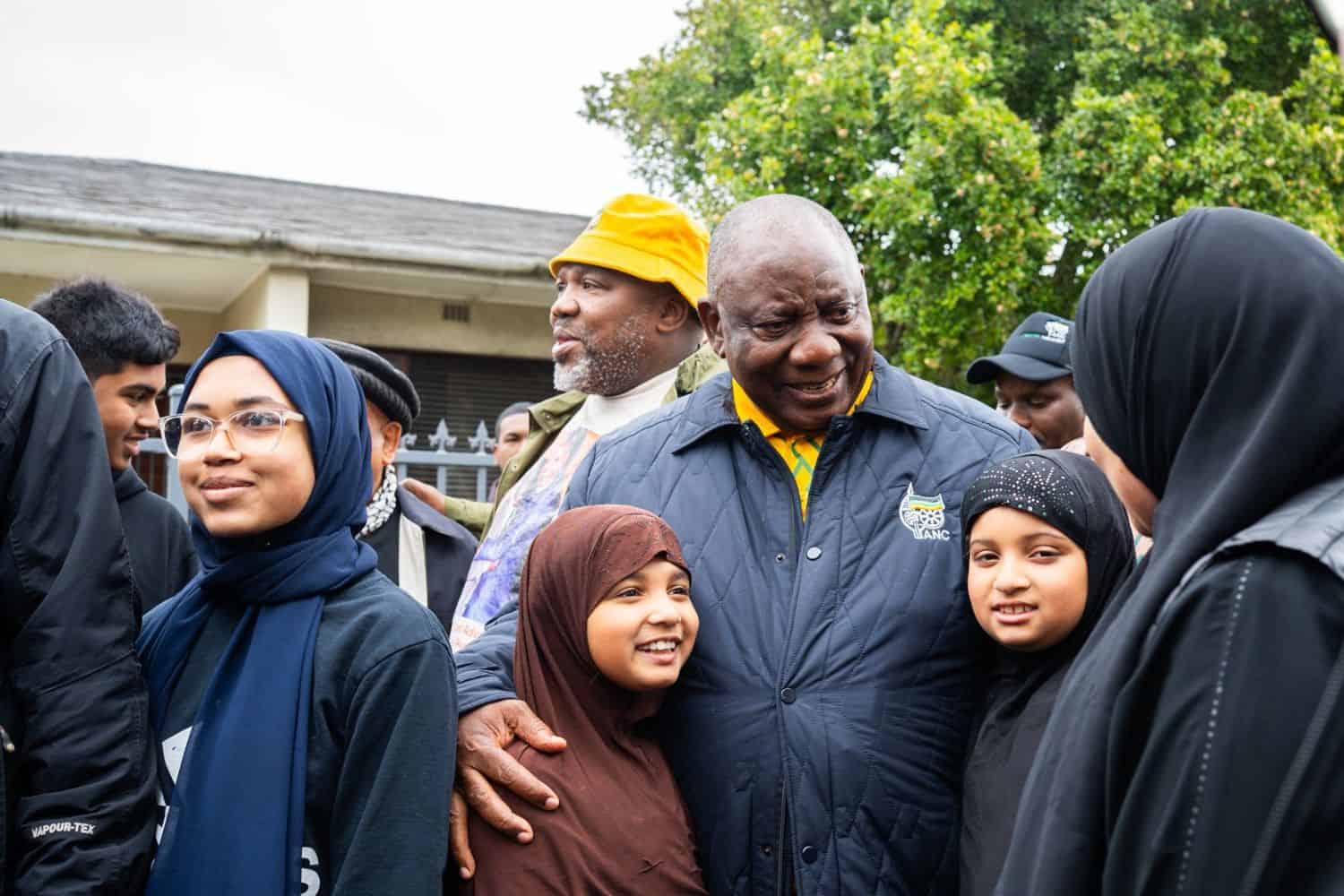
Ramaphosa also highlighted South Africa's International Court of Justice (ICJ) case against Israel, linking it to Nelson Mandela's vision of justice and freedom President Cyril Ramaphosa has urged South Africa’s Muslim community not to sit on the sidelines of democracy, warning that citizens who choose not to vote effectively hand decisions about the country’s future to others. “You need to be part of that process. Because if you are not part of that process, others will decide,” Ramaphosa said during a visit to Rylands on Saturday. The Muslim vote The president was addressing a discussion hosted by the International Peace College South Africa (IPSA) titled The Muslim Voter and the Ballot: Towards Developing an Ethical Framework for Informed Voting. LIVE interactive map, latest news, multimedia and more! View Map Ramaphosa rejected suggestions that Muslims should distance themselves from electoral politics, saying they are an integral part of South Africa’s democratic project and have both the right and responsibility to participate in elections. “Muslims are part of the South African community, plain and simple,” he said. “Muslims are South African citizens of our country and they therefore, like everyone else, have a very important responsibility as citizens.” Voting The president framed his argument around what he described as six key reasons why Muslims should participate in elections, linking voting to equality, justice, accountability and the country’s liberation history. Ramaphosa said voting gives practical expression to the ideals first articulated in the Freedom Charter and later entrenched in South Africa’s Constitution. “The Freedom Charter declared that South Africa belongs to all who live in it,” he said. He added that Section 19 of the Constitution guarantees every citizen the right to vote regardless of religion, race, gender or background, making electoral participation one of the fundamental pillars of democracy. Policies and decisions According to Ramaphosa, voting also enables citizens to influence policies and decisions that affect their communities and daily lives. He encouraged voters to carefully assess political parties and public representatives before making their choice at the ballot box. The president repeatedly returned to the issue of justice, arguing that elections provide citizens with an opportunity to ensure leaders remain committed to fairness, equality and human dignity. “Justice is about ensuring that everyone enjoys the rights and institutions of our country,” he said. Anti-apartheid activists Ramaphosa noted that principles such as justice, compassion and responsibility towards others are deeply rooted in Islam and should guide citizens when evaluating those seeking public office. He also called on South Africans to honour the legacy of Muslim anti-apartheid activists who played a significant role in the struggle for freedom and democracy. Paying tribute to figures such as Imam Haron, Yusuf Dadoo, Yusuf Cachalia, Fatima Meer, Ahmed Kathrada and Ebrahim Rasool, Ramaphosa said participation in elections was one way of recognising their contribution to the country. Holding presidents accountable The president further described elections as a powerful mechanism for holding leaders accountable, particularly as communities continue to face challenges such as unemployment, crime, healthcare pressures, education concerns and service delivery failures. Ramaphosa said citizens should use their votes to demand better governance and improved outcomes from those elected to serve them. “How do you make the president accountable? How do you make your councillor accountable?” he asked. Faith and democracy He argued that faith and democratic participation are not mutually exclusive and said South Africa’s Muslim community has a long tradition of civic engagement and public service. “The history of Muslims in our country is a history of faith, resilience, service and participation in the life of our country,” Ramaphosa said. Ramaphosa also highlighted South Africa’s International Court of Justice (ICJ) case against Israel, linking it to Nelson Mandela’s vision of justice and freedom for Palestine despite international criticism He concluded by urging Muslim South Africans to continue playing an active role in shaping the country’s future through the democratic process and by exercising their right to vote.
Ramaphosa urges Muslim voters to help shape South Africa’s future
Full Article
Original Source
Read the full article at Citizen →KhanList aggregates and links to publicly available news content. We do not host full articles from third-party sources. Always verify important information with original sources.