
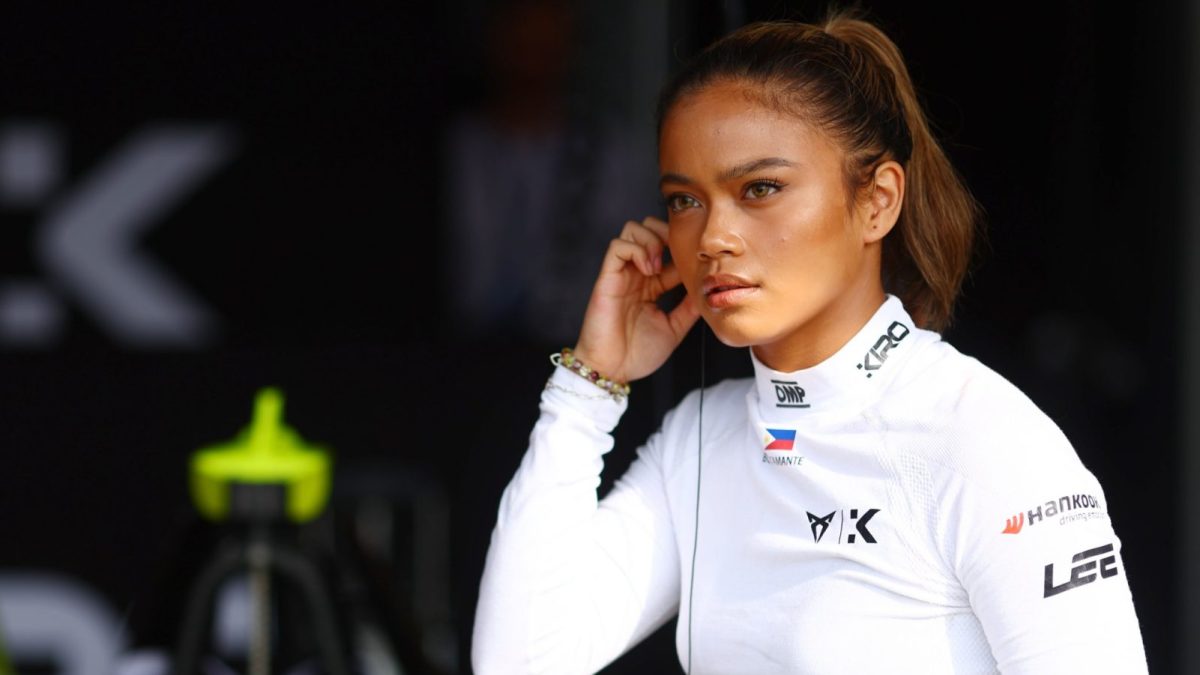
In our How I Manage My Money series, we aim to find out how people are spending, saving and investing money to meet their costs and achieve their goals. This week, in our celebrity edition, we speak to racing driver Bianca Bustamante, 21, who talks about growing up in the Philippines on a “budget racing” lifestyle, the huge cost of progressing through motorsport and why she still flies economy despite being able to afford more. She now lives in Surrey, England. What was money like when you were growing up? I think growing up in a country, particularly like the Philippines, you just have a different perspective towards life and money. Shorts I was brought up in a household where there was no bubble wrap. I was having tough conversations from an early age. I knew how difficult it was financially for my parents, or for anyone in the Philippines. I think I was very fortunate to have the privilege of being so self-aware of where we stood financially. Like I said, I think it’s very uncommon to have any financial conversations from a young age, but I did. How did you afford to race? There’s a phrase in the Philippines called “budget racing,” and that’s literally what it was for me my whole childhood. We saved in every way we could just so I could be on track. We booked the cheapest hotels, we took taxis, we didn’t rent cars, we ate literally anywhere. And I think that toughened me up as a kid. I was never afraid of feeling less, because no matter what I had, it already felt more than enough. How expensive is motorsport? It depends on how much you want to put into it. The more money you put in, the better performance you’ll have on track because you can afford a better go-kart, newer sets of tyres, better mechanics, better engineers – and that all translates into performance. I think easily, if you went into karting, you could spend £50,000 a year on a child, which is quite a lot of money to spend. For a lot of people, that’s their life savings and you’re just casually spending it for a season – it’s a one-year thing. It’s a big risk. I think I was quite lucky because in Asia, there was a scarce amount of women on track so, I had a lot of spotlight on me. Add that to winning championships and races, and I was fortunate enough to land sponsorship deals where I didn’t have to pay for my kart or my engine, etc. When did you first start earning money? I think a lot of drivers will sympathise with me when I say that you don’t really earn money being a racing driver. The first time I was ever able to gain money to continue racing actually, so not even money to pocket for myself, was back in 2022, when I was able to work with brands like Moto – one of my very first partnerships. Then I got into McLaren, then I worked with Sephora, and then I became a Google Pixel ambassador, and then I started working with Logitech G, EA Sports, Charlotte Tilbury, and so on. Those brands all contribute to my season. What do you spend your money on? I feel fortunate that my sponsorship deals can also pay for my living – my flat, having a roof over my head, eating good meals, proteins that help me become a better athlete and being able to afford physio. I struggle to settle for the physical, tangible things that you can afford in life. For me, that doesn’t really translate into success or stability. What’s your biggest spending weakness? I’m very creative as a person. I always felt like my creativity is my centre. Art is my centre. I just love everything that revolves around it. But unfortunately, it costs money. I love drawing; I love buying paint, canvases and sketching. I love that. I love photography. The most expensive thing I’ve ever bought for myself was my Fujifilm X-T3. I think that was the very first thing that I ever bought out of my own pocket. To this day, I’ve taken thousands of photos with it, but every single time I still carry that guilt with me. How do you manage your finances? I’m fortunate enough to have an ecosystem around me that helps me save those pennies. On my own, I don’t think I’m well-versed enough with the whole financial side to be able to save up like I do, put money into my racing and be strategic about it. So, I am grateful that I have my manager and my team. We have our financial adviser, our chief financial officer (CFO), who helps – he lets us know when we’re overspending, where we could be spending more, where we should invest more, and where we should maybe delay it till next year or delay it till next month. What’s your approach to saving for the future? I think I’m at an age where I can take more risk. At 21, that’s a time of your life where you just go for it. I’m gunning for it. I’m sending it as much as I can. I want to make it to F3; I want to make it to F2 – and obviously that costs money. I came here empty-pocketed, and now I have pockets full, and I can spend that to build a career and to build a lifestyle that I truly enjoy and something I’m passionate about – and I’m so grateful. So, I think for us, retirement isn’t something we have our eyes set on that yet. Do you have a money-saving habit? Personally, I’ve never flown business class out of my own pocket because I’m young. I can sleep crooked on an aeroplane and be all compact and tight – it won’t hurt my back as much. So, I can afford to fly economy and all that kind of stuff. My manager has always said that millionaires stay millionaires because they save their pennies, and I think that is such a good motto to live by because it’s true. The little things you buy will always account for much more when you put them all together. You just have to try to save in every possible way you can. Has being a female driver affected your approach to sponsorship? Being in an industry where people constantly perceive you as rich because racing is generally reserved for people with money, I constantly have to work hard to make people understand that I’m a racing driver that didn’t come from money and I’m just trying to make it. I want my story to be heard because I want to inspire people. I want them to see that anything is doable. There’s absolutely no ceiling over your head that can stop you from achieving your dreams. To have brands that genuinely believe and back my vision and that align with my ethos and align with my story is so important to me. Whenever we do have that alignment, I genuinely treasure those partnerships.
Racing driver Bianca Bustamante: Why I’ve never paid to fly business class
Full Article
Original Source
Read the full article at Inews →KhanList aggregates and links to publicly available news content. We do not host full articles from third-party sources. Always verify important information with original sources.