
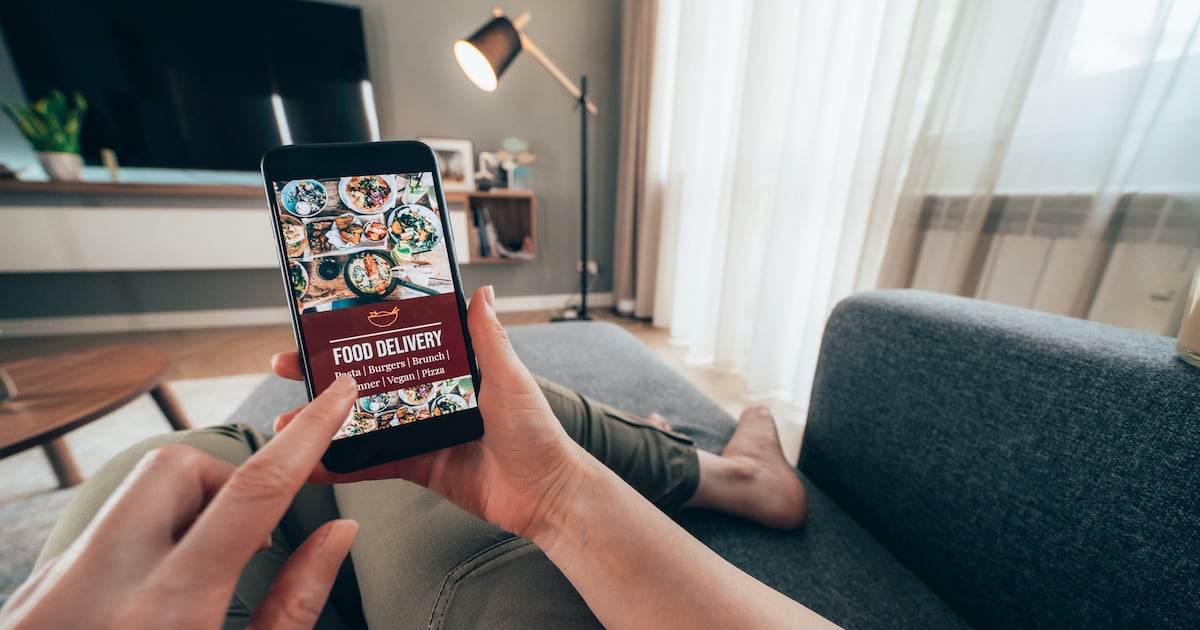
One of the greatest pleasures in my middle-aged life is a Friday takeaway, endlessly debating pizza toppings and portion sizes before buying way too much, watching the little figure bike over the virtual map to our door, only to inevitably get lost in the lane behind our house and need rescuing. When I heard about a site that allows users to experience the pleasure of ordering without the cost or calories or, well, delivery of anything yummy for dinner, I could not see the appeal. These are so-called dopamine sites, named for the brain chemical associated with reward seeking. Even the name “Food Never Comes” caused a neurological flare of whatever the opposite of dopamine is – deprivation? hanger? – in my hypothalamus. The trend began in South Korea, where youngsters facing soaring living costs turned to virtual window shopping for the thrill of adding to cart and checking out – minus the bills or buyer’s remorse. Dopamine is released when we expect something – less so when we actually get it. The theory is that clicking a “buy” button – even a fake buy button, even when the wished-for item fails to materialise – yields the same rush as a real transaction. “Craving a getaway too?” a banner ad reads, “Trip never leaves. Book the trip, skip the airport”.Despite my initial recoil, I have to admit this feels familiar. I’ve come home late and scrolled Deliveroo while eating cereal, just for the giddy notion of summoning my heart’s desire to my door at 1am. Only last night, while my husband read a biography of John McGahern like a good example, I drifted around on Vinted, not even looking for any specific item but looking for an item specific enough to fix my desire to. It’s bleak when you realise that one of your favourite pastimes is the unrequited scroll, maybe even a little perverse, like swiping through streaming apps for 28 minutes instead of watching a 28-minute show; suddenly deferred choice becomes its own empty brand of entertainment. READ MOREI wonder if this shopping that isn’t shopping is all that new? Walter Benjamin wrote about the 19th-century glass shopping arcades, where glamorous Parisians turned out to browse and let their attention drift from stall to stall. To be modern was to enter a capitalist dreamworld, a kind of aimless scrolling with your feet. Shopping has always involved a degree of fantasy, where the object – a new dress or a car – allows us to dream about the person we might become if we only possess it. That’s where much of the pleasure lies. But as I scroll Vinted or the “new in” section of Cos, I wonder if this imaginative hedonism is now less about a specific want than the endless possibility of finding something worth wanting, less a daydream than something that threatens to colonise my attention.[ Ireland is richer and spending more than 30 years ago but is it making us happy?Opens in new window ]The internet would say I am deficient in dopamine. Or maybe addicted to dopamine? One of those. One reformed shopaholic I follow on YouTube embraced a minimalist lifestyle several years back. Last week I cleaned my downstairs loo while she spoke about decluttering, before revealing that this too was problematic, as tossing out her old stuff gave her the same high as buying something new. Not shopping, it turns out, can also be addictive. We’re encouraged to frame over-consumption as a dopamine problem, to be remedied by deinfluencers, detoxes, no-spends, Marie Kondo-style clear-outs and even something called “Project Pan” (the revolutionary idea of using up your toiletries before buying more). And now it seems, dopamine shopping is another solution – fantasy retail that cures our urge to shop by allowing us to keep on shopping. So what are fake sites like Food Never Comes supposed to teach us about real consumption, I wonder, with my finger hovering over a bibimbap, which sits next to some AI slop tentacles labelled “ribs” you could not pay me to eat. Some of the simulation sites are designed as critique. On Fakehaul, a Microsoft developer, Jack Yang, has built a Temu version of Temu in response to a friend who struggled with impulse spending. Still, I happily add an aromatherapy diffuser and a chilled neck pillow to my imaginary cart. If there’s a bigger lesson, it’s drowned out by the call of stuff. On the checkout page I click on the “place order” button. I am not charged $287.22. I get a fake reference number and watch as my fake items cycle rapidly from an imaginary warehouse, to in transit, to my unspecified delivery address. The whole process, from browsing to not delivery, takes 10 minutes. I didn’t waste money or accumulate cheap things that will end up in landfill, but I wasted data and attention.[ ‘We’re living in a capitalist hellscape’: The people learning about money on social mediaOpens in new window ]Can fake consumption really critique capitalism? I don’t think so. I’m glad I’m not buying real stuff and that Ivan, the DPD driver I’m on first name terms with, is getting a break. But a site for simulated binge scrolling feels less like an incisive critique and more like shopping taken to its extreme, a bleak prospect where our fantasies, desires and leisure have become about what we might consume. We’re still dreaming about stuff we probably don’t need, or the life we don’t have instead of living right now. I’m reminded of a fintech event I attended 10 years ago. A game developer there told me about a failed video game (“for girls!”) where the player could “pretend” to shop. “But it was a stupid idea”, he said, “because women can do that online whenever they feel like adding stuff to a cart.” I can’t help suspecting that I play this game on a regular basis. And I realise what I really want isn’t to be someone who consumes less, but someone who wants less and spends her time better.
Rachel O'Dwyer: A food delivery site that promises to deliver no food? At first, I didn’t see the appeal
Full Article
Original Source
Read the full article at Irishtimes →KhanList aggregates and links to publicly available news content. We do not host full articles from third-party sources. Always verify important information with original sources.