
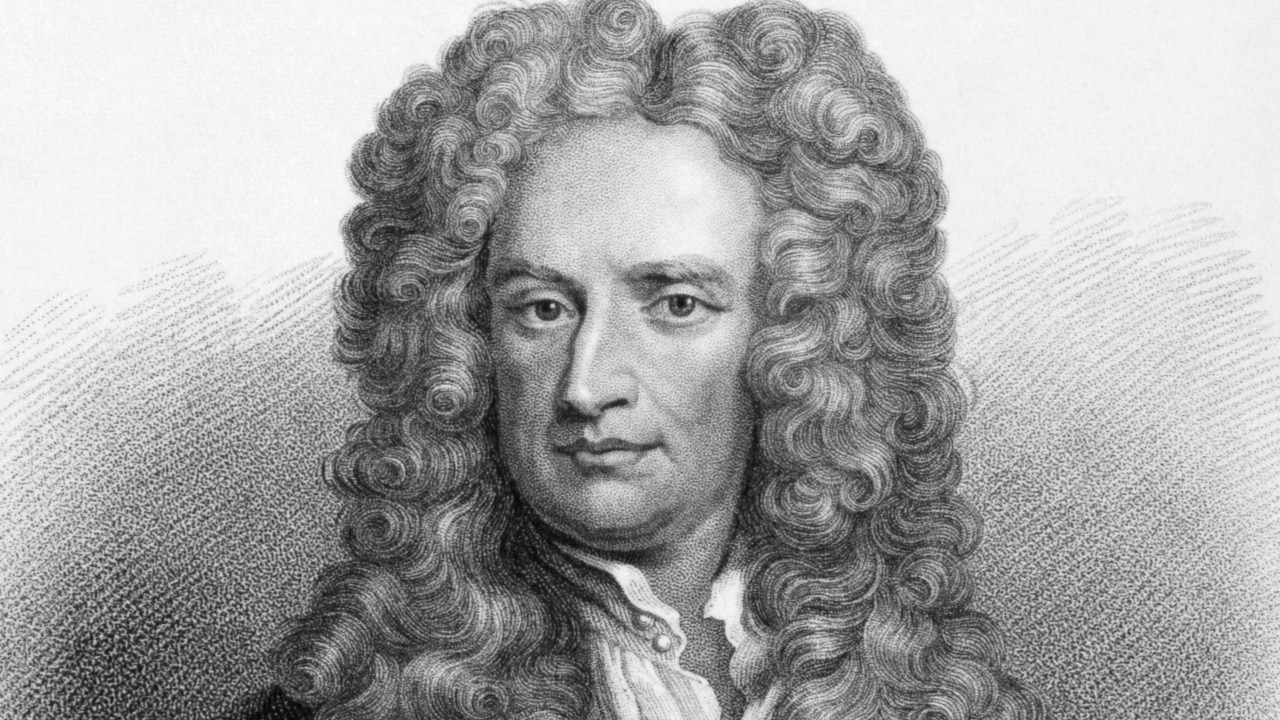
Isaac Newton's line on truth and simplicity has been traced to his Untitled Treatise on Revelation. The quote continues to resonate as a lesson in clear thinking across study, research and daily life.Quote of the day by Isaac Newton: Truth is ever to be found in simplicity, and not in... (Photo: Getty Images)“Truth is ever to be found in simplicity, and not in the multiplicity and confusion of things.”The quote reflects Newton’s belief that the search for truth should not be made unnecessarily complicated. For one of history’s most influential scientists, simplicity was closely connected with understanding the natural world.The line appears in Newton’s manuscript Untitled Treatise on Revelation, in a section known as “Rules for methodising the Apocalypse." In Rule 9, Newton writes about choosing explanations that reduce things to “the greatest simplicity." The manuscript is preserved and published by the Newton Project at the University of Oxford. ABOUT ISAAC NEWTONIsaac Newton was an English mathematician and natural philosopher whose work transformed the study of mathematics, physics and astronomy. The Royal Society records that he was born in 1642 and studied at Trinity College, Cambridge, before becoming Lucasian Professor of Mathematics. He was elected a Fellow of the Royal Society in 1672 and later served as its president from 1703 until his death in 1727. Newton is best known for his laws of motion and universal gravitation, which were presented in his landmark work Philosophiae Naturalis Principia Mathematica, published in 1687. His research also made major contributions to optics and mathematics. WHAT DOES THE QUOTE MEAN? In simple terms, Newton’s quote suggests that truth does not necessarily become clearer when we add more explanations, ideas or complications.Instead, the challenge is often to identify the central principle beneath the complexity.Newton demonstrated this approach through his scientific work. In Principia, he developed mathematical laws that could explain a wide range of phenomena, from the motion of objects on Earth to the movements of planets and other celestial bodies. His work sought underlying principles that could bring apparently different phenomena under the same explanation. The quote is therefore not simply about making things “easy." Newton’s idea of simplicity was connected to finding explanations that could account for many observations without introducing unnecessary assumptions.WHY NEWTON’S WORDS STILL MATTERThe idea has relevance far beyond science.For students, simplicity can mean breaking a difficult topic into its fundamental ideas rather than trying to memorise every detail at once. In research, it can mean looking for the central question before becoming overwhelmed by information.It is also a useful reminder in everyday life. More information does not always mean better understanding. Sometimes, clarity comes from removing what is unnecessary and focusing on what actually matters.Newton’s own scientific legacy demonstrates the power of this approach. His laws of motion and theory of gravitation provided a framework for explaining a remarkably wide range of physical phenomena. - EndsPublished By: Princy ShuklaPublished On: Sep 10, 2026 08:20 IST
Quote of the day by Isaac Newton: Truth is ever to be found in simplicity, and not in...
Full Article
Original Source
Read the full article at Indiatoday →KhanList aggregates and links to publicly available news content. We do not host full articles from third-party sources. Always verify important information with original sources.