
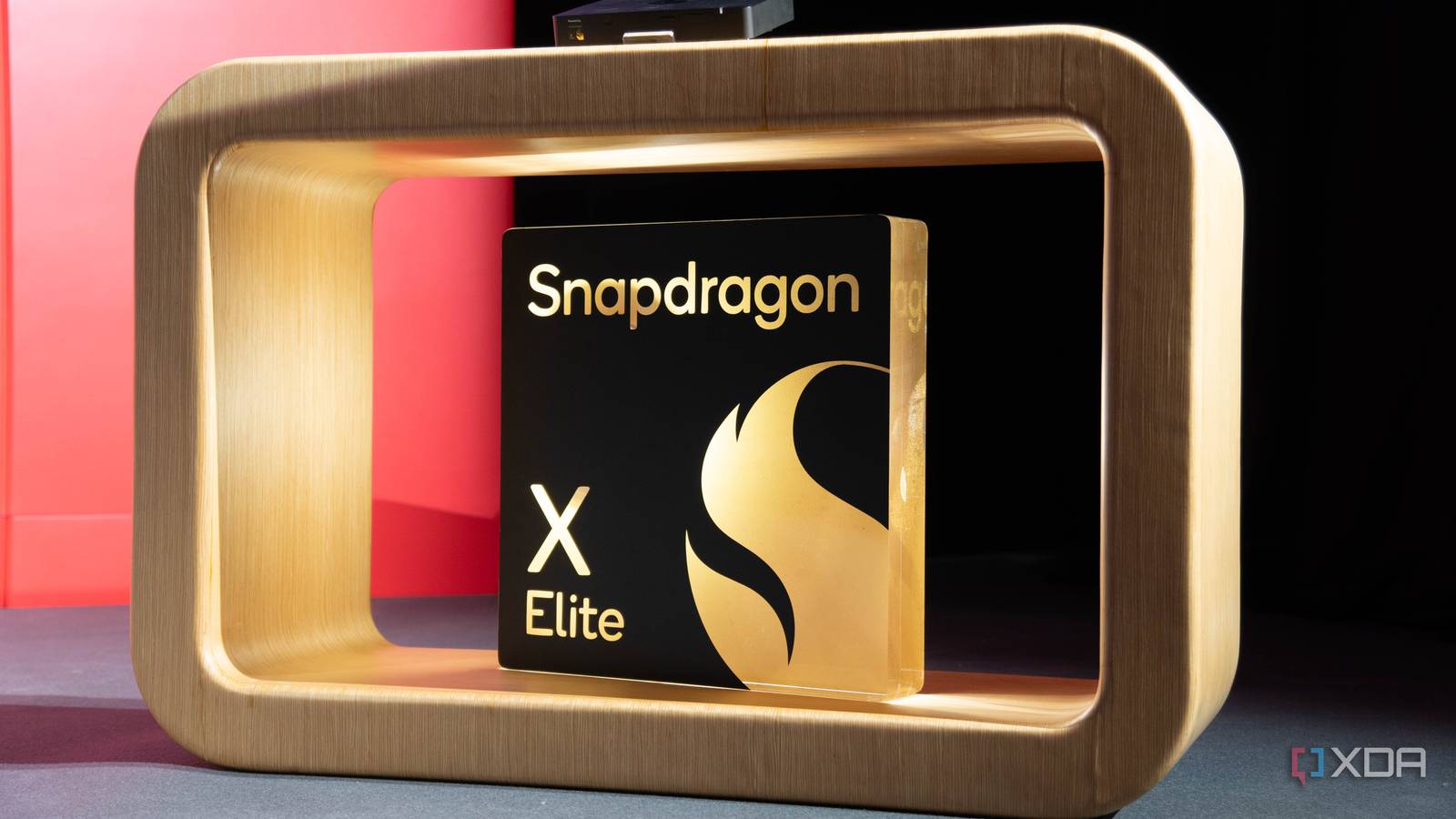
Published Oct 8, 2026, 9:15 AM EDT Rich is the Content Director of XDA, MakeUseOf, and How-To Geek, and I've been reporting on all things consumer tech since 2013. More recently, I've had more of a focus on Windows, and I've reviewed pretty much every mainstream laptop under the sun. If you see me somewhere, come say hello and let me ask you awkward questions about why you use the tech that you use. When Qualcomm announced that it was entering the PC space in 2016 with emulated x86 apps, it started with a mobile chip, the Snapdragon 835. It wasn't taken seriously for about another eight years, and now we have real PC chips and a growing Windows on Arm market, with Snapdragon X Elite. It didn't have to be that way though. Testifying in a court case where Qualcomm is suing Arm, CEO Cristiano Amon said that the San Diego firm actually reached out to Intel at one point in an attempt to license x86. Obviously, Intel said no, as Intel and AMD are the only ones allowed to do that. What could have been Quintel inside? Amon didn't say when Qualcomm reached out to Intel, and honestly, there isn't really a time when it makes sense. Was it before the 2016 announcement when Microsoft wanted a competitor to Intel? Indeed, Microsoft had been pushing for Windows on Arm well before that, as that was the original intention behind Windows RT from the Windows 8 era. Was it in the early 2020s when Qualcomm was buying Nuvia so it could make its own custom Arm cores? That also seems unlikely, given that Apple was normalizing Arm computing. No matter when it happened, if Intel was more open to the idea, we'd have a completely different Windows computing landscape. If Qualcomm was able to license x86 and didn't build out the Windows on Arm ecosystem you see today, you wouldn't have Nvidia's RTX Spark either. The market share that we're watching Intel continue to lose, all could have been prevented. It would also mean a pivot for Intel's business, from only making its own chips to licensing the technology behind them. Wait, Qualcomm is suing Arm? Best frenemies The relationship between Qualcomm and Arm actually reminds me a bit of the Microsoft and Intel relationship that became increasingly strained over the years. Back in 2024, Arm sued Qualcomm over its acquisition of Nuvia and the terms of the architectural license agreement that were being used for Snapdragon X Elite. At one point, the Arm CEO said that all Snapdragon X Elite laptops should be destroyed. Qualcomm won that case, and it was a sweeping victory across all counts. Now it's Qualcomm's turn to sue Arm, something Arm's lawyer called retaliation in his opening statement. Qualcomm says that Arm isn't honoring the terms of its licensing agreement, not offering things like patches and testing for Oryon cores. The way it seems is that Qualcomm has a pretty sweet agreement, which was made in 2013, and Arm wants out of it. A slide showed the terms of the agreement, and Qualcomm pays per core, maxing out at just four cores. That's right; Qualcomm could make a datacenter chip with hundreds of CPU cores, and it would only have to pay for the first four. Remember, back in 2013, Qualcomm was making quad-core Krait chips. The idea of an 18-core laptop CPU would have been a pipe dream, for both companies. However, one could argue that Arm should have considered this when it agreed to a 20-year licensing agreement. The difference between the way both companies present their arguments is stark. Arm represents itself as a company that was founded in Cambridge that's never denied a license to anyone. Qualcomm is quick to point out that Arm's direction has radically changed since it was acquired by SoftBank in 2016. That change in management likely has something to do with Arm's change of opinion on the architectural licensing agreement. The jury trial is running all week, and should come to a conclusion by next week.
Qualcomm once tried to license x86 from Intel when it was trying to enter the PC space
Full Article
Original Source
Read the full article at Xda-developers →KhanList aggregates and links to publicly available news content. We do not host full articles from third-party sources. Always verify important information with original sources.