
Russian attacks on Ukraine are increasing in scale and intensity, and Ukraine’s allies – the UK prominent among them – may soon also face an escalation of threats against them. That is the fear growing across Europe, and the signs are already there. On Thursday, Polish Prime Minister Donald Tusk warned that Russia could launch drone or missile strikes against countries supporting Ukraine in the coming month. “The official narrative will be that it was an accident and that there is no reason for anyone to consider any kind of Nato response,” Tusk said. Shorts He added that Russia’s aim would be to “weaken Nato’s integrity” and convince members that their mutual defence pact, Article 5, is “more theoretical than practical”. Tusk also warned that a massive attack on the western part of Ukraine – very close to the Polish border – has just ended, with Poland scrambling jets in response and two of the country’s airports briefly suspending flights. For European leaders, the threat is real. Emmanuel Macron reportedly summoned France’s various party leaders on Friday for a closed-door security briefing linked to fears of Russian hybrid warfare against Europe. Meanwhile, there are reports that German hospitals are preparing for war and mass casualties. “It’s time to use the language of maximum clarity – what we’re looking at, what we’re dealing with, is undeclared war,” James Sherr, a senior fellow at the Estonian Foreign Policy Institute, told a briefing on Thursday. “It’s expanding, and it’s multidimensional.” Unlike civilians in Ukraine, we are not facing a winter where we go to sleep at night wondering if we will be shaken awake by missiles and drones exploding around us. The Kremlin’s plans for Ukraine’s Western allies are likely to be very different. It was a different kind of disruption to air traffic last month that warned European nations further from the front line of what might lay ahead: an attempted drone attack at Leipzig/Halle airport in Germany. More incidents like this could occur. Police deployed an explosive-disarming robot at Leipzig/Halle airport in Germany after a drone was found nearby last month (Photo: Axel Schmidt/Reuters) Russian actions against the West are often described as being in the “grey zone” – somewhere between war and peace, leaving just enough doubt on responsibility for denial. But there was nothing grey about Germany’s response to the airport incident: Russia was to blame. In modern war, you do not need to occupy a country to make civilian life unbearable. Taking the electricity grid offline or damaging undersea internet cables could be enough. We had a taste of this in the UK in April, when the Ministry of Defence reported a Russian submarine operation aimed at distracting attention from other vessels conducting “nefarious activity near critical underwater infrastructure”. Past arson attacks in London and other incidents around critical infrastructure also point to a growing threat. Cyber attacks could also be ramped up against European nations and businesses. While an all-out attack is unlikely, Vladimir Putin could try to make life more difficult and uncertain for people living in countries helping Ukraine. Beyond messages of unity and outrage, how can Nato respond? France is among those countries which has introduced new forms of military service. In 2025, Denmark introduced legislation to call up women for national service. Nato could also look to respond by sending more troops to the alliance’s eastern edge, including the Baltic nations – formerly ruled from Moscow and a possible target for a Kremlin attempt to provoke a confrontation. Getting tougher with Russia’s shadow fleet – the vessels exporting oil to sell to keep Putin’s war machine running – is another option. In the first UK-led operation of its kind, the Smyrtos, part of Russia’s shadow fleet, was taken over by Royal Marine Commandos in June and moved out of operation (Photo: Ministry of Defence) Russian financial assets frozen in the West could also be released to support Ukraine. Kyiv has repeatedly asked Germany for Taurus cruise missiles, a request that remains unfulfilled. However, news in August that Ukraine had used UK-manufactured drones for some of its strikes on Russia prompted a threat from the Russian embassy. “London’s actions will inevitably carry consequences for which it will have to answer,” it said. All these options carry risk. Neither side has a clear understanding of how the war in Ukraine, and therefore the wider conflict between Russia and the West, will develop from here. That makes firm plans difficult to formulate. Decisions may have to be taken quickly, and under extreme pressure. Nato’s options also require a collective desire to respond, which has so far been lacking. Many countries will actively look to turn a blind eye to hybrid aggression unless really pushed. What is clear is that, even with the full-scale invasion in its fifth year, and victory still out of Putin’s reach, Russia remains a growing danger to European security. Any Russian act that caused death, or large-scale disruption or destruction, in a Nato country might be the moment the calculations change. Meanwhile, the Kremlin will be watching European politics with increasing interest – and looking at weights to tilt results in its own favour. A win for the far-right AfD in regional elections in Germany last weekend will probably have been welcomed as a sign of growing division in one of Ukraine’s major supporters. It’s important to remember the context of this moment in the conflict. Russia’s infrastructure has suffered as the war has gone on, with Ukraine’s increasing success at hitting oil refineries and warehouses bringing the war home in a way the Kremlin never intended. Even so, Putin will probably feel emboldened after parliamentary elections this weekend, even if most of the world views them as a sham; any element of unpredictability vanished from Russian elections long ago. Putin’s whole career has been built on his tough-guy image. Nato must be prepared for where that might take him next.
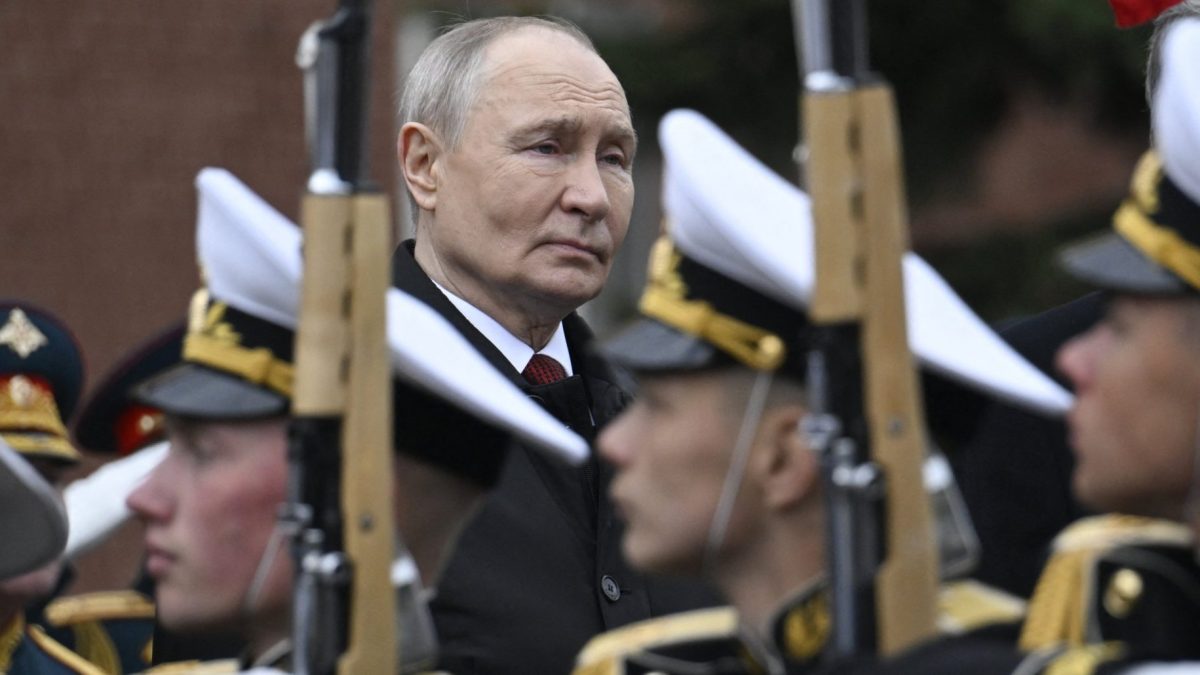
Putin’s options for a ‘hybrid attack’ on Europe – and how Nato would respond
Full Article
Original Source
Read the full article at Inews →KhanList aggregates and links to publicly available news content. We do not host full articles from third-party sources. Always verify important information with original sources.