
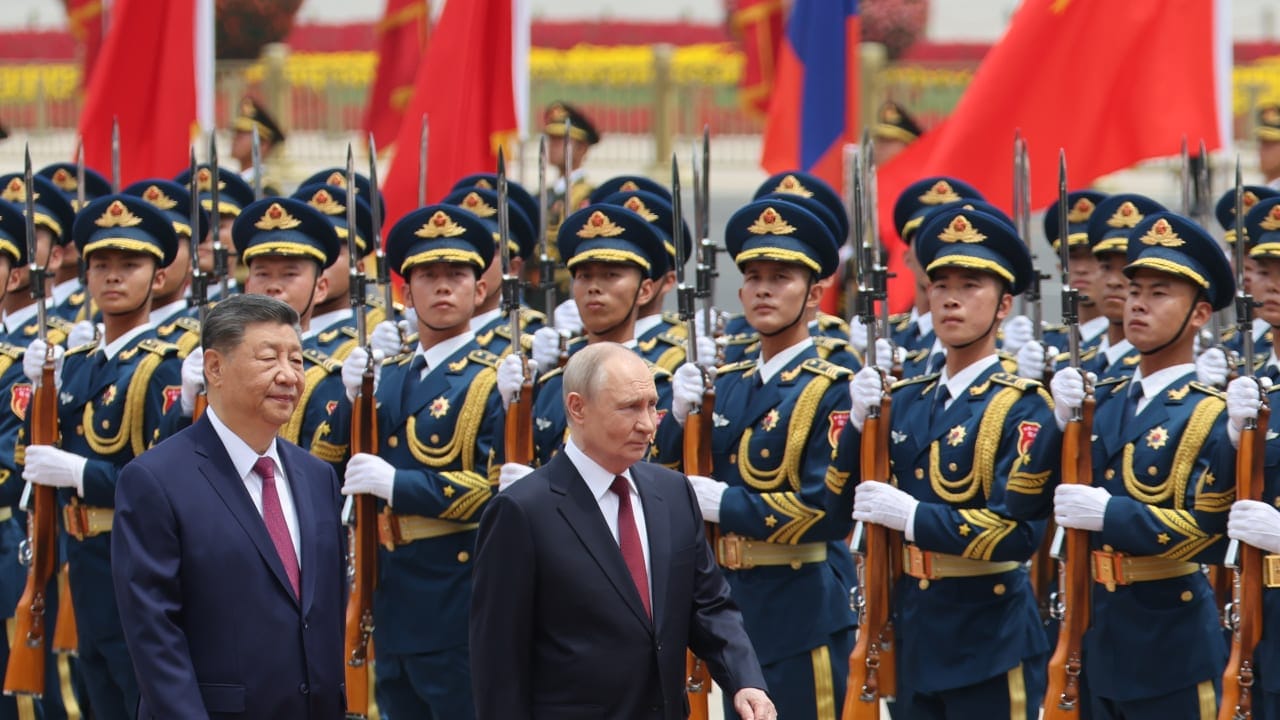
Jerusalem Post/World NewsRussia and China used the Shanghai Cooperation Organization summit to promote a multipolar world order, with leaders criticizing unilateralism and calling for greater influence for non-Western powers.Follow us on GoogleRussian President Vladimir Putin and Chinese President Xi Jinping inspect an honor guard during a welcoming ceremony at the Great Hall of the People state building in Beijing in May. (photo credit: Maxim Shemetov/China Pool/Getty Images)SEPTEMBER 1, 2026 21:47Updated: SEPTEMBER 1, 2026 21:51Seven years after similar meetings took place in Central Asia, Russian and Chinese leaders are back again for a familiar meeting of the Shanghai Cooperation Organization. Meeting in Bishek in Kyrgyzstan, the Russians and Chinese are seeking to push for a post-American world order.These leaders have been doing this for a while. Back in 2019, the Shanghai Cooperation Organization held a summit in Bishkek. At the time, some of the officials flew to Tajikistan’s capital Dushanbe for a Conference on Interaction and Confidence Building Measures in Asia (CICA). Taken together, the leaders were lifting the curtain on their push for a multi-polar world order.Much has changed since 2019. Russia had already invaded part of Ukraine in 2014, but in 2022 it launched a major new invasion. The US left Afghanistan. A civil war broke out in Sudan. The Assad regime was overthrown in 2024. Hamas attacked Israel on October 7, 2023, creating a multi-front war. The US and Israel attacked Iran in February 2026. Russia and China are watching. The SCO is one vehicle they use to discuss with non-Western powers the new world order that Moscow and Beijing want to create.Back in 2019 there were eight member countries attending the SCO, and numerous other countries were attending as observers and partners. Russia’s TASS said on September 1, 2026, that “Russian President Vladimir Putin said the potential of the United Nations (UN) remains untapped and called for improving its effectiveness at the SCO Plus meeting.” China’s President Xi Jinping, who is set to visit Egypt soon, said the world must reject the "law of the jungle.” Clearly this was a reference to the US war with Iran.Putin said Russia is not fully satisfied with the UN, but that is nothing new: "We do not always like or are satisfied with everything the UN does. At the same time, I must note that, to be honest, this has always been the case, practically since its creation." Putin called for the SCO to work more closely at the UN and also have broader representation from countries of the Global South and East. Overall, the organization should adapt to the changing realities and fundamental shifts emerging in global politics and the economy."Russian President Vladimir Putin and Chinese President Xi Jinping pose at Beijing’s Great Hall of the People, May 20. (credit: Sputnik/Maxim Stulov/Pool via Reuters)'Building a fair multipolar world order is irreversible'He also spoke about “building a fair multipolar world order is irreversible,” TASS noted. "This process is objective and, frankly, irreversible, a fact that is already clear to everyone."Xi Jinping said the emergence of a multipolar world "is now an irreversible historical process,” TASS noted. Xi said the SCO "has become one of the key platforms for joint development and addressing challenges facing Eurasian countries.” Belarusian President Alexander Lukashenko also spoke. Tajik President Emomali Rahmon said the UN and SCO can play a greater role in building a fair and inclusive world order, TASS noted. Kyrgyz President Sadyr Japarov also stressed this multi-polar theme. Kazakh President Kassym-Jomart Tokayev made an interesting reference to the world order today. He said that it should not be a "cult of force,” essentially arguing that it shouldn’t be one of “might makes right.” He added, "our common strategic task is to build a world order in which a cult of force and confrontation give way to mutual responsibility, joint development and long-term cooperation."Photos from the event appeared to show leaders from 25 countries attending. Xinhua noted that Chinese President Xi Jinping said: “the meeting today focuses on strengthening the role of the United Nations and building a multipolar world, and it demonstrates SCO's commitment to reforming and improving global governance as required by our times.”He added that there are many changes that are “accelerating across the globe. Hegemonism, unilateralism, and protectionism are resurging against historical trends.” In essence, this was a critique of the US. He argued that the rise of the Global South is reshaping the world order."What kind of multipolarity does the world need? How are countries going to take part in and promote it? The international community should build consensus and make the right choice that can stand the test of practice and history," Xi said, according to China’s Xinhua state media. "Major countries in particular should take the lead in observing international norms and honoring the rule of law, and work together to tackle global challenges," he added.SCO summit highlights growing challenge to US-led world orderThe SCO meeting matters because it brings together so many countries that apparently agree on confronting the US-led world order that began at the end of the Cold War. Many of these countries are now moving forward with new ideas on how to shape the world order. The origins of the SCO date from 1996, when China, Kazakhstan, Kyrgyzstan, Russia, and Tajikistan met to discuss closer cooperation. A charter was signed in 2002. As such, the current SCO is very much a legacy of the long-term leadership of Putin, Xi, and several other leaders who have been around for decades.Much has changed in the last decade. As things change, the SCO continues to expand. India, Pakistan, Iran and Belarus have joined. More dialogue partners and observer states have also come on board. These include Turkey, Azerbaijan, Saudi Arabia, Qatar, Egypt, and othersWhat matters at the SCO today, as back in 2019, is that these countries are openly talking about how they will supplant the US and create a new world order. What does this mean for countries such as Pakistan, which work with the US but also formed a new alliance with Turkey and Saudi Arabia. Turkey and Saudi Arabia are both close friends of the US. Turkey is a member of NATO. However, increasingly many countries want to hedge and have a foot in several camps. SCO, BRICS, and other groupings provide that opportunity. India, for instance, is a master at this balancing act. It has been since the era of the non-aligned movement during the Cold War. In those days, some countries wanted to balance between the Soviets and the Americans. Now the game afoot is to balance between the US and the rest. This is because the US continues to be the most powerful and influential country in the world.'Hide your strength, bide your time'Beijing had pursued a policy of “hide your strength, bide your time.” As China expands globally and increases the size of its navy, it is no longer hiding. It is now taking a more aggressive stance. However, it doesn’t want direct confrontation yet. Russia has been willing to directly confront the West over Ukraine. This has led to a long and difficult war. It remains to be seen how Russia will behave as the war appears to sap its strength. However, for now Putin continues to put on an image of moving forward with his Ukraine war. What that means for the Middle East, Asia, and other areas is not yet clear. China’s outreach to Egypt this week, for instance, is a key example of how Beijing is exerting its influence in the Middle East.Follow us on Google
Putin, Xi attempt to rally SCO leaders behind a new multipolar world order in Kyrgyzstan - analysis
Full Article
Original Source
Read the full article at Jpost →KhanList aggregates and links to publicly available news content. We do not host full articles from third-party sources. Always verify important information with original sources.