
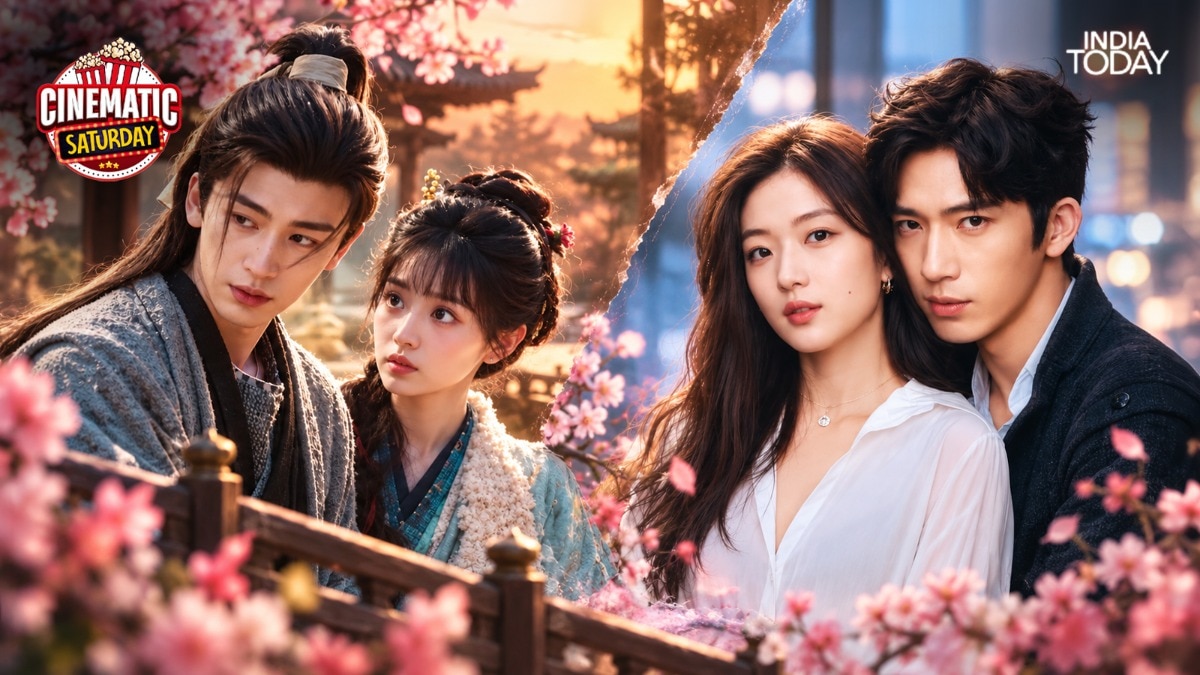
A marriage of convenience turns into an unexpected romance. A childhood crush blossoms into an adult relationship. Two people from opposing supernatural worlds find themselves bound by destiny. Elsewhere, a workplace romance unfolds amid professional ambitions and the complications of keeping love a secret. These are familiar storytelling premises for Indian audiences across television and films. Increasingly, these themes are being discovered through Chinese dramas.C-dramas, as Chinese-language television series are popularly known, have been building international audiences for years. Their recent appearances on Netflix’s global weekly charts, however, suggest that the conversation is reaching beyond dedicated fan communities. Pursuit of Jade, starring Tian Xiwei and Zhang Linghe, entered Netflix’s global Top 10 for non-English television in March 2026. In August, The Early Spring, led by Jing Boran and Sun Qian, debuted at No. 2, recording 2.4 million views and 21.5 million hours watched between August 24 and 30. It also entered the weekly Top 10 in 22 markets.The two dramas offer different routes into Chinese storytelling. One is a historical romance shaped by revenge, marriage and political intrigue; the other explores a complicated relationship in a contemporary professional setting. Their chart performances show that irrespective of genres, good storytelling is finding audience beyond China. For Indian fans, the appeal is particularly interesting. Korean dramas have already familiarised many OTT viewers with subtitles, East Asian storytelling and romance that does not necessarily follow Bollywood conventions. Chinese dramas are entering a market where audiences are increasingly willing to explore stories beyond their own language. Yet accessibility alone cannot explain the interest. The deeper connection lies in the emotional worlds these series create: family obligations, social expectations, sacrifice, ambition and the difficult negotiations between personal desire and duty.Different stories, familiar conflictsThe success of Pursuit of Jade illustrates how a distinctly Chinese historical setting can accommodate a universally recognisable romantic conflict. Fan Changyu, a butcher’s daughter, enters a marriage of convenience with Xie Zheng, a fallen marquis with secrets of his own. What begins as a practical arrangement develops into a relationship complicated by revenge, political conflict and competing responsibilities. The premise has an obvious point of connection with Indian storytelling, where marriage has often served as a starting point for romance rather than its conclusion. Relationships begin through family arrangements, social expectations or circumstances beyond the characters’ control. Affection and trust have to be built afterwards. The circumstances in Pursuit of Jade are specific to its fictional historical world, but the questions are familiar. Can two people build a partnership without initially choosing each other for love? Can private happiness survive public duty? And what happens when the person you have come to trust has a past that threatens everything you have built together?The series also gives its female protagonist agency. Fan Changyu is not simply waiting for a powerful man to rescue her; she has skills and ambitions of her own. The relationship becomes more compelling because both characters must negotiate a partnership.Its international performance offers evidence of the genre’s growing visibility. Pursuit of Jade recorded 1.9 million Netflix views and 34.2 million hours watched in the week of March 9–15, when it ranked sixth on the global non-English television chart. It remained in the Top 10 the following week. These are weekly figures, not cumulative viewership totals.The Early Spring, meanwhile, demonstrates that the appeal is not confined to historical epics. Its workplace romance explores professional ambition, emotional baggage and the complications of a secret relationship. Its No. 2 global debut suggests that contemporary Chinese romance can also attract international viewers without elaborate costumes or fantasy settings.The pressures of work, the difficulty of expressing feelings and the challenge of balancing a relationship with professional ambition are familiar across borders. The details may be distinctly Chinese, but the emotional negotiations are recognisable.Together, the two series challenge the idea that C-dramas travel internationally through a single formula. One can enter through historical spectacle or contemporary romance, depending on what draws them in. Why family, marriage and duty resonate in IndiaThe similarities between Chinese and Indian storytelling extend beyond romantic tropes. Both have rich traditions in which family relationships, marriage, respect for elders and social obligations shape the choices available to individuals.These parallels should not be mistaken for cultural equivalence. China and India have different histories, social structures and regional traditions. Nor do all contemporary viewers share the same expectations of family or marriage. But the themes provide a point of connection between stories made for different audiences.In many popular C-dramas, love does not exist in isolation. It is affected by family expectations, social standing, professional responsibilities or obligations to a larger community. A decision made by two people can have consequences for everyone around them.Indian audiences are accustomed to this kind of storytelling. From family dramas to mainstream romances, relationships have frequently been framed as negotiations between individual desire and collective expectations. A character’s decision to marry, leave home, pursue a career or reject a family arrangement can become the central conflict of an entire story.The attraction is not that Chinese families behave exactly like Indian families. It is that both storytelling traditions can make the family an active force in a character’s romantic life.The same applies to sacrifice and filial responsibility. In some dramas, family duty provides emotional warmth; in others, it becomes a source of conflict or limits the choices available to characters. The more interesting stories do not merely celebrate tradition. They examine what happens when personal desires collide with inherited expectations.For Indian viewers, this tension is accessible without requiring familiarity with every Chinese social convention. The dilemma of wanting one thing while feeling responsible for another is hardly unfamiliar. Hidden Love and the pleasure of slow-burn romanceIf historical dramas provide spectacle, contemporary C-dramas often rely on something more intimate: the gradual development of a relationship.Hidden Love, starring Zhao Lusi and Chen Zheyuan, follows Sang Zhi, whose longstanding feelings for her older brother’s friend, Duan Jiaxu, evolve as she grows older. The story moves from adolescent longing to an adult relationship, with family bonds, insecurity and emotional maturity shaping the journey.Its appeal lies in the time it gives those feelings to develop. Attraction is not always expressed immediately, and the relationship changes as the characters move through different stages of their lives. Indian cinema has its own long tradition of first-love stories, unspoken affection and the transition from friendship to romance. Many C-dramas extend that experience across a substantial run of episodes, allowing viewers to become invested in small gestures, misunderstandings and moments of vulnerability.The First Frost, a companion story to Hidden Love, follows former schoolmates who reconnect years later. Their unresolved feelings return alongside the emotional baggage of adulthood. The story shifts the focus from the excitement of a first crush to the challenge of building a relationship after life has changed both people. Amidst a Snowstorm of Love offers another variation. It brings together a former snooker prodigy and a rising nine-ball player, allowing their romance to develop alongside sporting ambitions and personal setbacks.These stories offer different versions of intimacy: the excitement of first love, the uncertainty of reconnecting with someone from the past and the comfort of being understood by someone who shares your ambitions. They also allow romance to coexist with other aspects of a character’s life.The slower pace can be demanding for those who prefer tightly structured storytelling. For others, it is precisely the attraction. Watching a relationship change gradually can make its eventual turning points feel earned rather than rushed.When fantasy becomes a cultural bridgeChinese dramas also offer a distinctive visual and narrative language through historical epics and fantasy series. Love Between Fairy and Devil, starring Esther Yu and Dylan Wang, follows Xiao Lanhua, a low-ranking fairy, and Dongfang Qingcang, a formidable demon lord. Their encounter binds their fates together, drawing them into a conflict involving supernatural power, sacrifice and opposing realms.The series belongs to the xianxia tradition, a Chinese fantasy genre associated with cultivation, immortality, spiritual transformation and supernatural beings. Its mythology may be unfamiliar to many Indian viewers, but its emotional stakes are easy to follow. A relationship between people from opposing worlds is a familiar dramatic premise. So is the idea that love can transform an apparently unfeeling character, or that personal sacrifice can alter the course of a larger conflict.Indian audiences have encountered comparable ideas in mythological television, fantasy films and stories built around destiny. The traditions are different, but the emotional grammar overlaps.Historical dramas such as The Double, which combines betrayal, revenge, political intrigue and romance, offer a similar mix of recognition and discovery through a different genre. The next chapter for C-dramas in IndiaChinese dramas are not suddenly new to the world, and their international popularity did not begin with Netflix. What appears to be changing is their visibility on mainstream streaming platforms and the ease with which viewers can discover them.For Indian audiences, the attraction is a balance of recognition and discovery. A marriage of convenience may evoke familiar romantic conflicts; a slow-burn relationship may recall stories of first love; a supernatural romance may tap into the enduring appeal of destiny and sacrifice. Yet each arrives with its own cultural setting, visual style and storytelling conventions.The next test is whether the success of Pursuit of Jade and The Early Spring helps more Chinese dramas find viewers beyond those who already seek them out. For now, their appeal is easy to understand: the worlds may be unfamiliar, but the emotions that drive them are not. Sometimes, that is all it takes to discover a new favourite. A story that feels just familiar enough to draw you in, and different enough to make you stay.- Ends
Pursuit of Jade to Early Spring: What makes Chinese dramas feel so Indian at heart
Full Article
Original Source
Read the full article at Indiatoday →KhanList aggregates and links to publicly available news content. We do not host full articles from third-party sources. Always verify important information with original sources.