
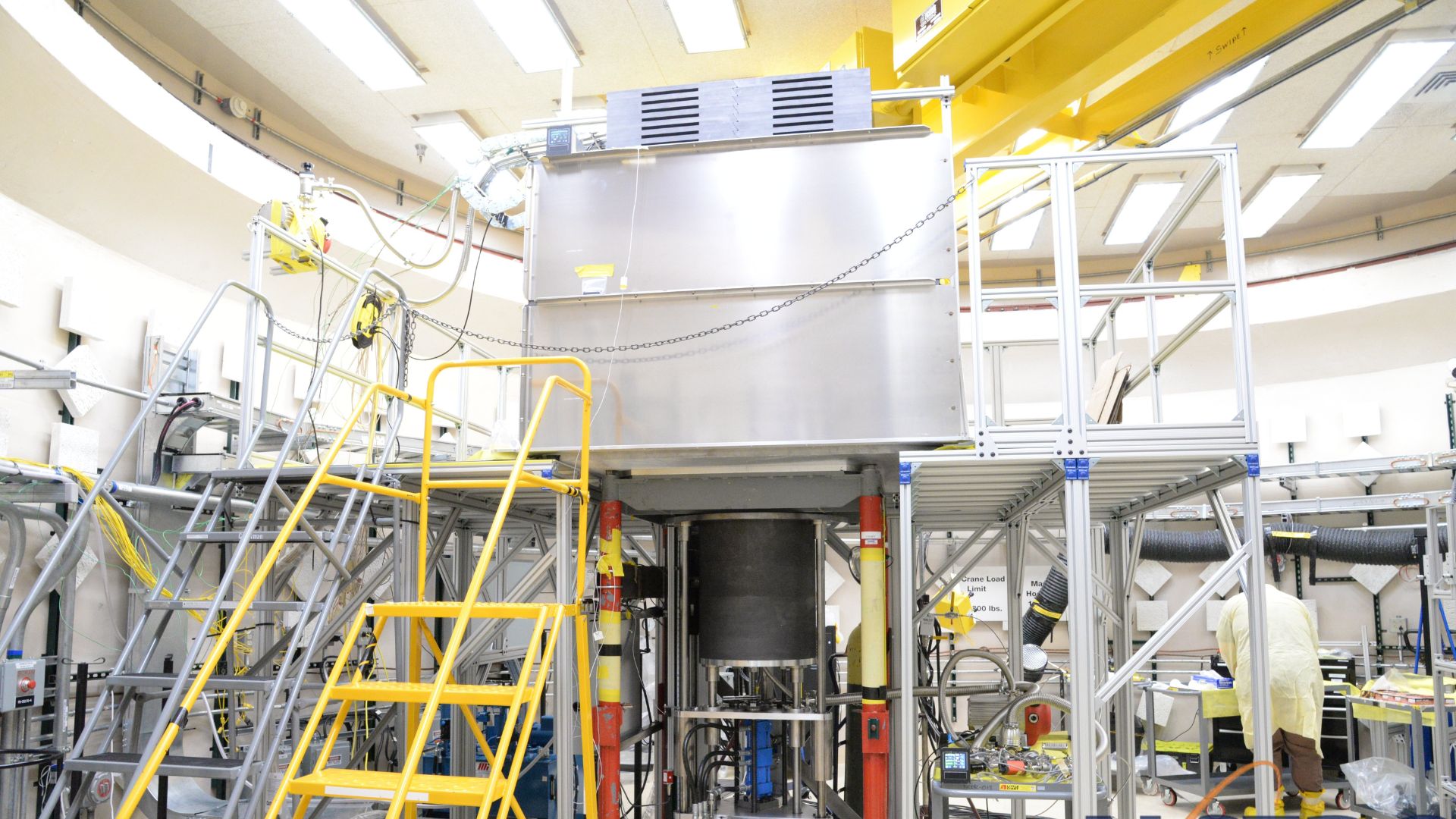
Westinghouse has pushed its eVinci microreactor through another high-temperature test, giving engineers fresh data on how the reactor behaves as its core heats up. The experiment reached criticality at 1,225°F and produced a subcritical reactivity measurement at a peak core temperature of 1,852°F. Researchers conducted the test September 3 at the National Criticality Experiments Research Center in Nevada. Los Alamos National Laboratory and the Nevada National Security Site supported the work at the National Nuclear Security Administration facility. The results extend a testing campaign designed to compare physical measurements with predictions from reactor models. That comparison can help engineers identify where simulations need refinement before they apply the findings to prototype hardware. eVinci reaches 1,225°F criticality Criticality occurs when a nuclear chain reaction becomes self-sustaining. Engineers use controlled criticality experiments to examine how changes in reactor conditions affect its behavior. The eVinci test reached that state at 1,225°F. Researchers then performed a subcritical reactivity measurement while the core reached 1,852°F. Westinghouse said the measurement set a new temperature record at NCERC for this type of reactivity experiment. The result also gives researchers temperature-dependent data from conditions that move closer to the reactor’s intended operating environment. Those measurements matter because temperature can influence the physical properties of materials inside a reactor. Engineers need accurate data to understand those effects and incorporate them into predictive models. The experiment forms part of Westinghouse’s build-test-learn development process. Each test provides another opportunity to check calculations against measured reactor behavior. Heat pipes drive compact design The eVinci reactor uses a compact architecture built around heat pipes, TRISO fuel, and a graphite core. Heat pipes transfer heat from the reactor core without the conventional pumps used in many larger reactor systems. That arrangement is central to the reactor’s compact design. Westinghouse is developing eVinci for applications where conventional nuclear plants may not fit the physical or logistical requirements. Potential applications include remote locations, defense systems, and space missions. Westinghouse also says the reactor could deliver electricity continuously for eight years without refueling. The company has not demonstrated that operating period through a commercial reactor. It remains part of the intended eVinci design and deployment concept. New data guides prototype The high-temperature measurements now give Westinghouse engineers more evidence for refining their analytical models. Those models help predict how the reactor should respond as temperatures and other operating conditions change. Westinghouse President and CEO Dan Sumner described the work as part of a rapid cycle of building, testing and improving advanced nuclear technology. “Our teams are rapidly building, testing, learning and improving advanced nuclear technologies,” Sumner said. He also credited the Department of Energy, NNSA, Los Alamos and NNSS for supporting the testing program. Acting Deputy Assistant Secretary for Nuclear Energy Chimi Zacot pointed to the project as an example of U.S. nuclear engineering progress. He said Westinghouse’s work reflects the wider push to expand advanced nuclear technology in the United States.The latest experiment does not represent a commercial deployment of eVinci. It does, however, give engineers another set of measurements from a demanding thermal environment.Get the latest in engineering, tech, space & science - delivered daily to your inbox.Aamir is a seasoned tech journalist with experience at Exhibit Magazine, Republic World, and PR Newswire. With a deep love for all things tech and science, he has spent years decoding the latest innovations and exploring how they shape industries, lifestyles, and the future of humanity.
Pumpless eVinci hits zero-power criticality at 1,225°F, then pushes to 1,852°F
Full Article
Original Source
Read the full article at Interestingengineering →KhanList aggregates and links to publicly available news content. We do not host full articles from third-party sources. Always verify important information with original sources.