
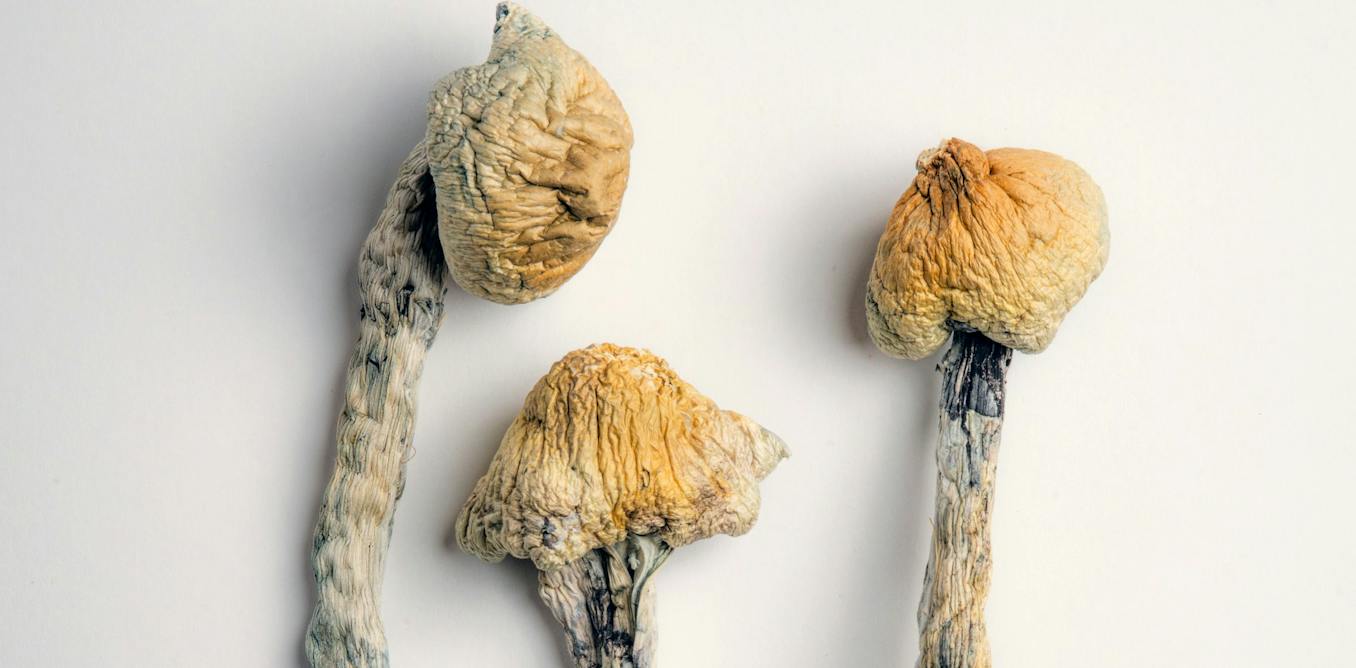
A concussion is often described as a “mild” traumatic brain injury. Yet repeated blows to the head rarely feel mild and the impacts — including changes in movement, memory, mood and brain function — may last for months or years. Athletes, military personnel, people involved in vehicle collisions, older adults who experience falls and people experiencing intimate partner violence are all especially susceptible to repeated head injuries. And these are associated with an increased risk of neurodegenerative conditions, including chronic traumatic encephalopathy and Parkinson’s disease. There is no approved drug that repairs the underlying brain damage from concussions. This therapeutic gap has prompted interest in an unconventional candidate: psilocybin, the psychoactive compound found in “magic mushrooms.” New research, which I conducted with colleagues from the United States, shows that psilocybin may help the brain recover from repeated mild head trauma. Beyond the psychedelic experience Psilocybin is best known for producing profound changes in perception and consciousness. However, research increasingly suggests that its biological actions extend beyond the psychedelic experience. It can promote plasticity, the brain’s capacity to adapt, and may influence inflammation, blood vessels and the molecular systems that support cellular repair. Recent animal studies suggest that psilocybin may also be effective in healing repetitive brain injuries. A single dose of psilocybin administered months after repetitive concussion-like injuries improved emotional and cognitive outcomes in rats. In another study, treatment one year after a more severe brain injury improved motor function, restored serotonin-receptor signalling and reduced microglial abnormalities. These studies suggest that psilocybin may influence both the immediate response to head injury and its long-term consequences. Vancouver Whitecaps midfielder Jeevan Badwal is checked for a concussion during the first half of an MLS soccer match against the Seattle Sounders in August 2026 in Seattle. (AP Photo/Lindsey Wasson) Reduced brain fluid leakage To further investigate the potential of psilocybin to heal concussion, our team worked with middle-aged female rats. They received one mild head impact per day for three consecutive days while awake. This approach was intended to resemble repeated concussive injuries more closely than models involving severe damage or prolonged anesthesia. Psilocybin was administered shortly after each impact. We then combined behavioural testing, advanced magnetic resonance imaging, protein measurements and analysis of signalling fats in the blood to examine recovery from several angles. The results were striking, although not uniformly so. Soon after injury, brain imaging revealed widespread changes consistent with vasogenic edema: fluid leakage and accumulation outside cells when the blood-brain barrier is disrupted. Psilocybin substantially reduced this signal. Three weeks later, untreated injured rats showed abnormally strong responses of brain blood vessels to carbon dioxide, indicating persistent disruption of vascular regulation. Psilocybin partially normalized this response in several regions, including the prefrontal cortex, which supports decision-making and behavioural control. This image shows the location of the prefrontal cortex in the human brain. (Natalie M. Zahr & Edith V. Sullivan/ Wikimedia Commons) Increased brain connectivity Repeated injury also weakened the co-ordinated activity, or functional connectivity, between many brain regions. Psilocybin not only reversed this loss but produced connectivity greater than that observed in uninjured animals. A separate experiment suggested that this “hyperconnectivity” was not simply a general effect of the drug in a healthy brain. Nevertheless, more connectivity is not necessarily better. Future work must establish whether this increase represents helpful reorganization, a temporary compensatory response or excessive network activity with its own risks. At the molecular level, psilocybin reduced phosphorylated tau, an abnormal form of a protein linked to chronic traumatic encephalopathy and several dementias. It also increased brain-derived neurotrophic factor (BDNF) and its receptor, tyrosine kinase receptor B (TrkB) — two molecules that help brain cells survive, adapt and form new connections. Changes in fats circulating in the blood suggested that psilocybin may also affect broader processes throughout the body. In another study, psilocybin was associated with increased myelin, the insulating material that helps nerve impulses travel efficiently, in a small exploratory group of older rats. Together, these findings point toward several possible, and potentially interacting, routes to recovery. Future studies are needed Important cautions remain. This was an animal study conducted primarily in female rats, and the treatment was given within 30 minutes of each injury, timing that may be difficult to reproduce in people. The selected dose produced a behavioural sign of psychedelic activity in rats, and whether altered consciousness is necessary for any benefit remains unknown. Acute imaging was performed under anesthesia, which can affect brain fluid movement and blood flow. In the current experimental settings, rats showed only minor behavioural alterations related to the repeated head injury, which psilocybin did not appear to correct. A person suffering from concussion currently has few treatment options other than rest and symptom management. (Getty/Unsplash+) Researchers are left with many questions: How long do the effects last? Does the treatment work when delayed? Which receptors and cell types are responsible? Will similar benefits occur in males and across different ages? Future studies should also test lower or non-hallucinogenic doses and determine whether imaging and molecular changes translate into meaningful symptom improvements. New avenues for treatment Psilocybin is not ready to be considered a treatment for concussion, and these findings should not encourage self-medication after a head injury. What the study does provide is a particularly comprehensive demonstration that psilocybin can modify multiple biological consequences of repetitive mild head trauma when administered shortly after injury. By linking changes in brain fluid, vascular function, network activity, tau, growth-factor signalling and possibly myelin, it opens an unexpected avenue for treating an injury that currently has few options beyond rest and symptom management. Together with emerging animal studies showing benefits when psilocybin is administered months after brain injury, these findings suggest that psychedelics may influence both the immediate response to concussion and its longer-term consequences.
Psilocybin may help the brain recover from concussion, new study shows
Full Article
Original Source
Read the full article at Theconversation →KhanList aggregates and links to publicly available news content. We do not host full articles from third-party sources. Always verify important information with original sources.