
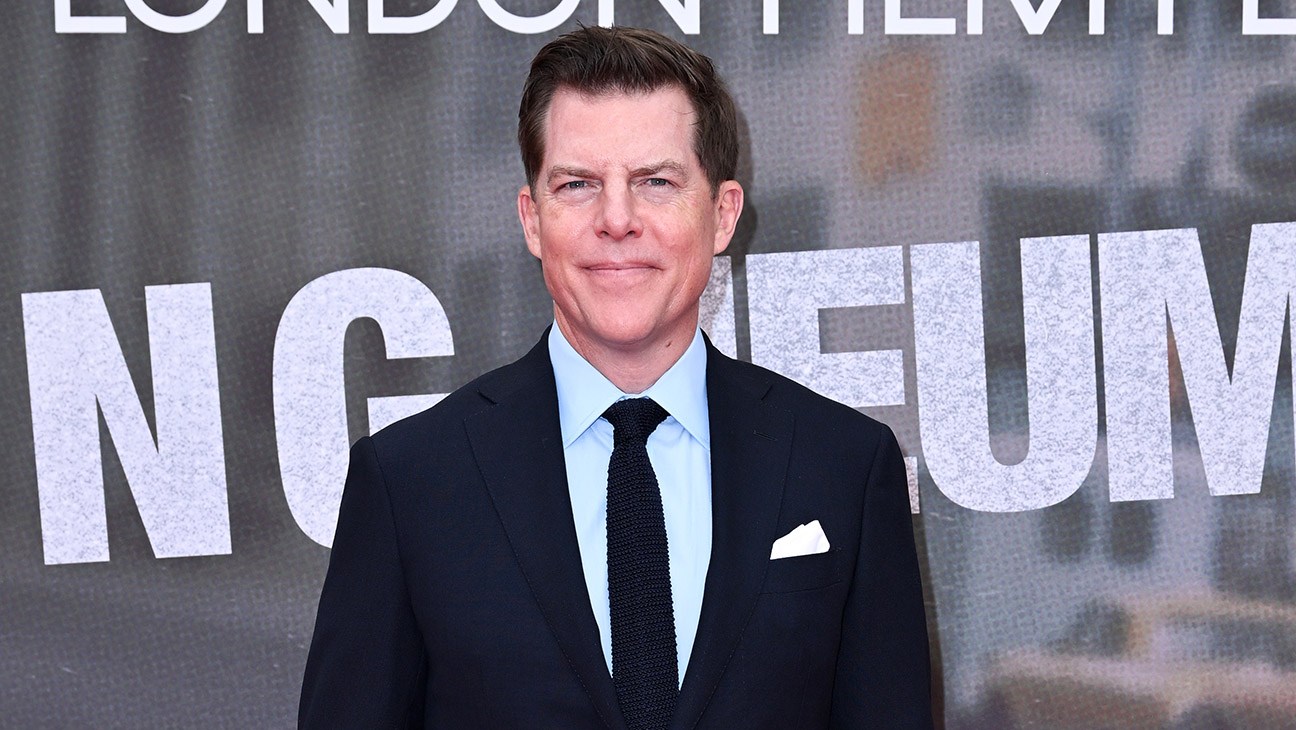
Logo text Being Heumann producer Kevin J. Walsh is not easily rattled. After all, the Boston-area native served in a variety of assistant roles for Scott Rudin, Steven Spielberg and Tommy Mottola before eventually spending more than five years running Ridley Scott’s company, Scott Free. There, he shepherded a dozen pictures, four of them directed by Scott, including All the Money in the World (2017), The Last Duel (2021), House of Gucci (2021) and Napoleon (2023). In other words, he’s as battle-tested as they come. Yet the prospect of helping CODA director Sian Heder tell the story of Judith “Judy” Heumann’s Herculean fight to make the world more accessible for disabled people made Walsh’s blood run cold. “When Sian first asked me, ‘Why do you want to do this?’ my answer truly was, “Because the movie fucking terrifies me,’” Walsh tells The Hollywood Reporter in support of Being Heumann’s Nov. 13 release on Apple TV. In 1977, disabled rights activist Judy Heumann helped organize the landmark Section 504 Sit-in, a nationwide protest aimed at compelling HEW Secretary Joseph Califano to finally sign the long-delayed regulations implementing Section 504 of the Rehabilitation Act of 1973. Heumann and her fellow disabled activists occupied federal buildings across the country for more than three weeks until Califano finally put pen to paper. The regulations secured civil rights protections for disabled individuals and helped direct billions of dollars toward making federally funded infrastructure more accessible, including through curb cuts, wheelchair ramps, wider public restrooms and designated parking spaces. The movement also helped pave the way for the more sweeping Americans with Disabilities Act of 1990. Walsh and Heder knew that if they were going to dramatize Heumann’s David-versus-Goliath tale, the only way to honor the late disabled pioneer was to bring her story to the screen authentically. That meant casting more than a dozen key roles with disabled actors and practicing what the movie preaches by creating an accessible, equitable set that could accommodate the ensemble’s unique needs. The rub was that no such blueprint existed, and there was only one wheelchair-accessible trailer in all of North America. Working alongside a ten-person accessibility team and a crew that included disabled artisans and technicians, Walsh, Heder and their partners customized the Being Heumann set, taking extra precautions for the cast and ensuring direct access to personal and hair/makeup trailers. “We did experience a handful of Califano-type people, just not from the studio side. Apple was great. It was more, You can’t do it this way. It’s never been done this way,” Walsh shares. “But we needed to ignore history and really try to recreate how people make movies. I’m as proud of what we did behind the scenes to redefine access as I am of the quality of this movie.” Michael Patrick Thornton, who plays a supporting role opposite Ruth Madeley’s lead turn as Judy, put matters into perspective in a way Walsh will never forget. As one of the most accomplished disabled screen and stage actors of the last 25 years, Thornton found that Being Heumann offered him a first-time experience that most actors likely take for granted. “On his first day, he got into the hair and makeup trailer and started to cry. He said, ‘In my whole career, I’ve never, ever seen the inside of a hair and makeup trailer,’” Walsh recalls. “He went on to describe it to me personally and said, ‘You don’t understand. This is Shangri-La for an actor who’s disabled. Normally, I’m in a closet getting ready on my own. But I feel like I’m one of everyone here.’” Below, in a conversation with THR, the Manchester by the Sea producer also discusses his company’s prolific output in the 2020s, plus his extensive upcoming film and TV slate. *** When we last spoke for Napoleon three years ago, the actors’ strike had just ended, and there were a lot of questions as to what the new normal would be. What did the answer end up being for you and The Walsh Company? We’ve been lucky. We got to make three or four movies during the strikes, which was really something. We were able to keep shooting in Europe. Echo Valley did have to shut down because of the writers’ strike, so we went back to finish it. We then got a little independent film made called Miss You, Love You, and we’ve since made four films at Apple. Overall, we’ve now made five movies at Apple since [launching the Walsh Company and signing there in 2022]. So COVID and the strikes impacted us, but we were largely able to keep going. Is it harder to set things up now? Or is it about the same? It’s been about the same for us. We’ve been on a really good pace setting things up, but getting things made and securing that green light is always harder. The head of a streamer once joked, “Everybody’s been drinking at the bar for free, and now they’ve got to pay their tab.” So those days are gone when a streamer would green-light a $50 million to $70 million movie and say, “Hey, good luck.” I have to really work for the green light now, but these streamers and studios need product. So I’m lucky to be in that small percentage of people who are still getting movies produced. We’ve set up a bunch of movies, and we’ve made five since we last talked. We’ve also started a TV business. (L-R) Sian Heder and Kevin J. Walsh attend the premiere of “Being Heumann” during the 2026 Toronto International Film Festival at Roy Thomson Hall on September 10, 2026 in Toronto, Ontario. Matt Winkelmeyer/Getty Images You and Sian Heder both have deals at Apple. Did they play matchmaker between the two of you for Being Heumann? I actually met Sian during a party at Ben Affleck’s house. We both grew up outside of Boston, and we both expressed a desire to work together. I had been looking for the right thing, but Apple ultimately did play matchmaker because we both had deals there. They said they needed someone to come on alongside [producer] David Permut, who had identified the rights and done a great job developing the script. So Sian and I really bonded as we started to talk about the challenges of this movie, and I was excited to jump in with her. You mentioned your fellow producer David Permut. Do you know the story of how he fended off Jean-Marc Vallée to acquire the rights to Judy Heumann’s story? I don’t know the details surrounding the Jean-Marc of it all. I do know that David and Sian arrived at Judy separately, but then they quickly came together. I came in much later, but I was really happy to play a pivotal role in the development of the script and the execution of the movie. Judy was at a decision-making point when Sian cold-emailed her [in 2020]. One of Sian’s best friends, who was an accessibility coordinator on Crip Camp, had told her to watch the documentary [co-starring Heumann]. Sian asked, “Why should I watch it?” And her friend said, “This woman needs to have a movie made about her.” So Sian watched Crip Camp, and she emailed Judy that same day to say, “Hey, I’m really interested in your story.” Judy wrote back 20 minutes later and said, “I’m making the decision on who I’m going to make this movie with today. So if you can get on the phone with me tonight at 5:00 p.m., you’ll be in the running.” Sian quickly finished her book and called her that night. CODA came out in August 2021. It won the Oscar for best picture in March 2022. Sian’s follow-up is now out in November 2026. Was she indecisive about how she wanted to spend her Oscar capital? Or did it just take a while to get Being Heumann across the finish line? I think she’s just really exacting. People misuse the word picky when exacting is the better word. She’s relentless in making sure something is really excellent, well done and well researched. So she took her time just to make sure it was the movie she wanted to commit to. She had a lot of opportunities with other films and studios, but they weren’t quite the right fit for her or an exact match with her DNA. She really appreciates and supports underdogs — and this story certainly tells the ultimate underdog story. So it took time for her to get the script right, and then it took time for Apple to finally make that turn to say, “Okay, we’re going to make Being Heumann.” That’s just part of the normal process of getting movies green-lit. Ruth Madeley as Judy Heumann in Being Heumann Apple TV I’m ashamed to admit I never fully realized how life-changing a curb cut could be for someone with a disability. And, as the movie points out, so many people were naive to that reality. But after watching Being Heumann, I’ve started noticing all the other forms of accessible infrastructure that Judy Heumann and her allies fought to establish. You’re right that people don’t realize it. People do not realize how vital and how prevalent curbs cuts and other forms of barrier-free access are. Judy fought for them at a time when they didn’t exist. One of my favorite lines in the movie is about how anyone at any time can become a part of this subset of disabled people. We’ve done probably 15 Q&As over the last month, and you’d be surprised how many people are affected, whether it’s personally or through their siblings, their parents, their cousins, et cetera. This affects everyone. And if we’re lucky enough, we’ll live a long time — long enough to use a cane or a walker or a wheelchair. Hollywood, meanwhile, still has very few figurative curb cuts for the disabled community, whether it’s telling their stories or hiring their performers. Did you encounter your own Joseph Califano types in trying to get this movie made? We did experience a handful of Califano-type people, just not from the studio side. Apple was great. It was more, You can’t do it this way. It’s never been done this way. But we needed to ignore history in a way and really try to recreate how people make movies. I’m as proud of what we did behind the scenes to redefine access as I am of the quality of this movie. Access is the word I keep coming back to for everything about this movie. We created a film set with access to trailers and ramps. We made sure that disabled people had access to every single thing that an able-bodied crew member had access to — and then some. That happened through a lot of hard work, ingenuity and research by our great team of people. Did any wheelchair accessible Star Waggons exist? There was one in all of North America. We actually ended up cutting the backs off some trailers and creating lifts to bring actors up into the hair and makeup trailer. We had a series of ramps built by our construction team and grips, which we laid out to lead actors to any trailers that weren’t accessible. It made such a difference. One of our actors, Michael Patrick Thornton, who plays Ed Roberts, the self-described “artichoke” in the movie, had been working for 30 years in the movie business. He’s a huge Broadway actor and a big TV actor. He just finished a Broadway run with Keanu Reeves in [Waiting for Godot]. On his first day, he got into the hair and makeup trailer and started to cry. They asked him what was wrong, and he said, “In my whole career, I’ve never, ever seen the inside of a hair and makeup trailer.” I was so floored by that story and what we had done to achieve it. He went on to describe it to me personally and said, “You don’t understand. This is Shangri-La for an actor who’s disabled. Normally, I’m down the hall in a closet getting ready on my own. But I feel like I’m one of everyone here.” So, as a seasoned disabled actor, he could see the difference. Was there extra crew to accommodate the disabled cast? We had a 10-person accessibility team at all times. We provided masseuses, nutritionists and round-the-clock care. We had people transferring disabled actors from their regular wheelchairs to period wheelchairs. We’d give them time for stretches and breaks. We had a lot of disabled crew members working with us as well. But we made a lot of mistakes throughout the process. We had to refine it and hone it and get it better and better. It was just really important for me to learn this new skillset. It’s one of the reasons why I did the movie. When Sian first asked me, “Why do you want to do this?” my answer truly was, “Because the movie fucking terrifies me.” I wanted to figure out all these issues. But with a good team around us, we were able to achieve it. There are so many great disabled actors in this movie who had never acted before. They’d never been in a film before, much less a soundstage or a set. So, for them, it was like, This is how movies must work all the time. (Laughs.) Andrew Pilkington, Siena Rafter, Charlie Rush-Reese, Dylan O’Brien, Roberta Colindrez, Ruth Madeley and Madeline Delp in Being Heumann Apple TV When it came to casting Judy and the other 504 protestors, how large was the talent pool of disabled actors? You might be surprised to hear this, but there are a lot of really talented people. Our casting directors, Bernie Telsey and Adam Caldwell, really put the spotlight on that community. Had we not tried to authentically cast people with the actual disabilities of the characters they’re portraying, we wouldn’t have found that talent. For Judy, it was a bit more specific. We had to find a disabled person who has the charisma and acting chops to lead a movie, but also possess the same kind of ferociousness and tenacity that Judy had. So there aren’t a lot of Ruth Madeleys out there. Hopefully, this movie opens more doors for everyone. Yeah, my hope is that people will shine a spotlight on these actors so that they’ll be considered for other parts. We’re developing a TV show right now for an A-list TV actress, and I’ve pitched one of our disabled actors, Andrew Pilkington, to play her sibling. He plays Hale Zukas in Being Heumann, and he communicates with the antenna on the board. So I just said, “How great would it be if he were the brother of this actress? That would provide a whole other layer of complexity to this show.” I’m also doing the Team Hoyt movie at Netflix with producers Gotham Chopra and Tom Brady, and [directors] Nat Faxon and Jim Rash. I’m bringing Andrew Pilkington on because he’s a producer in his own right, and he’s going to help me with authenticity. We have an actor who has cerebral palsy, and he’ll oversee the way we make the movie. So there is a lot of talent in front of the camera and behind it. It’s just a matter of redefining the norms of casting actors in movies and TV shows and learning to look at everyone all at once. Again, access. One of the best performances of the year was given by a disabled actor named Steve Way on the series Furious, which was partially directed by Cory Finley, who you helped launch by way of Thoroughbreds. Yes, Steve is incredible. Sian knows Steve. She chatted with him, but Steve had some conflicts regarding this movie. I just read in the trades a couple days ago that Ramy Youssef and Steve are doing a body swap comedy, which is really interesting. What Steve and Cory and [creator] Liz Meriwether did on that show is amazing. We’re actually getting ready to start prep on Cory’s next film. It’s coming up next year with a really good cast. I admire how honestly Being Heumann portrays its disabled characters. They’re generally altruistic, but they still make mistakes and give in to their impulses, like we all do. In other words, the film doesn’t portray them as infallible saints simply because they’re disabled. Did the ensemble also appreciate this unvarnished take? They totally did. I’m glad you mentioned that because one of the geniuses of Sian Heder is that she’s able to create an arc for all 15 of these characters. And I will say she proved me wrong. Early, early on, before prep, I said, “There’s too many people to service, Sian. I don’t know if you’re going to get around to all of it.” And she did. One of the most amazing feats of the movie is that each person you meet has their own little 180-degree turn. And so the actors loved that. A lot of times, when we see disabled characters, they’re either perceived as saintly or bitter because they’re dealing with their disability, but they are like anybody else. They just happen to be in a wheelchair or unable to access certain things that non-disabled people have access to. So the actors really appreciated how layered and different all these characters were. I was also impressed by how they let their personal experiences shine through in their characters quite a bit. If you recall the testimonials in the movie, Sian wisely guided and directed them to look inward a bit as they were telling those stories about their disabilities. That infused the film with a certain credibility, but also emotion. Mark Ruffalo and Dylan O’Brien both fit their roles so well, but the cynical viewpoint is that you needed a couple names to appease the powers that be. They just responded well to the material. Don’t get me wrong, it’s always beneficial to have movie stars help open a film and bring awareness to a film. But Apple was supporting this film through and through, head to toe. [Apple TV bosses] Zack Van Amburg, Jamie Erlicht, and Matt Dentler really got behind this movie and said, “Go make the film. Stick to this number, but go make the film.” So we didn’t need any real names. We were just lucky to get Mark and Dylan. Mark is a once-in-a-generation-level actor. We’re working together on another project that he’s going to star in and direct. I spoke to him this morning in fact. He is perfect in the role of Califano. It’s a very complex, layered part. He could be perceived as a cold, simple villain, but he’s really a guy who’s just trying to do his best. And at the end of the day, he tips his hat to Judy, nicely, by saying, “Well fought.” Dylan is another wonderful actor with a huge following, so we got lucky to have those guys help raise awareness of the film. But we didn’t really need them. Mark Ruffalo as HEW Secretary Joseph Califano in Being Heumann Apple TV The postscript says that the fight for disability rights is far from over. Do you happen to know what the outstanding issues are? Yeah, a lot of these Section 504 rights and regulations are now being conflated with the argument about transgender rights. They all fall under the same umbrella. So, in 14 states right now, they’re trying to repeal funding for some of these Section 504 rights because of other rights that fall under that umbrella. There was a big article about this in Time magazine within the last couple of months. What people don’t understand is that you’re talking about taking away curb cuts, elevators and access for disabled people in our community. This is why it’s super important, and it saddens me that we’re still having this conversation 50 years later. If you’re against the idea of a person in a wheelchair being able to access a federal building, a post office or a place to get their passport renewed, you’re on the wrong side of history. It’s just that simple. So you have to look closely at what you’re reading, what you’re voting for and who you’re supporting. I spoke to Tom Pelphrey and Louis Leterrier not too long ago, and your sci-fi action-thriller with them, Liminal, came up. What else are you excited about on the Walsh Company slate? I’m really excited about Louis’ movie. He’s got a murderer’s row of great actors. Besides Tom, it has Vanessa Kirby, Yahya Abdul-Mateen II, Tracy Letts and Franka Potente. So we’re in post on that right now. We’ve also had a rocket-ship start to our TV business. We hired an executive named Danny Feldheim about a year and a half ago, and we’ve set up ten TV shows in that time. We have five or six shows at Apple, a show with John Mulaney and Langston Kerman at HBO and another great show called The Hawk with Dave Collard and Casey Affleck at Hulu. So we’re excited about being all over that side of the business. We’re also prepping three or four movies for next year. We just got something in the last week that I’m most excited about. There’s a Black List script called Best Seller that was with Peter Rice until he left to take the [Netflix CCO] job. We got lucky enough to meet on it, and while it went out to 10 or 15 producers, we won that movie. So we’re really excited about putting it together and getting a director on it. We’re finally going to make Adam and Aaron Nee’s next movie, Calamity Hustle, next year. We’re getting close on that deal with two actors. Ryan Reynolds and Channing Tatum are no longer attached? It’s no longer Ryan and Channing. It’s going to be a couple other actors, but we’re really excited about it. The Nee brothers have done a really good job on the script, and they’re ready to go. They’ve said no to a lot of movies to make this movie. You mentioned it earlier, but what’s the latest on Cory Finley’s next one? Yeah, we’re going to make Cory’s upcoming film [Reasonable People] with Paul Rudd and Sam Rockwell, which will probably be a fall shoot. We’re out to another actor now, and we’re closing a deal with a really exciting financier who’s going to do it. It’s a wonderful story about revenge in modern-day America. It’s kind of like a present-day Hatfields & McCoys set in the suburbs. It has that same darkly comedic tone as Thoroughbreds, with really nuanced characters and a deep dive into the relationship between two fathers and one of the fathers’ brothers in this suburban community. Then we have a really big film at Apple that we’re getting quite close on for next year. It’s a Christmas movie. So it could be a busy year next year, but I’m honestly just lucky and happy to be making movies and doing what I love. Apple has been great to us, and I’m grateful they’ve given us a platform. “Obsession and Backrooms” has been the most repeated phrase this year. Everyone’s been trying to discern what the takeaway should be. Rather than simply hiring more YouTubers or adapting unusual internet properties, is the real lesson to take chances on newer, original voices, regardless of platform or genre? You’re right about original voices. Matisse Haddad, who wrote Best Seller, is an original voice. It’s one of her early screenplays, and it’s one of the best scripts I’ve read in a long time. There’s another great young writer named Cody Brotter who’s writing the Bon Jovi story for us at Universal. He has a Black List script called Drudge about Matt Drudge, which is also one of the best scripts I’ve ever read. We’re going to try to get that made. So it’s about finding young voices and just trusting youthful filmmakers. There’s a great script we love called The Toe by a writer named Mallory Westfall. It’s completely bonkers and left of center and dark, but original and great and unlike anything you’ll read. It’s harder to make those kinds of movies. Those [tonal seesaws], like Cory’s next movie, are harder lifts, but you’re fighting for originality at the end of the day. There are filmmakers to be found on YouTube, just like there’s filmmakers to be found everywhere. It’s just about keeping an open mind to originality and setting your own pace and not trying to copy something else. The directive at our company isn’t, Go find us an action movie or a romantic comedy. It’s always, What makes you sit up straight when you read it? Do you want to make it and why? That’s really all we look for. We’ve reached the dreaded AI question. Initially, the creative community drew a hard line in the sand against its use. But now there’s filmmakers like Doug Liman and Darren Aronofsky who are experimenting with it rather aggressively, while directors like Ben Affleck, Danny Boyle, and Ava DuVernay have acknowledged using it for minor details, such as animating old photographs. But as the scope keeps creeping outward, those minor details could soon become major ones, and entire departments could be gutted or downsized in no time. Maybe I’m being an alarmist, but do you think it’s inevitable at this rate? I don’t think you’re being alarmist, but I don’t think it’s inevitable, either. There’s always going to be human artistry that you need to harness. Some people say, “Graphic designers and previs artists and other visual artists are going to be gone.” John P. Goldsmith, who was my production designer on Being Heumann, has a degree from Harvard — a master’s in architecture. He did Boston Strangler with me. He’s a genius. On Being Heumann, he designed all the detailed lobby work, like the brass elevator buttons and the marbling, in the building the protestors storm. All of that was constructed from scratch. John took all of his education, his history, his experience, all of it, and made sure that it looks right. People from Apple came to visit the set, and they couldn’t believe it. It hearkens back to one of my first films in my early 20s when I worked as an assistant on The Hours. We dropped a shot while filming at a hotel in the south of London, and we moved back to the stage. We didn’t want to go back to the hotel location. So, Stephen Daldry, I believe, described the [dropped] shot to the production designer and the construction team. The next morning, I came back to the stage at Pinewood, and the hallway of this hotel had been reconstructed. It was flawless. I walked through it, and I couldn’t believe how exact a match it was. We put the actors in the hallway, Julianne Moore, and we had the shot. So, yes, there’s a way to use AI quite a bit in previs, in post and with VFX, but you still need to harness that type of human creativity. You’re going to use AI as a tool. The filmmakers you mentioned — Danny, Ava and Ben — they’re using it as a tool in a great way. But if you ask any one of them, “Can you do away with human artistry and do your job?” they’d say that you can’t. This is a community medium. You need to have a team that executes at a high level. I could not make Being Heumann without my producing team of Sian, David, Kevin Cleary and John Beach. We are using AI, for sure, with certain VFX stuff. There’s definitely some AI in the previs on bigger movies. But I came up working in a lot of different departments in moviemaking, and you will always need to harness artistic creativity. Without it, you’re going to have a movie that feels devoid of spirit. It’s going to look mechanical, and audiences are going to sniff it out. Screenwriting, storytelling and directing need to keep redefining. Those areas can’t be iterative. If you’re going to be iterative with AI, you’ll just be rehashing old movies and old stories. So you need human creativity to explore other areas, and that’s where you’ll find your Backrooms and Being Heumanns, movies that have not been done before. I’ve asked this question off and on over the years, but I Play Rocky has given me permission to dust it off. I love narrative features about the making of beloved movies. So out of all your projects, which one warrants the I Play Rocky treatment? Oh man, that’s such a hard question. I had such a good time on The Way, Way Back. It was an incredible movie. I actually attended an AMPAS lunch this past weekend, and coincidentally, I was seated next to Mark Ricker, my production designer, on that movie. We talked about how it was his favorite movie ever. Everyone rented beach houses alongside each other. Toni Collette, Allison Janney, Steve Carell, Sam Rockwell, Maya Rudolph and the rest of our wonderful cast all lived on the beach together. We would walk to work every day, shoot the movie and come home. That was a great moviemaking experience for the comedy of it, because [co-directors] Nat [Faxon] and Jim [Rash] and I would go to dinners and get cocktails with all our wonderful comedic actors each night. So there’s definitely a behind-the-scenes element to that. But then there’s the scope and scale of the Ridley movies and those experiences. Napoleon was jaw-dropping to film and create. Seeing the scope of it made me pinch myself quite a few times and think, How did I get here? How did I get here from making a tiny little independent film 28 years earlier? Would [script doctor] Paul Thomas Anderson be the second or third-act twist in the Napoleon making-of movie? (Laughs.) Yes, the Paul part of that process was great and really rewarding to watch. I actually got to meet Paul much, much earlier than that. [Writer’s Note: In the early 2010s, Walsh attended a wedding officiated by Anderson. The filmmaker was so taken with Walsh’s look that he cast him in The Master.] Then I would say House of Gucci, just with the legendary cast and the postcard-like tour of Italy. We made the movie in Rome, Milan, Lake Como and the Alps. I got to watch Al Pacino, Jeremy Irons, Gaga, Adam Driver and Jared Leto. It was a wonderful front-row seat to moviemaking with Ridley at the helm. He’s one of a kind. ***Being Heumann is now streaming on Apple TV.
Producer Kevin J. Walsh Had Seen It All. Then ‘Being Heumann’ Came Along
Full Article
Original Source
Read the full article at Hollywoodreporter →KhanList aggregates and links to publicly available news content. We do not host full articles from third-party sources. Always verify important information with original sources.