
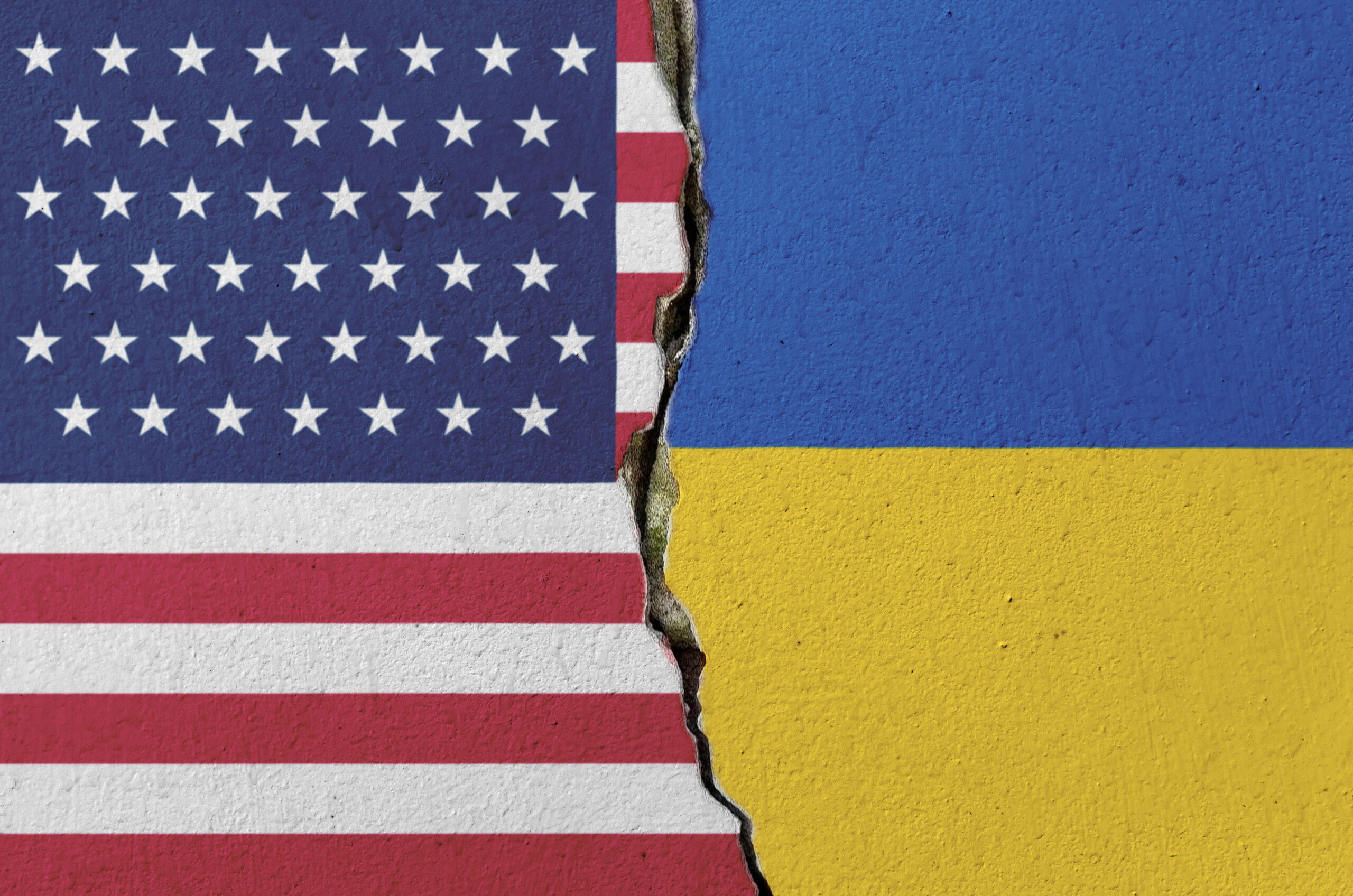
The Democratic party’s electoral victory on November 3 and future control of the Senate and House of Representatives create an opening to form a bipartisan strategy to end Russia’s war against Ukraine. The President and Congress should take heed. If Ukraine policy becomes a test of constitutional power between the executive and legislative branches, this will prolong the war. A divided America invites more Russian aggression and destruction. At this pivotal moment, the President and Congress should match the constitutional strengths of their respective branches to address this national security challenge. Rather than allow institutional division to weaken American power, they should seek to align presidential leadership and congressional authority to shift the calculus of the conflict and advance a durable peace. This should begin with regular, structured consultations between the President and the bipartisan leadership of the key foreign policy, intelligence, and armed services committees in both chambers, bringing together their chairs and ranking members. An Advisory Council on Peace and Security in Ukraine could provide the institutional framework for these consultations, enabling the two branches to develop, execute, and sustain a unified US position on Ukraine. Stay updated As the world watches the Russian invasion of Ukraine unfold, UkraineAlert delivers the best Atlantic Council expert insight and analysis on Ukraine twice a week directly to your inbox. The President’s diplomacy, including recent trilateral talks in Abu Dhabi, has so far failed to persuade Moscow either to halt aggression or to negotiate an end to the war. The shape of the table is wrong. Trump’s envoys Jared Kushner and Steve Witkoff sit between Russia and Ukraine as mediators, often deferring to Russian President Vladimir Putin’s maximalist demands for Ukraine to sacrifice territory, sovereignty, and security. Overall, the missing element in US strategy is the deterrent effect of combining American military, intelligence, economic, and diplomatic power. An Advisory Council could develop a consensus on the purpose and role of military assistance to Ukraine. It could address key issues in negotiations including future security guarantees, when to increase and end sanctions, broader applications of economic incentives, and the conduct of US diplomacy. To end the war, President Trump has little choice but to begin working with the new Congress, which intends to assert its prerogatives to pressure him to provide more support for Ukraine. Congress is preparing to act on different fronts. This will likely include accelerating delivery of $400 million in already-authorized military assistance and sharply restricting presidential discretion to waive or suspend Russia sanctions without congressional approval. There may also be efforts to exercise oversight of proposed commercial transactions with Russia and their impact on US national security. Eurasia Center events Newly empowered Democrats in Congress are already turning up the pressure and have issued a warning to Trump that he should stop his envoys from making concessions to Russia. But the President and Congress can take an alternative and more constructive path of partnership to end the war. The US Constitution provides a framework for this approach to foreign policy, assigning distinct but complementary responsibilities to the executive and legislative branches. The President leads diplomacy and serves as Commander in Chief. In parallel, the House exercises its power of the purse along with legislative and oversight authorities, while the Senate brings its advice-and-consent responsibilities under the Constitution to approving treaties and senior appointments. Congress also has War Powers responsibilities, including authorizing the use of military force and determining conditions under which American forces may be committed to hostilities. These congressional powers need not compete with presidential leadership. The Constitution reflects the original concept of the Senate as an executive council providing advice during negotiations and consent to any resulting agreements. Used constructively, this can reinforce diplomatic leverage, establish clear boundaries against concessions that undermine US and Ukrainian security, and ensure that any negotiated settlement has the resources, legal authority, and bipartisan institutional support necessary to endure. An Advisory Council would demonstrate that the United States has the political will, common sense, and resources to sharply increase the costs of continued Russian aggression. The message to Putin would be unequivocal: America is unified by a common position on ending the war in Ukraine, and ready to apply military, economic, and diplomatic leverage to achieve this goal. The choice is not between presidential leadership and congressional involvement. It is between a divisive, incoherent approach that Russia is exploiting, or a coordinated strategy that puts the full weight of American power behind efforts to end the war. Matthew H. Murray is a former US Deputy Assistant Secretary of Commerce for Europe, the Middle East, and Africa. He teaches international affairs at Columbia University and Georgetown University. Further reading The views expressed in UkraineAlert are solely those of the authors and do not necessarily reflect the views of the Atlantic Council, its staff, or its supporters. The Eurasia Center’s mission is to enhance transatlantic cooperation in promoting stability, democratic values, and prosperity in Eurasia, from Eastern Europe and Turkey in the West to the Caucasus, Russia, and Central Asia in the East. Follow us on social media and support our work Image: DPA/Picture Alliance via Reuters Connect
President and Congress must forge a common US strategy on Ukraine
Full Article
Original Source
Read the full article at Atlanticcouncil →KhanList aggregates and links to publicly available news content. We do not host full articles from third-party sources. Always verify important information with original sources.