
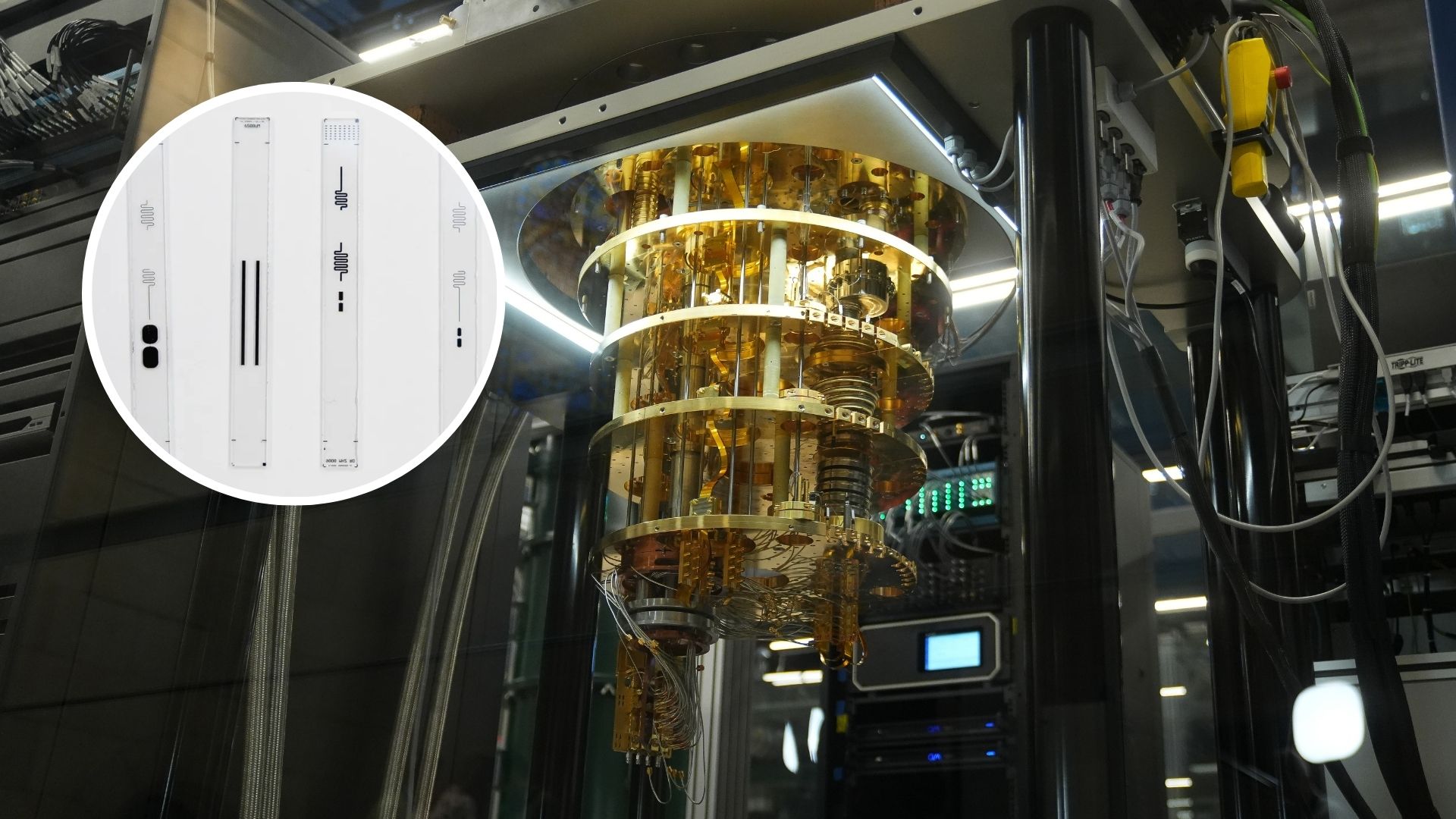
Researchers in the United States are set to start designing practical and self-correcting quantum computers from top to bottom. For this, a Yale-led multidisciplinary team of researchers has been awarded a $37.5 million grant from the U.S. National Science Foundation (NSF). Researchers also highlighted that to be reliable and practical, quantum computers must be able to detect and correct errors in these machines faster than they occur. Challenge for making quantum computing useful “Today, error correction is the main scientific and engineering challenge for making quantum computing useful,” said Professor Robert Schoelkopf, director of the center. “With this project, we want to understand the science and engineering that makes the computers better and easier to build. We’ll come up with new ideas at all levels of the stack to make error correction and fault-tolerant machines much more achievable, efficient, and practical.”It was also revealed that the five-year, $37.5 million effort brings together physicists, engineers, computer scientists and chemists from Yale and partner universities to solve quantum computing’s biggest obstacle – error correction – and chart a path toward machines reliable enough for real-world use. Making advances at every level of the quantum computer The research team will launch a new effort titled the NSF Quantum Leap Challenge Institute for Physics and Engineering of Practical Quantum Error Correction (NSF PRACTIQAL), a center that brings together computer scientists, chemists, physicists, and engineers from numerous universities. NSF PRACTIQAL is focused on making advances at every level of the quantum computer, from the physical qubits and control electronics to the way algorithms are run.“Part of the reason we have not just physicists, but engineers and computer scientists, is so we can understand the physics of the devices and the kind of errors that occur, and then optimize the codes and the algorithms to work with that,” said Schoelkopf, the Sterling Professor of Applied Physics. NSF PRACTIQAL will primarily focus on two challenges in quantum computing. One is identifying key issues that have hindered the scaling of error-corrected machines and finding ways to make quantum error correction more practical and efficient. Second, the researchers will explore the uses of specially designed qubits known as “erasure qubits.” Pioneered by members of the PRACTIQAL team, these qubits act as flags that signal exactly where and when an error has occurred, according to a press release. The team also pointed out that much of the work in this area has been done on very small machines optimized for error correction. The PRACTIQAL group aims to shorten the route to large-scale, error corrected quantum computers. “Because we’re academics, we’re not going to build a giant system, but we’ll prove our ideas and build a pathway towards how you could build a much bigger system,” said Michael Hatridge, co-director of PRACTIQAL and associate professor of applied physics. “That’s why we have industrial partners. We also have an external advisory board helping us not just do isolated experiments, but to stay relevant to the broader community.”By the end of the ambitious five-year project, the researchers expect to have developed a path toward building practical error-correcting computers on an industrial scale. “We’re looking forward to it,” Hatridge said. “PRACTIQAL is big, it’s complicated, and it has a lot of moving parts, but we’re very excited to do it.”
Practical, self-correcting quantum computers could soon be developed in US with new funding
Full Article
Original Source
Read the full article at Interestingengineering →KhanList aggregates and links to publicly available news content. We do not host full articles from third-party sources. Always verify important information with original sources.