
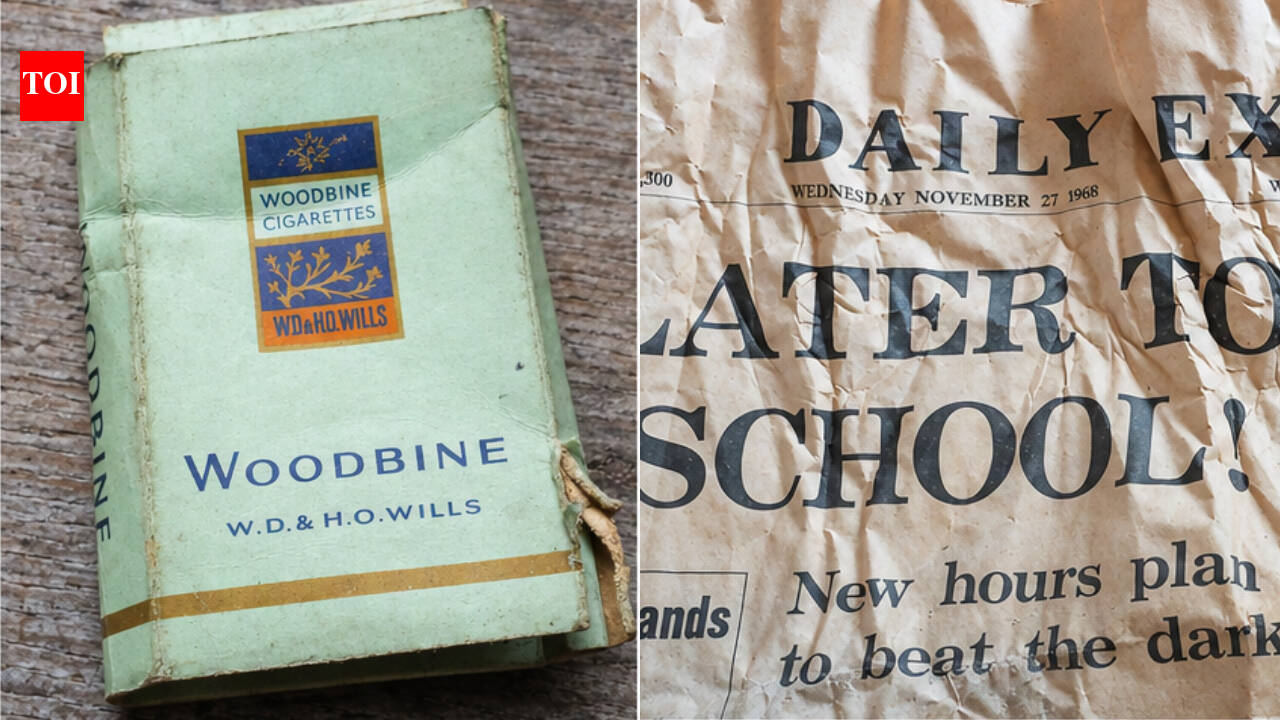
Restorers discovered a mysterious three-arrow shield carving hidden behind ornate Oak Room panelling at Tamworth Castle.A forgotten cigarette packet, a newspaper frozen in time and fragments of an old tea chest are offering an unexpected glimpse into everyday life at one of England’s historic castles. Hidden for decades behind ceilings and skirting boards, the ordinary objects are emerging as specialist restorers peel back layers of alterations at Tamworth Castle, revealing stories left behind by generations of people who lived and worked there.According to Tamworth Borough Council, the discoveries were made during a £1.9 million conservation programme, the largest restoration project in the castle’s modern history. Now entering its second phase, the work focuses on the South Wing as contractors address essential repairs while documenting the building’s hidden history.Everyday objects become historical cluesAmong the latest discoveries is a pale green Woodbine cigarette packet found above a ceiling on the southern side of the castle. Believed to date from the 1950s or early 1960s, the packaging retains part of its original foil lining and carries the manufacturer's branding and the slogan 'Wills for Quality'.Tamworth Borough Council notes that Woodbine was introduced in 1888 and became a familiar name in British social history, particularly during the first half of the 20th century. The packet's location suggests a tradesperson may have accidentally left it behind during an earlier repair or renovation.Another find emerged from behind the skirting board in Cooke's Bedroom. It was part of the Daily Express dated Wednesday, November 27, 1968. The newspaper's headline, 'Later to School', alongside reports about cigarette manufacturers and pricing, offers a snapshot of British life nearly six decades ago.In the Georgian Room, restorers also uncovered timber fragments from what appears to have been an old tea chest. Reused within the ceiling structure, the pieces still carry traces of stencilled lettering, including the words 'Paris' and 'Grand'. According to the council, the discovery demonstrates how materials were repurposed rather than discarded during earlier building work.A much older history beneath the surfacesThese recent finds add to a growing collection of discoveries made during the restoration. In September 2026, contractors working in the Townshend Room gift shop uncovered an intact lead-lined sink concealed inside a deep windowsill.Tamworth Borough Council believes the feature dates from the 18th or 19th century and indicates that the room may once have served as a pantry or domestic service area. Its lead lining was shaped over a wooden structure, with drainage holes individually punched into the metal. The sink will be protected and concealed again as the room is reinstated.Earlier archaeological investigations beneath the modern kitchen area also revealed medieval pottery and animal bones. The ceramic fragments, believed to date from the 13th to 15th centuries, include green-glazed pottery and cooking vessel remains. Cattle, sheep, and game bird bones with butchery marks reveal the castle's former residents' diet.A sheep toe bone with a drilled hole was particularly intriguing, as it may have been reused as a toggle.Meanwhile, removing sections of ornate panelling in the Oak Room exposed a mysterious carving of three arrows inside a shield. Its purpose remains uncertain, with possibilities ranging from a craftsman's mark to a decorative or heraldic symbol.Preserving a thousand years of historyThe conservation programme is supported by £1,716,238 from Arts Council England's Museum Estate and Development Fund (MEND), alongside £190,695 from Tamworth Borough Council.According to the council, future work will include stabilising the North Wing's bay windows, walls and historic openings, alongside essential repairs to the motte and surrounding slopes.Dating back almost 1,000 years, Tamworth Castle has evolved from an Anglo-Saxon centre of power into a Norman fortress, medieval stronghold, historic residence and public museum.Tamworth Borough Council's Caring for the Castle programme aims to safeguard the nationally significant building for future generations while allowing visitors to experience its continuing conservation journey.Although scaffolding, temporary closures and changing access arrangements are expected, the council is keeping the castle open wherever possible. As restoration progresses, the discoveries demonstrate that preserving a historic building is not simply about repairing its walls, but also uncovering the everyday lives embedded within them.Images Courtesy: Tamworth Borough Council
£1.9m Tamworth Castle restoration reveals 1960s cigarette pack, old newspaper
Full Article
Original Source
Read the full article at Timesofindia →KhanList aggregates and links to publicly available news content. We do not host full articles from third-party sources. Always verify important information with original sources.