
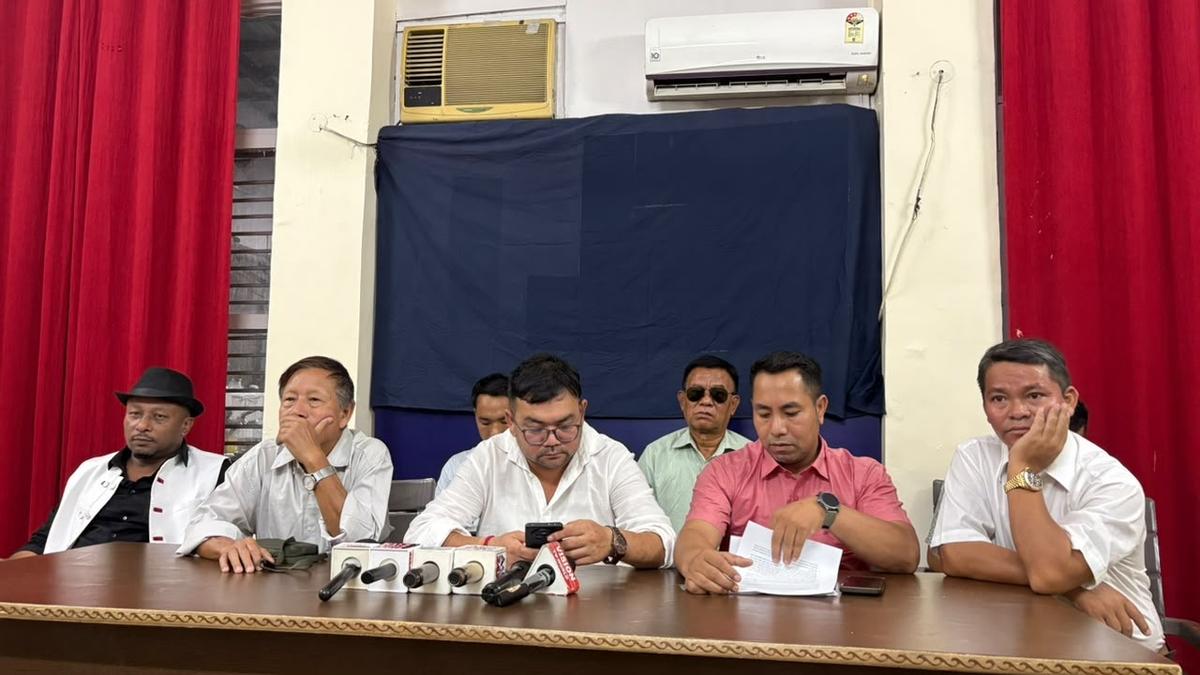
Leaders of a 14-member CSO platform, who have met Union Minister Kiren Rijiju, BJP president Nitin Nabin, and MHA officials in Delhi over the past few days, said they want the government to postpone Census-related activities and initiate a dialogue process on the implementation of a National Register of Citizens (NRC)-type mechanism in Manipur. A delegation of Manipur civil society organisations (CSOs) has urged the Union Ministry of Home Affairs (MHA) to convene tripartite talks involving the Union government, the Manipur government, and representatives of different communities before proceeding with the Census, arguing that citizenship-related concerns must be addressed first to ensure the exercise is accepted across the State.Leaders of a 14-member CSO platform, who have met Union Minister Kiren Rijiju, BJP president Nitin Nabin, and MHA officials in Delhi over the past few days, said they want the government to postpone Census-related activities and initiate a dialogue process on the implementation of a National Register of Citizens (NRC)-type mechanism in Manipur. While they declined to disclose details of those discussions, they said they had been assured that their concerns were being considered.“We have requested the Government of India to organise a table where all stakeholders can sit together and discuss the issue,” delegation member Shanta Nahakpam said on Tuesday. “In the current situation, only the Centre can bring different communities together.”Migration, citizenship concernsThe demand for tripartite talks comes amid opposition to the Census process by several Meitei organisations and a section of the Naga community in Manipur. These groups argue that carrying out the Census without first addressing concerns over illegal immigration and citizenship could affect future political representation, particularly in the context of delimitation exercises.The delegation maintained that any citizenship verification exercise should use 1951 as the base year, arguing that the first post-Independence Census in Manipur was built on records prepared before the State’s merger with the Indian Union in 1949. According to them, pre-merger electoral rolls, village records, and population data provide the most reliable basis for identifying “original Indian citizens” in the State.Delegation members claimed that demographic changes recorded in Census data over several decades have raised questions about population growth and the proliferation of villages in some areas. Referring to Census figures from 1961 to 2011, they alleged that while some districts recorded a decline in the number of villages, others witnessed sharp increase. Such changes warrant scrutiny, they said.Documentary evidence neededThe organisations linked these concerns to migration from neighbouring Myanmar, citing decades of cross-border movement. They argued that after Manipur’s traditional permit system was abolished in the early years after the merger with the Indian union, there was no effective mechanism to document who entered the State and settled there.Delegation members stressed that their demand was not directed against any particular community. Rather, they said, any future verification process should allow every resident an opportunity to establish citizenship through documentary evidence.“This is not about targeting any tribe or community. The process should give every individual the chance to prove citizenship through records and due process,” said Ahao Kom, another member.Census faces oppositionThe groups also pointed to ongoing ethnic tensions and large-scale displacement in the State, arguing that current conditions are not conducive to a credible Census exercise. They contended that internally displaced persons, restrictions on movement between some hill and valley areas, and continuing mistrust between communities could undermine public confidence in the enumeration process.According to the delegation, several district-level Census training programmes for enumerators have already faced opposition from local organisations who even locked up their offices and registered protests. This reflects widespread apprehension among sections of the population about conducting the exercise before resolving citizenship-related issues, they said.The first phase of Population Census 2027, the House Listing and Housing Census (HLO), is scheduled to take place in Manipur from September 1 to 30, but training of enumerators, mostly government school teachers, has been halted amid protests by civil society groups. The self-enumeration portal, due to be launched on August 17, is also yet to become operational, with a State government official saying a decision from the MHA is awaited. Published - August 25, 2026 10:01 pm IST
Postpone Census to first hold tripartite talks on NRC, citizenship issues: Manipur civil society groups
Full Article
Original Source
Read the full article at Thehindu →KhanList aggregates and links to publicly available news content. We do not host full articles from third-party sources. Always verify important information with original sources.