
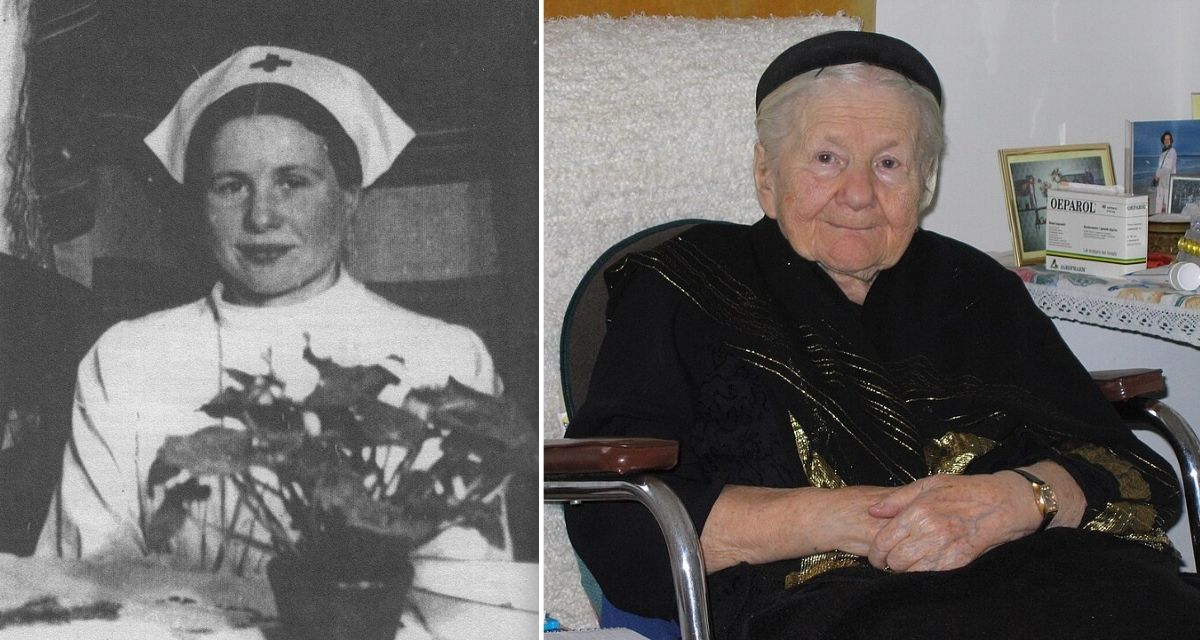
Irena Sendler’s father taught her that if someone is drowning, you help them, regardless of their religion or nationality. That upbringing led the Polish Catholic social worker to risk her own life to help save 2,500 Jewish babies and children from the clutches of Nazi terror. Sendler was a 29-year-old social worker in Warsaw when World War II began in 1939. The following year, the Nazis forced Warsaw’s Jews into the ghetto, and Sendler began using her position and connections to smuggle food and money to them. She joined Zegota, the underground, state-sponsored Council for Aid to Jews, which formed in 1942. Zegota helped hide Polish Jews from Hitler’s regime, in addition to providing them with food, financial assistance, forged documents, and medical care. As head of Zegota’s children’s section in 1943, Sendler focused her efforts on getting babies and children to safety. How she got into the Warsaw ghetto to help Between 1940 and 1943, most of the Jews in the Warsaw ghetto were killed. Tens of thousands died of starvation and disease in the dirty, overcrowded conditions. Around 265,000 were sent to the Treblinka extermination camp in 1942. An uprising of resistors resulted in the destruction of what remained of the ghetto and the deportation of whoever was left in May of 1943. In the midst of all of that chaos and killing, Irena Sendler and her companions focused on smuggling babies and children out of the Warsaw ghetto. Sendler entered the ghetto to help by obtaining a pass to monitor health conditions. “German authorities were afraid of being exposed to deadly diseases like typhus and tuberculosis,” historian Dr. Ewa Wampuszyc shares in a video interview. “These were diseases that were actually caused by the ghettos that they themselves had created.” Ironically, that fear allowed Zegota helpers like Sendler to get into the highly guarded ghetto prison. The Nazis thought Sendler was helping control and monitor disease epidemics. Really, she was providing aid to the Jews in whatever way she could, even creating a network of other workers with passes to help. Smuggling out the Jewish children Sendler connected with Jewish welfare activists in the ghetto to identify children and families to help, explains Dr. Wampuszyc. However, families did not always agree on whether to send their children with Sendler and her helpers. In hindsight, it’s clear that Sendler’s smuggling network was their best chance for survival. In real time, however, those decisions were brutal. “When my friend and I were going to the ghetto to pick up those children, there were hellish scenes,” Sendler shared in an interview later in life. “A mother wanted her child to go, while the father did not. A grandmother wanted to hand over a child; a mama didn’t. They asked for a guarantee. What kind of a guarantee could I give them? I could not even guarantee that I would get past the sentry. So when I went to a Jewish family for a child, I could not guarantee that the child would live.” Sendler and her companions smuggled kids out in suitcases, sacks, ambulances, and coffins. One baby escaped the ghetto in a toolbox. The children were often hidden in plain sight in convents, orphanages, or with foster families under Polish children’s names. Sendler kept meticulous records in hopes the children might reunite with their families. The Jewish and Polish names of each child and their location were written on strips of paper, stored in milk jars, and buried in the backyard of one of her co-conspirators for safekeeping. She endured interrogation, torture, and a death sentence, but never caved It would be remarkable for Sendler to have done all of this right under the Nazis’ noses and never get caught. What’s even more remarkable is what she did when she did get caught. On October 20, 1943, the Gestapo arrested Sendler at her home after beating another woman into revealing Sendler’s name. They then took her to Pawiak prison, where they broke her legs and feet. “They beat me. Tortured me. Hence, you know, my bad legs,” she shared. “And very quickly, I got a death sentence.” Yet through it all, Sendler never revealed the children’s whereabouts. Thankfully, Zegota managed to bribe officials into releasing her before her execution. Authorities knocked her unconscious and left her by the roadside. After the war, Sendler handed the jars containing 2,500 children’s names and whereabouts over to Jewish representatives. Tragically, they found that nearly all of the children’s families had perished. She didn’t want to be called a hero Sendler was objectively a hero by every measure, but she flatly rejected the title. “Every child saved with my help is justification of my existence on this Earth, and not a title to glory,” she wrote in a 2007 letter to the Polish Senate. “The term ‘hero’ irritates me greatly,” she said in an interview. “The opposite is true. I continue to have pangs of conscience that I did so little.” Sendler died in 2008 at the age of 98. The following year, her story was made into a Hallmark television film, The Courageous Heart of Irena Sendler, with Anna Paquin starring as Sendler.
Polish woman who smuggled 2,500 Jewish children to safety in toolboxes, suitcases, and coffins rejected WWII ‘hero’ label
Full Article
Original Source
Read the full article at Upworthy →KhanList aggregates and links to publicly available news content. We do not host full articles from third-party sources. Always verify important information with original sources.