
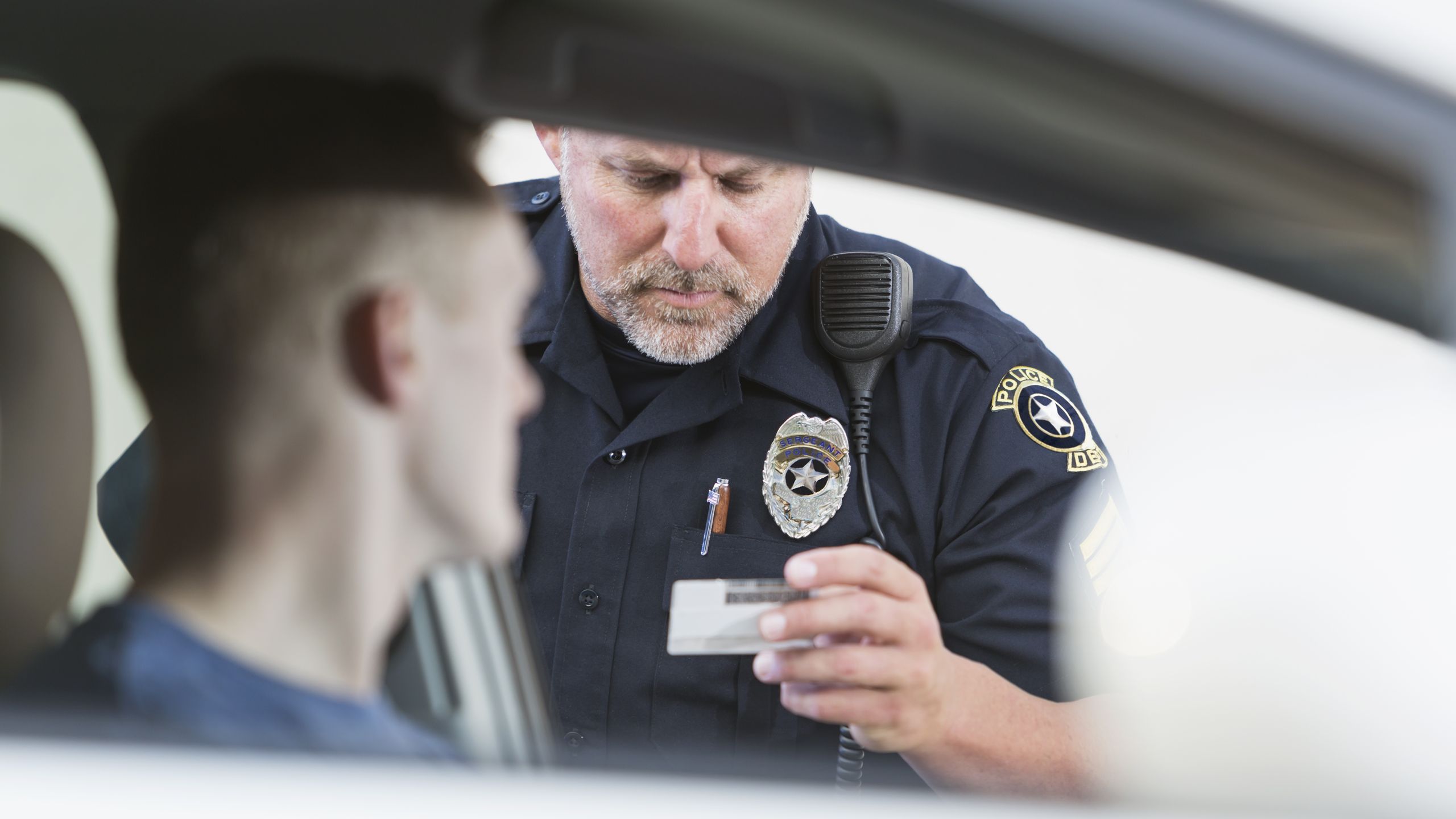
(Image credit: Getty Images) Imagine driving across the country, enjoying a road trip and minding your own business, only to get pulled over because AI decided your route looked suspicious. That's what one Virginia woman says happened to her, and privacy advocates warn that similar encounters could become more common.According to a new report released on Monday from the American Civil Liberties Union, police are using automated license plate readers and AI-powered analysis more often to identify drivers based on their travel patterns, even when there's no evidence they've committed a crime.The technology can piece together where a vehicle has traveled, how often it visits certain locations and whether its movements fit patterns investigators consider suspicious.While license plate readers have been used for years to identify stolen vehicles and help solve crimes, AI is making it possible to analyze much larger collections of driving data. The concern is that an otherwise ordinary trip could become grounds for additional police scrutiny.A road trip that raised an AI red flag (Image credit: Shutterstock)In September 2025, Grace Knowles was driving from northern Virginia to Florida when she was pulled over by an officer who claimed she'd spent too much time in the left lane.But according to her account to the ACLU, the officer seemed more interested in her travel history than her driving. He asked where she'd been, why she was traveling and whether she could prove she'd recently visited New Orleans. Knowles eventually showed him a pamphlet from a museum she'd visited.The officer then identified himself as an FBI special agent investigating human and drug trafficking. He told Knowles that her license plate had been flagged because of suspicious travel patterns.Sign up to the Tom's AI Guide weekly newsletter summing up all the biggest AI news you need to know. Plus, analysis from our AI editors and tips on how to use the latest AI tools!He even invited her to look at the computer in his vehicle. On the screen was a map showing places she'd traveled, with photographs of her license plate attached to individual locations. Knowles said the officer had questioned her visit to New Orleans because the system hadn't recorded her car there.That's one of the problems with relying on AI technology for this type of work. Police can see where cameras have spotted a car, but not necessarily everywhere it's been. And when there are gaps in the data, investigators may draw the wrong conclusions.The ACLU hasn't identified the software used during Knowles' stop, so it's unclear exactly how her driving patterns were flagged.How AI can track your driving habits (Image credit: Shutterstock)Automated license plate readers, or ALPRs, are cameras installed along roads, highways and intersections. Some are mounted on police cars. Every time a vehicle passes, the camera records its license plate, location and time, creating a record that police can use to track where it's been.Companies like Flock Safety supply these systems to law enforcement, and the technology is becoming more sophisticated. An August investigation by WIRED found that Flock's newer AI-powered software can spot recurring travel patterns, identify cars that frequently appear together and connect license plate records with other investigative information.That means police aren't limited to searching for cars already linked to a crime. They can also look for unusual driving patterns and use those findings to identify people they want to investigate.Someone who regularly drives between two cities, for example, could attract attention simply because of their route, even if they're just commuting to work or visiting family.A Texas driver challenged his stop — and won (Image credit: Ford)Knowles isn't the only driver who's been pulled over after surveillance technology flagged a trip as suspicious. On September 28, a federal jury found that Bexar County, Texas, had violated the constitutional rights of Alek Schott, who was stopped while driving home from a business trip in March 2022.According to the Institute for Justice, which represented Schott, his drive from the Houston area toward the border and back had caught the attention of a police surveillance system.A deputy pulled him over, claiming he'd drifted out of his lane. But dashcam footage showed otherwise. Schott was questioned, detained and had his truck searched, even though police ultimately found nothing illegal.The jury awarded him $76 (one dollar for every minute he was detained). The jury found that the county's traffic stop practices had violated Schott's rights. His case shows how quickly a trip flagged as suspicious can turn into a police encounter, even when the driver hasn't done anything wrong.Can you stop AI from tracking your car? (Image credit: Shutterstock)Unfortunately, there's no easy way to opt out of this kind of surveillance. Roadside cameras capture license plates as cars pass, so turning off your phone's location services or using a VPN won't make a difference.Drivers also have little control over what happens to that information once it's collected. How long police can keep license plate records and who they can share them with depends on where you live.The ACLU has challenged the use of these systems, warning that tracking a car's movements over time can reveal surprisingly personal details about someone's life.If you're curious whether police in your area use license plate cameras, the Electronic Frontier Foundation's Atlas of Surveillance lets you search for surveillance technology used by local law enforcement. Some departments also publish their policies on how long they store the data and who can access it, although not every agency or technology is included in the database.The takeawayAI is giving police a much clearer picture of where people drive, even when they're not suspected of a crime. Instead of looking for a specific vehicle, investigators can now search months or even years of license plate records to spot travel patterns they consider suspicious.Police say these tools help them investigate crimes, but privacy advocates worry about what happens when an innocent driver's routine starts to look suspicious to an algorithm.As the ACLU points out, turning off your phone's location services won't stop roadside cameras from tracking your car. And depending on how police interpret that information, an ordinary drive could be enough to get you pulled over.Follow Tom's Guide on Google News and add us as a preferred source to get our up-to-date news, analysis, and reviews in your feeds. Subscribe to Tom's Guide on YouTube and follow us on TikTok. More from Tom's GuideTurn your PDFs into audiobooks with ChatGPT — here's the simple trickAI researcher warns cyberattacks could take down power, banking and water within a year — here's how to prepare An OpenAI employee allegedly used AI to spy on his own company — then AI helped catch him Amanda Caswell is the AI Editor at Tom's Guide and one of today’s leading voices in AI and technology. A celebrated contributor to various news outlets, her sharp insights and relatable storytelling have earned her a loyal readership. Amanda’s work has been recognized with prestigious honors, including outstanding contribution to media.Known for her ability to bring clarity to even the most complex topics, Amanda seamlessly blends innovation and creativity, inspiring readers to embrace the power of AI and emerging technologies. As a certified prompt engineer, she continues to push the boundaries of how humans and AI can work together.Beyond her journalism career, Amanda is a long-distance runner and mom of three. She lives in New Jersey.
Police are using AI to track where you drive — and your next road trip could raise a red flag
Full Article
Original Source
Read the full article at Tomsguide →KhanList aggregates and links to publicly available news content. We do not host full articles from third-party sources. Always verify important information with original sources.