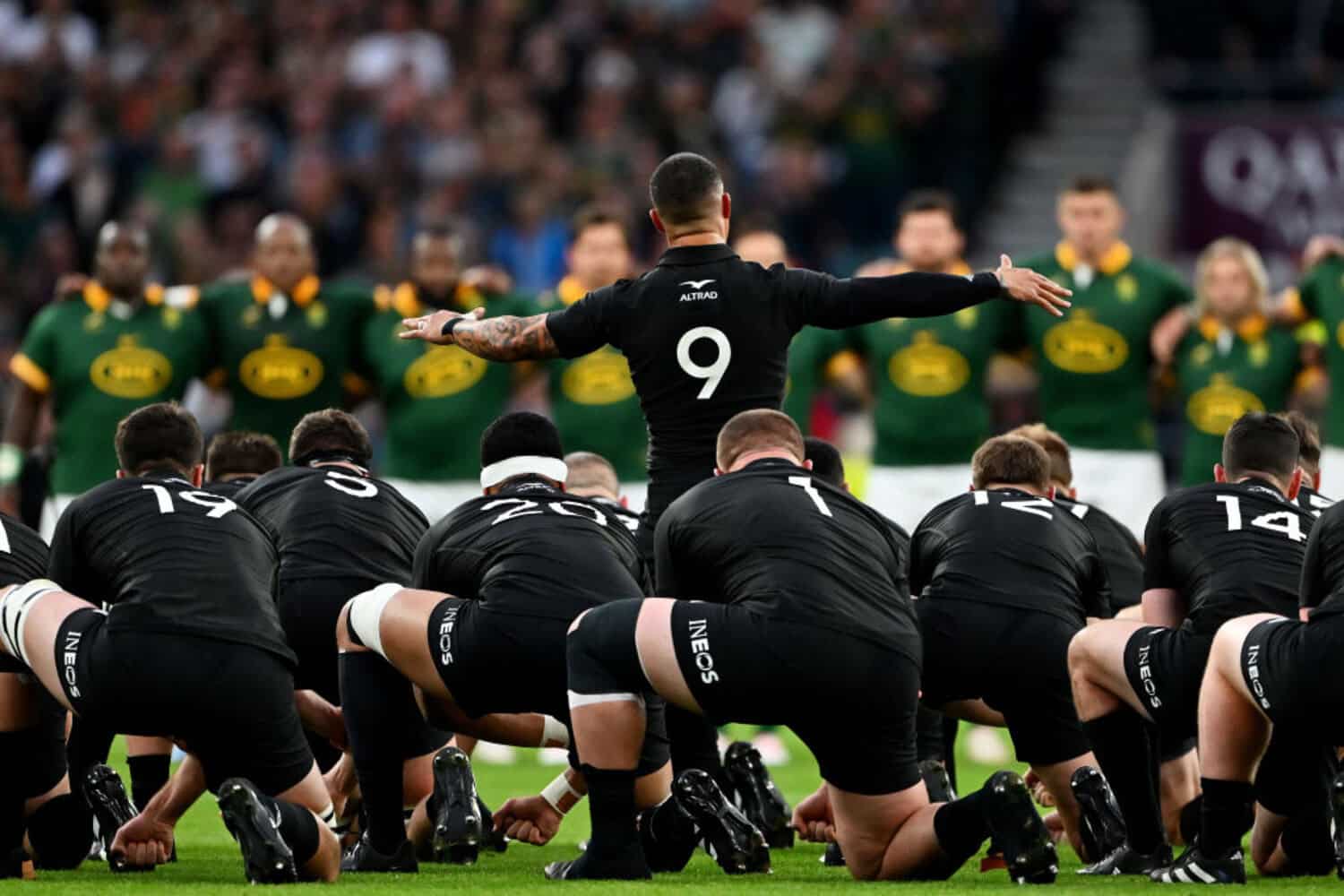
The South African and New Zealand rugby teams clash in four Tests in the coming weeks. Springbok coach Rassie Erasmus has urged local rugby fans to respect the haka by remaining quiet when the All Blacks rugby team perform their pre-game ritual at Ellis Park on Saturday. The teams clash in the first of four Tests this weekend in what has been called Rugby’s Greatest Rivalry. In the recent past South African rugby fans have responded to the haka with their chanting of “olé, olé, olé”, thus drowning out the famous call to battle by the New Zealanders. ‘Something special’ In the buildup to the first Test, Erasmus appealed this week to fans to show the All Blacks and their haka the respect they deserve. “I’d love it if the people at Ellis Park create the same atmosphere as that which the people did in Cape Town (when the All Blacks faced the Stormers in their tour opener two Fridays ago). “The haka was heard 100%, which makes it something special.” There was also plenty respect shown at Kings Park and Loftus Versfeld in the matches against the Sharks and Bulls. In Durban last week, the All Blacks’ haka was answered by a solo haka of now Sharks player Ma’a Nonu, who played over a 100 Tests in the New Zealand jersey. History of the haka The New Zealand Native rugby team first performed a version of the modern-day haka while on tour of Britain and Australia in 1888 and 1889. In 1905, when the All Blacks name was used for the first time on tour of the British Isles, the haka known as Ka Mate was first performed. For most of the 20th century, the haka was only performed during overseas matches. That later changed. There are currently two hakas that the All Blacks perform – Ka Mate, composed by a Maori war chief in the early 19th century, and Kapa O Pango, introduced in 2005.
Please respect the haka, asks Bok boss Rassie
Full Article
Original Source
Read the full article at Citizen →KhanList aggregates and links to publicly available news content. We do not host full articles from third-party sources. Always verify important information with original sources.