
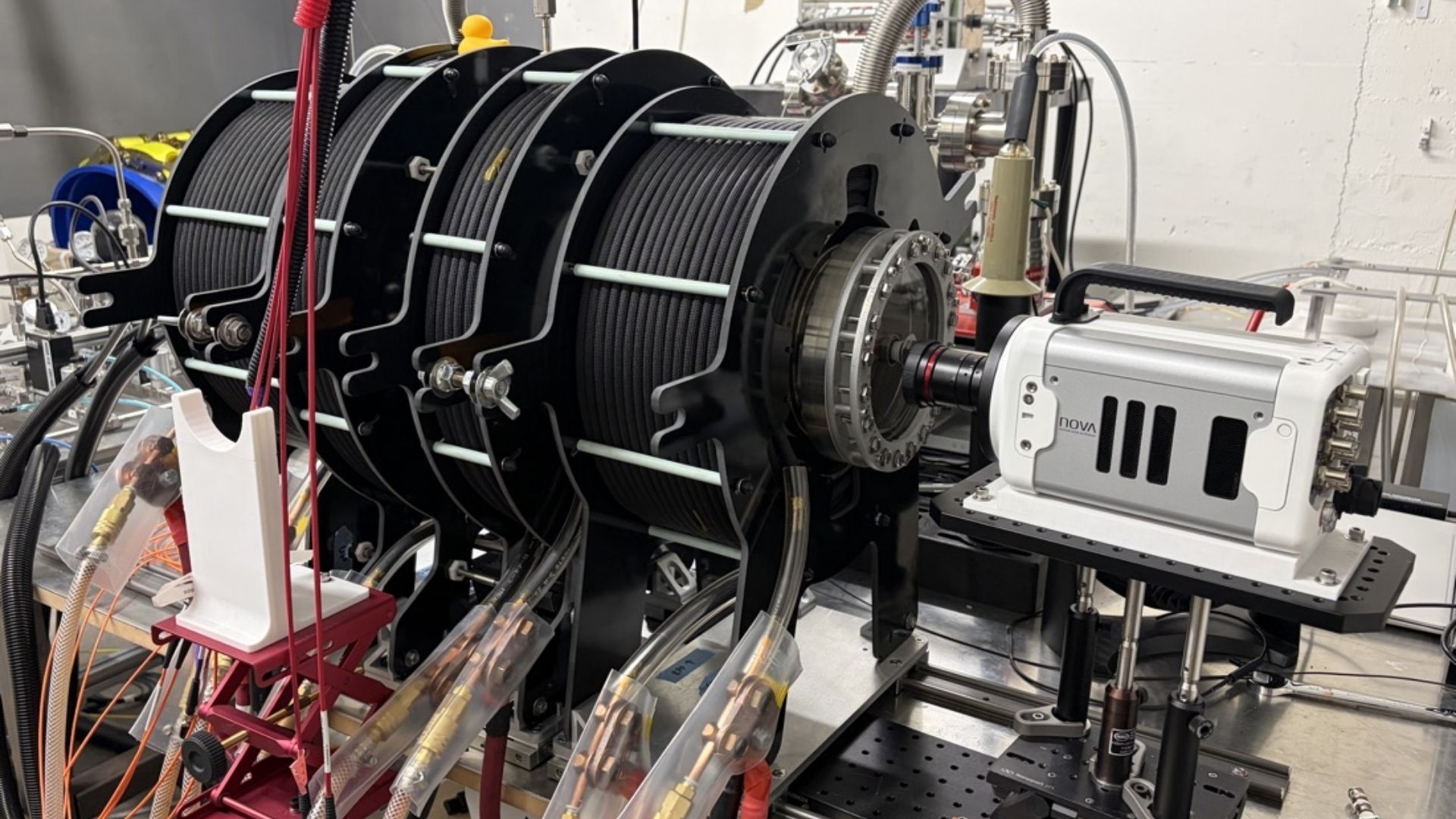
A new approach to plasma physics may solve two of the biggest engineering hurdles facing commercial nuclear fusion. Marathon Fusion announced that it has successfully separated both hydrogen and lithium isotopes using a specialized plasma centrifuge. The achievement proves that a single electromagnetic method can handle both exhaust fuel recycling and raw material enrichment for future fusion power plants. “By enabling selective tritium pumping, their technology can improve fusion power plant performance while dramatically reducing the required tritium inventory,” said Dennis Whyte, an MIT Professor of Nuclear Science & Engineering. Major engineering bottlenecks Commercial fusion plants aim to generate energy by fusing two forms of heavy hydrogen, deuterium and tritium, inside a magnetic chamber. However, the fuel cycle suffers from two major supply and engineering bottlenecks. First, reactors burn only a small fraction of their tritium during each cycle, creating a large stream of unburned radioactive exhaust that operators must quickly clean and recover. Second, tritium does not occur naturally in meaningful quantities, meaning reactors must breed their own fuel by bombarding lithium-bearing blankets with neutrons. Conventional gas centrifuges use spinning mechanical rotors to push heavier atoms outward. Here it must be noted that light gases like hydrogen travel at high thermal velocities. Therefore, mechanical rotors must spin at extreme speeds to separate them. Physical stress limits how fast metal or carbon-fiber rotors can spin without tearing apart. Overcoming physical barriers The plasma centrifuge overcomes these physical barriers. When electric and magnetic forces cross inside the chamber, they drive charged plasma particles into high-speed rotation at supersonic velocities. Marathon Fusion operates its device in a partially ionized state, where only a fraction of the gas carries an electric charge. These charged particles collide with neutral atoms, dragging the entire gas mixture into rapid rotation. The centrifugal force throws the heavier isotopes outward toward the vessel wall, while lighter isotopes stay along the central core. This design avoids the extreme heat problems that damaged earlier plasma separators. When applied to reactor exhaust lines, the device performs a task called differential pumping. It pulls heavier deuterium and tritium away from helium waste and lighter protium impurities before the gas enters downstream treatment plants. This direct separation reduces the total volume of fuel processing equipment by more than ninety percent, while significantly shrinking the amount of hazardous radioactive tritium that a plant must keep on site. The same mechanism processes lithium for reactor coolants and breeding blankets. Liquid molten salts such as FLiBe require lithium that has been enriched in lithium-6 to breed fresh tritium, or lithium-7 to cool fission systems. Non-chemical alternative Most of the global supply of enriched lithium currently relies on an older chemical process in China and Russia that uses large volumes of toxic mercury. The plasma centrifuge offers a dry, non-chemical alternative that eliminates mercury handling entirely. Experimental measurements from hardware test runs matched the predictions of the company’s magnetohydrodynamic computer models. Backed by funding from the US Department of Energy through the ARPA-E VISION OPEN program, engineers are now developing multi-stage configurations of the system. The team plans to build a commercial pilot facility to supply enriched isotopes for future grid-scale fusion installations. Get the latest in engineering, tech, space & science - delivered daily to your inbox.An active and versatile journalist and news editor. He has covered regular and breaking news for several leading publications and news media, including The Hindu, Economic Times, Tomorrow Makers, and many more. Aman holds expertise in politics, travel, and tech news, especially in AI, advanced algorithms, and blockchain, with a strong curiosity about all things that fall under science and tech.
Plasma ‘breakthrough’ could advance nuclear fusion reactor isotope enrichment
Full Article
Original Source
Read the full article at Interestingengineering →KhanList aggregates and links to publicly available news content. We do not host full articles from third-party sources. Always verify important information with original sources.