
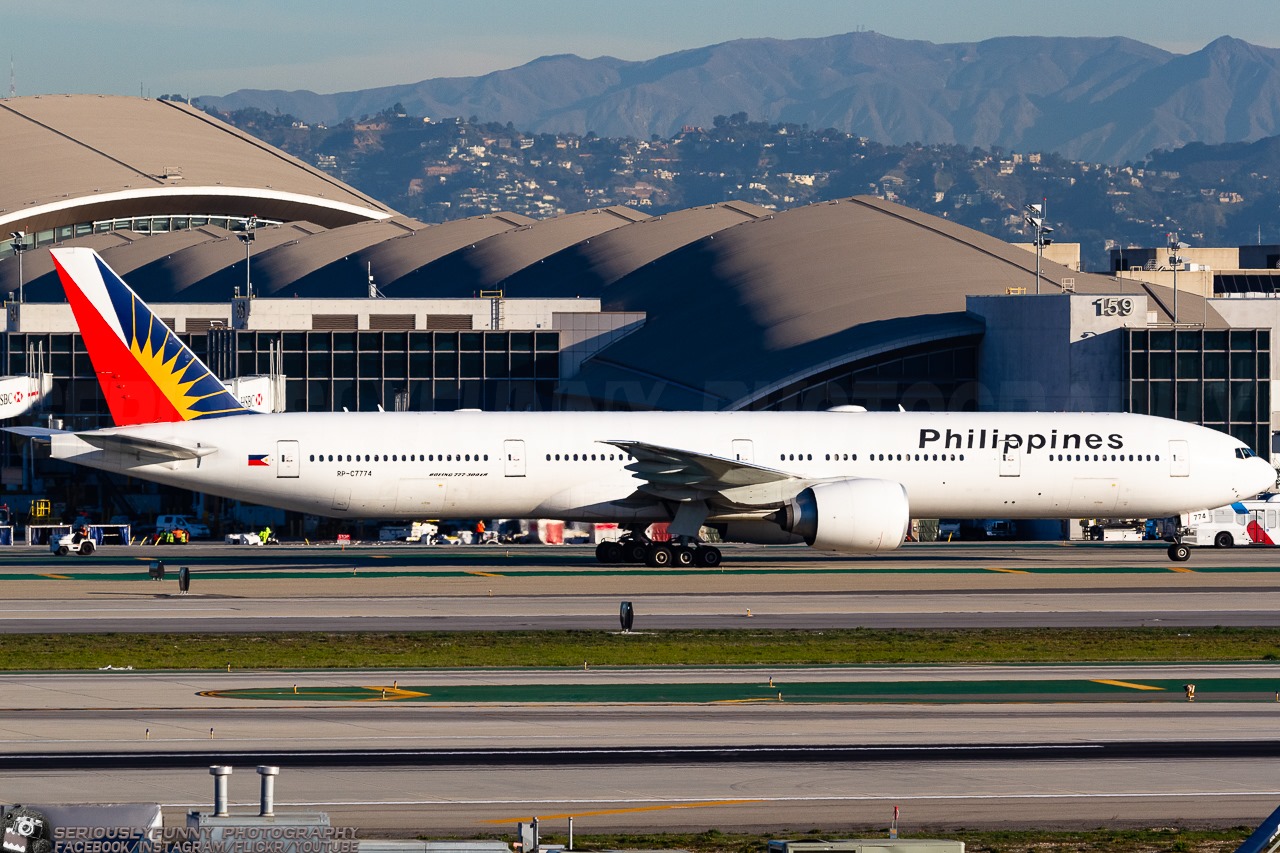
Philippine Airlines wants more than $5.7 million knocked off its U.S. tax bill and it’s gone to tax court. Their best case is that the Philippines exempted Delta and United passenger revenue from tax, and U.S. law requirings a corresponding exemption here. The IRS is denying it though because the Philippines taxes cargo. That fight comes as United expands in Manila, Delta prepares to launch its own nonstop service, and Philippine Airlines adds Chicago while preparing to join oneworld alongside American and Alaska. The same airlines have been arguing over getting the same treatment Manila’s airport. Now Philippine Airlines wants the same reciprocal tax treatment provided for under U.S. law. The IRS says Philippine Airlines owes $7,112,500 in additional tax for 2019 and 2020: $4,834,948 for the first year and $2,277,552 for the second. The rules have three parts: U.S. law generally imposes a 4% tax on a foreign airline’s U.S.-source gross transportation revenue. The U.S.-Philippines tax treaty limits that tax, so the IRS used a 1.5% rate to calculate the bill. However, Section 883 of the tax code provides an exemption for qualifying foreign airlines when their home country grants an “equivalent exemption” to U.S. companies. PAL’s case turns on that last provision. The Philippines changed its law in 2013 to allow reciprocal exemptions for foreign airlines’ passenger and excess baggage revenue. Its tax authority issued a ruling confirming Delta’s exemption in 2014 and United’s in 2015. The court filing includes a June 2025 certification from the Philippine tax commissioner confirming that United received these exemptions for 2015 through 2022, and Delta for 2014 through 2021. Those periods cover both years in this case. Delta and United were the only U.S. airlines operating international flights into and out of the Philippines during the years at issue. The problem is how Treasury chooses to group the income. Its regulations put passenger and cargo transportation in the same category (even though the law does not). To qualify, the foreign country must exempt all the income in that category. The Philippines exempts passenger and excess baggage revenue but still taxes cargo, so the IRS denies the passenger exemption, too. If the Philippines exempts passenger revenue earned by U.S. airlines, the U.S. should exempt the corresponding passenger revenue earned by Philippine Airlines and tax cargo. The reciprocal passenger exemption was being granted to U.S. airlines, which is the objective of U.S. law. Treasury’s rules arbitrarily lump different revenue sources together. The question before the court is whether they can choose to do that. The airline also argues that: Treasury no longer gets deference for how it chooses to interpret U.S. law on its own under Loper Bright. Treasury didn’t meaningfully address industry comments warning about this problem before finalizing its rule in 2003 so wouldn’t get deference because of Administrative Procedures Act failings anyway. Meanwhile, the competitive stakes between these airlines are growing. United added a second daily San Francisco–Manila flight in October 2025. Delta has announced Los Angeles–Manila service beginning March 28, 2027, initially three times weekly and increasing to daily June 7. Philippine Airlines is selling three weekly nonstop Manila–Chicago flights starting November 9, 2026, and has announced that it will join oneworld. And U.S. law meant to create a level playing field is now doing the opposite. The U.S. complained about access to Manila airport, but now is imposing its own protectionist regime by taxing foreign carriers more heavily than their government taxes U.S. airlines. Back in March, Delta asked the Department of Transportation to hold up PAL’s Chicago approval until it received written assurances of commercially viable slots and airport access in Manila. Delta wanted PAL’s U.S. expansion tied to its own ability to compete in the Philippines. Its Los Angeles route has since been formally announced. United had previously pushed back against PAL’s expansion while seeking better Manila slots. That dispute also complicated American’s partnership with Philippine Airlines. Clearly though the U.S. should honor its tax law and treaty obligations regardless. And I don’t think we should respond to Philippine protectionism with protectionism of our own anyway. Blocking a Philippine Airlines flight taxes U.S. consumers for the benefit of narrow equity interests in a U.S. airline. It reduces competition, raises fares and eliminates flight choices. Topics on this page
Philippine Airlines Wants $5.7 Million Off Its IRS Bill—Pointing To Delta And United’s Tax Breaks
Full Article
Original Source
Read the full article at Viewfromthewing →KhanList aggregates and links to publicly available news content. We do not host full articles from third-party sources. Always verify important information with original sources.