
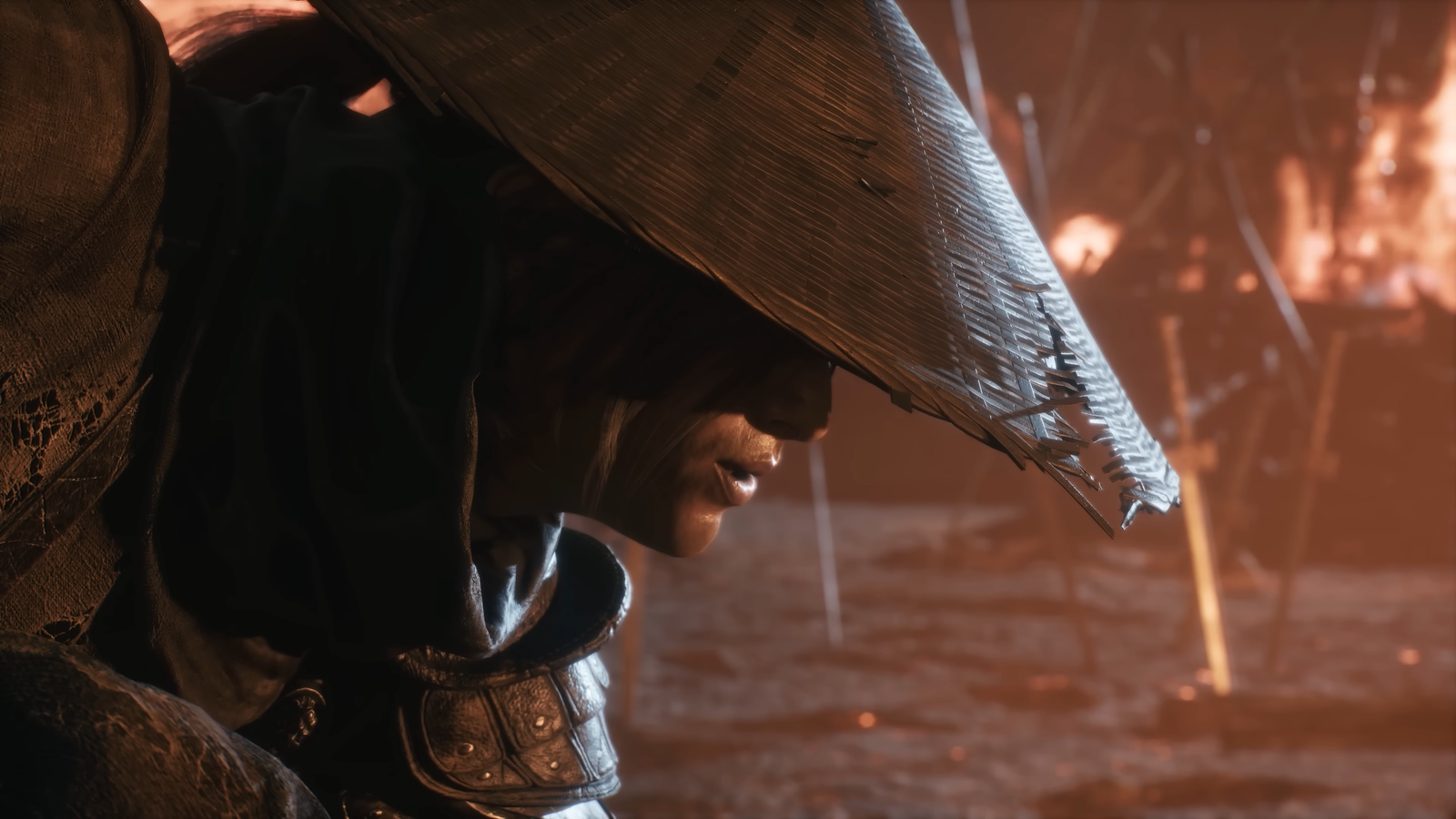
Phantom Blade Zero Director Talks John Wick, Jackie Chan, And His Biggest Conundrum Published Oct 9, 2026, 10:30 AM EDT Sam Woods is TheGamer’s Senior Reporter. He’s been in games journalism since 2020 and has undertaken a variety of roles in that time. These have included roles such as SEO Editor, Managing Editor at DualShockers, and Global Head of Gaming, and he's also been seen on the BBC. He was promoted to the Senior Reporter position in 2025 following a series of high-quality reports and exclusives for TheGamer. Since 2020, Sam has written over 3,000 articles and specializes in telling the stories of the people behind the games. He’s interviewed the biggest game directors, some of the industry’s top talents, told the stories of how indie games came to be, and spoken to players about what really makes them tick. He’s also interviewed some of the world’s biggest musical artists to find out how the medium has inspired their work, and TV and Film actors about their roles in video game adaptations. He even hosted a PAX panel in 2021 and made a documentary in 2024 surrounding the creation of a Disney game. Alongside this, Sam focuses on breaking news. He got the scoop on Perfect Dark’s cancellation, provided context on some AI drama, and revealed that Lady Dimitrescu’s actress would love to step back into the character’s giant shoes. These articles have been picked up by the biggest gaming sites, including IGN, GameSpot, and PC Gamer. He also loves to dive into the numbers behind the games. Sam’s journey in games journalism has taken him all over the world. He’s covered Gamescom in Germany, Summer Game Fest in Los Angeles, and Tokyo Game Show in Japan, each on three occasions. He’s been learning Japanese since 2024 with the intention of identifying and translating Japanese-language news and bringing it to English-language audiences first, something he’s done countless times. Sam’s first review was 2020’s Battletoads reboot, and he’s since reviewed games in The Legend of Zelda, Super Mario, and Pokemon franchises. Phantom Blade Zero is just a few weeks away. The wuxia-action title is shaping up to be one of this year's biggest surprises. Last month, we flew to China to preview the game, visit S-Game's mo-cap studio, and to speak to its director, Soulframe. We took part in a five-person group interview, and you can read all of the juicy details below. Q: What was the decision behind adding difficulty options to Phantom Blade Zero? Soulframe: We want to expand the player base. We realize that many people love the style, and many people love Kung Fu, and they really enjoy the movements and everything. But we don't think we should block them from experiencing the game with overly high difficulty. So that's why we came up with the idea of offering certain difficulty options on the first day [of development]. I think everyone should be treated equally in the game. If you play on easy mode, you will still get the excitement, but it's easier to finish and move through the game. But the difficulty options also give us another chance to explore something even more challenging, like 66 Days mode. In this mode, we don't only change the stats. Instead, we create a much more complicated AI balance. [Soul then goes into great lengths of how it impacts one particular boss, which we've omitted for spoiler reasons] I think different people have different intentions and requirements in the same game, and they want different experiences. So we didn't want one single difficulty because it would lock people out. It wouldn't just block general and light users from enjoying the story and the art, but if we made it too easy, it wouldn't be as fun for streamers or experienced players. So I think it's a good thing to have this variety. Q: Is the game's Platinum Trophy tied to difficulty? S: You can finish the Platinum Trophy in one run, regardless of what difficulty you play on. We don't want to gate anyone from anything, so as long as you're willing to explore, you can get that Platinum Trophy. Q: What were your kung fu inspirations for the game? S: Most of Donnie Yen's movies, like Hero and The New Dragon Yin, and there is also one movie, The Blade. I watched all of these in my childhood, and now, when we made the game, we studied some of them, especially some unique and classic scenes, frame by frame. Q: What was the hardest part of creating a game this beautiful and deep? S: I think everything is difficult. Everything is a struggle. One part is the technical side, because we have to struggle with Unreal Engine. We're doing something pretty new, and that means building everything from the ground up. With this combat system, we deal with bugs, crashes, and struggles every day because we can't borrow any existing systems. We've overcome most of that, and now we have a solid system to build what we need. Another part is the psychological side: when you are doing something new, you are not sure whether players will welcome or recognize it, but you still need to finish it. In these circumstances, the only thing you can do is try to fulfill your own dream and meet real-world requirements. If you have an unlimited budget, just lean into public taste; that would end up being something other people have already done, though. That would be something very plain and boring. On the other hand, if you do only what you love, that may be very high risk and might not be accepted by most players. So it's a balance. Q: How easy is it going to be for a player from Europe and America to understand the story? S: Did you understand the first chapter? [Everyone agrees they did]. We don't want the cultural elements to become obstacles to understanding the story and the world. After all, this isn't based on any classical novels or classical cultures. It's original. Everything is made up. Everything is created. And we just want people to recognize this as an original IP, an original world, with some flavor of Chinese culture. The stories and the relationships between the people are universal. The emotions are universal. It's all about these two brothers. They grow up together, and for some reason they turn their swords on each other. One is an assassin, and his original organization hunts him down. He's just John Wick. It's our own way of doing the same thing, but you can easily relate it to something you guys are familiar with. All these cultural elements add authenticity and flavor, and they let people enjoy a brand-new world. There is some culture and philosophy, and it leans into Taoism, but you'll recognize that after the experience. We don't give you this concept right away because it's hard to understand at first. It's unnecessary in the very beginning. You just need to enjoy the game. Q: Do you feel you have to compromise on any of the cultural stuff to make it easy to understand? S: No, we didn't have to. We stuck to universal emotions and the logic. We don't have to compromise anything. It's wuxia stuff. Wuxia culture is also a compromised culture from real ancient Chinese culture. But Hong Kong movies and stars like Bruce Lee and Jackie Chan have translated and modified it over the decades to fit the global market. And all of this is cool stuff. But it has changed, been expressed, and become popular enough to understand. Q: Why did you opt for different art styles throughout the story? S: It came from great advice from our animation studio because the studio lead, the director, is actually my friend of 20 years, and we know each other well, so he knows what I want. When the game is set in the distant past, the art style is 2D. When it gets closer to the present day, things become clearer. It will be a raw 3D animation with a filter. Then it becomes a clear 3D animation, and finally, as it gets closer to the present day, it becomes our usual art style. It's a way to give us a sense of the age and the period of what's happening. Q: How is the development team handling the balance across all 30 different weapons? S: Actually, it's an impossible mission. You'll never be able to balance 30 different weapons. But now the strategy is that we don't have to. We just give players different options in different areas, and then they can keep respecing and stay excited by new stuff. It's not a PvP game or an MMO that needs strict balancing; as long as people keep trying new stuff and feel excited about it, "Oh, this can be used in this way," that's enough. We use a very important concept of the lock-and-key. When you encounter new enemies, they have new mechanics, let's say a shield, and you try different ways to defeat them. This is the lock. The axe might then break the shield; this is the key. We'll have lots of different locks and keys, and it's about seeing which keys open which locks. Systems Released October 29, 2026 ESRB Unreal Engine 5 Developer(s) S-Game Publisher(s) S-Game Engine Unreal Engine 5 Genre(s) Action, RPG
Phantom Blade Zero: The Big Pre-Launch Interview
Full Article
Original Source
Read the full article at Thegamer →KhanList aggregates and links to publicly available news content. We do not host full articles from third-party sources. Always verify important information with original sources.