
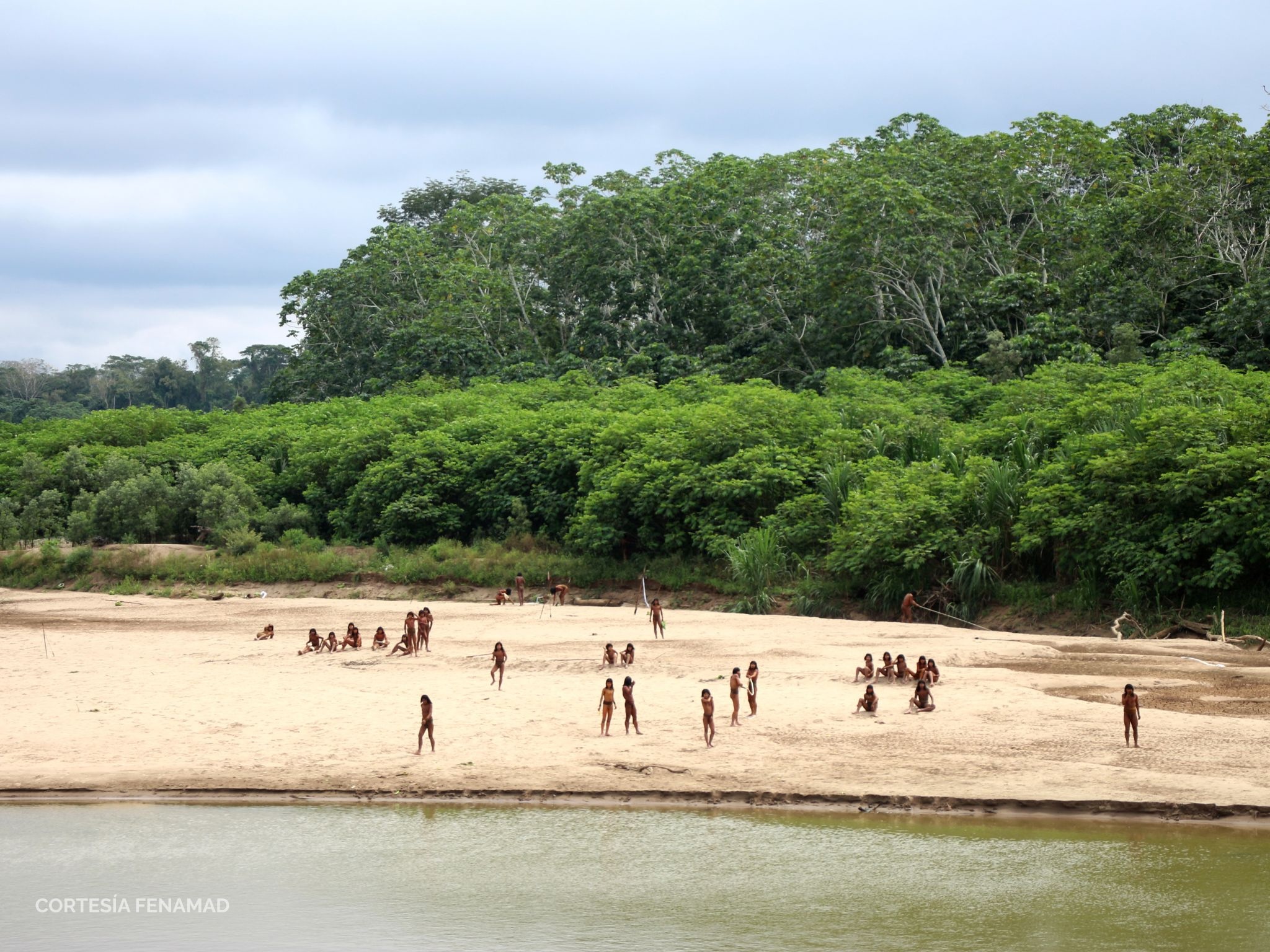
A public hearing this week by the Inter-American Court of Human Rights will assess claims that the Peruvian state violated the rights of the Indigenous Mashco Piro, Yora, and Amahuaca peoples, who live on ancestral territory in the Amazon Rainforest. The court will hold a hearing on Sept. 24 and 25 in Montevideo, Uruguay, about whether the state failed to adequately protect the groups from extractive industries encroaching on their land, including inside the Madre de Dios Territorial Reserve. “This case constitutes a historic milestone in Latin America; the Court’s decision will not only have an impact on Peru, but will set a legal and political precedent for all Indigenous peoples of the Amazon,” the Native Federation of the Madre de Dios River and Tributaries and EarthRights International, two organizations representing the communities, said in a joint statement. The Inter-American Commission on Human Rights, a separate body from the court, investigated the claims involving the Indigenous groups and found Peru was responsible for violating their rights. In November 2024, the commission referred the case to the human rights court, which can order the state to correct its actions. According to the commission, Peru failed to expand the Madre de Dios Territorial Reserve despite evidence that Indigenous peoples living in isolation and initial contact, often referred to by the acronym PIACI, are present there. Peruvian law requires that the government protect the areas that the groups traditionally occupy. The commission also said the state didn’t recognize collective territories with legal titles or define buffer zones around protected areas. Logging, mining, roadbuilding, oil exploration, and drug trafficking have been documented in the area, the commission said. “Despite the adoption of regulations developed by the state to protect PIACI, the lands where they live face constant pressure on their territories from the presence of outsiders,” the commission said in its referral letter to the court. The commission asked the court to order the state to demarcate Mashco Piro, Yora, and Amahuaca territory, and to establish buffer zones. It also wants the Peruvian government to finish categorizing the Madre de Dios Territorial Reserve as an Indigenous reserve, which could confer it a greater degree of protection. The commission report also called for stronger action against illegal logging and mining, and a review of concessions that may overlap with ancestral territory. In the commission’s report, the state argued that it’s already taking measures to protect PIACI with laws and regulations, and ongoing adjustments to protected areas. It also said it’s improving its monitoring and early-warning system for threats against the communities. After the hearing this week, written arguments are due by Oct. 26. The court doesn’t have a deadline for issuing a decision. Banner image: The Mascho Piro in Monte Salvado, Peru in 2024. Image courtesy of FENAMAD. Credits Topics
Peru faces hearing over threats to uncontacted Indigenous groups in the Amazon
Full Article
Original Source
Read the full article at News →KhanList aggregates and links to publicly available news content. We do not host full articles from third-party sources. Always verify important information with original sources.