
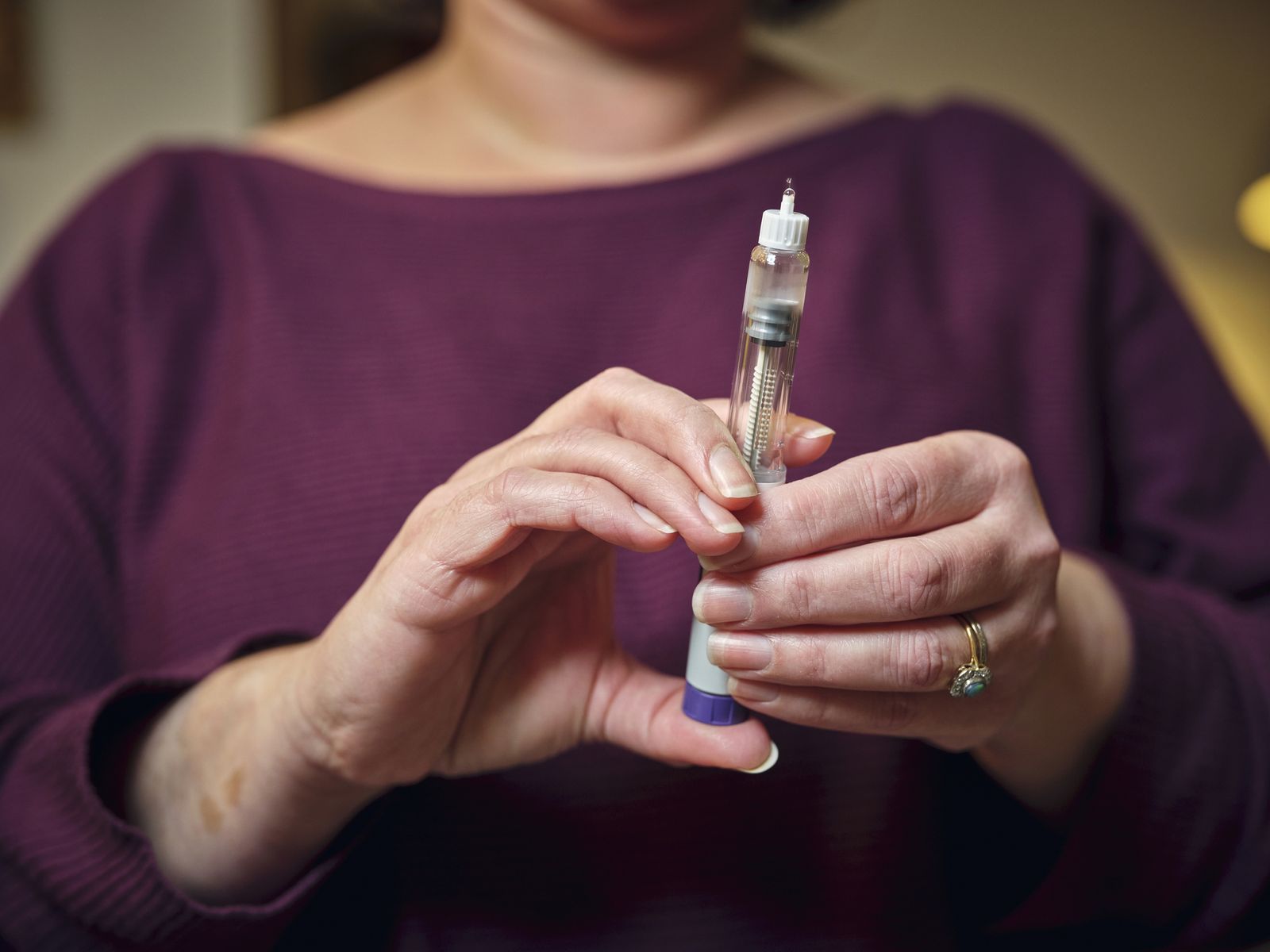
Peptides Are All the Rage, Promising Miracle Cures and Makeovers Delivered by Injection. How Did We Get Here? Experts say the peptide craze is part of a broader phenomenon, as patients look beyond the regulated health system to address problems that doctors have struggled to treat September 9, 2026 2:28 p.m. GLP-1 drugs, medications that are self-injected to support weight loss and lower blood sugar, helped peptides become mainstream. Jon Challicom via Getty Images Peptides seem like they’re everywhere: on social media, on medical spa menus and beyond. Name your problem, and you can probably find a peptide—with a cryptic moniker like BPC-157 or GHK-Cu—that promises to help. A few years ago, these drugs belonged to the world of bodybuilder message boards and the dark web. Today, they’re sold via polished websites with a medical gloss, with each peptide promising to deliver a remarkable benefit, such as weight loss, younger-looking skin or muscle repair. In Silicon Valley, devotees have gathered at peptide parties to drink, dance and inject themselves with these chemicals—all in pursuit of sharper minds and more sculpted bodies. But within the last few years, peptides have become a much broader phenomenon, not just taken for self-optimization but for treating chronic pain and various other conditions. Simply put, peptides are short chains of amino acids—the building blocks of proteins—that carry specific instructions to specific cells. By linking up various amino acids in sequence, the body produces peptides that carry out a wide range of functions, including immune support, tissue repair and appetite control. Scientists, in turn, have developed synthetic copies or modified cousins of these peptides to use as medications. By contrast, many peptides available for purchase online are experimental chemicals: They are not approved by the Food and Drug Administration and are openly sold with disclaimers, such as “for research use only.” As yet, these peptides are “completely untested and unregulated,” says Deborah Doroshow, an oncologist and historian at Mount Sinai in New York. There’s little to no research proving these molecules are safe or effective and no assurance from the FDA about their identity, purity or strength. “What’s in the package may not actually be what is on the outside of the label,” Doroshow adds. Despite the uncertainty around them, peptides have garnered a cult following. According to a recent survey of over 500 physicians, nearly half said a patient had disclosed using an experimental peptide in the past year. This boom is even more visible online: As of May, peptide-related hashtags had generated more than 130,000 Instagram posts and 230 million TikTok views. Teenagers and retirees alike broadcast before-and-after pictures and trade their “stacks,” or custom combinations of peptides, like recipes. Experts say the peptide boom offers a window into a larger transformation in American health care: a shift from a market driven by diagnoses to one driven by demand, in which medicine is increasingly viewed as a consumer good—an Amazon-like product delivered to your doorstep. “We’re seeing a new rival or parallel health system emerge,” says Daniel Carpenter, chair of the government department at Harvard University and an expert in FDA regulation, “built on self-diagnosis and easy access to a wide range of treatments.” This kind of “do your own research” theory of medicine is hardly new, but today, there’s more of a platform than ever to cultivate this demand and serve it at scale. How did we get here? How peptides went mainstream An illustration of the structure of insulin, a peptide hormone made in the pancreas that helps regulate blood sugar David Goodsell via Wikimedia Commons under CC BY 3.0 Peptides have long been essential medications. The first one was insulin: In the 1920s, scientists isolated the peptide from animal pancreases and began using it to treat Type 1 diabetes. When injected, insulin travels throughout the body and instructs muscle and fat cells to absorb glucose, turning a once-fatal disease into a manageable one. The discovery showed how powerful peptides could be and demonstrated their ability to effectively reprogram cells. Over the ensuing decades, scientists developed many other peptides into drugs, like oxytocin to induce labor and calcitonin to treat osteoporosis. These drugs were transformative, but they remained tucked inside specific corners of medicine, never really making peptides a household name. By the 2000s and 2010s, however, peptides began to spill beyond conventional medicine, says Luke Turnock, a sociologist at the University of Lincoln in England. Some peptides, for instance, were being studied for their effects on muscle growth and injury repair. Bodybuilders discovered them, traded notes over online forums and began stacking unapproved peptides with anabolic steroids. Compounds that had previously been tested only in rodents became fodder for self-experimentation, with bodybuilders posting their experiences and promoting a kind of “folk pharmacology,” Turnock says. In late 2022, peptides entered the consumer consciousness with GLP-1s, which helped people lose weight by curbing hunger and slowing digestion. FDA approval gave these drugs clinical legitimacy, while the promise of dramatic weight loss gave them mass appeal, says Pieter Cohen, a primary care physician at Cambridge Health Alliance in Massachusetts. The rise of the prominent GLP-1 Ozempic was visceral and publicly legible, he adds, and for the first time, a peptide drug became culturally pervasive. That visibility helped normalize rituals around GLP-1 use, like self-injection and the purchase of low-cost copycat drugs online, Cohen says. And the demand gave telehealth companies and niche compounding pharmacies, which make these copycat medications, a major windfall. After all, they promised ready access to drugs that patients already knew they wanted, he adds. In this way, GLP-1s reinforced how easily health and wellness could be purchased, casting medical treatments as something to be transacted like anything else, Doroshow says. The success of Ozempic legitimized the larger marketplace: If one peptide could produce such dramatic results, the thinking went, what others might be out there? Did you know? GLP-1 drugs GLP-1—which stands for glucagon-like peptide-1—medications mimic a natural hormone that suppresses appetite and regulates blood sugar. Originally developed to help control blood sugar in diabetes patients, the drugs have been used for promoting weight loss. Recent research has suggested that GLP-1s could have a range of other benefits, including slowing aging in mice and holding back cognitive decline in people with Alzheimer’s disease. Science without the gatekeepers At some level, the rise of peptides taps into a longstanding desire for quick fixes, says David Jones, a historian at Harvard Medical School, and it has emboldened a cast of enterprising salespeople eager to fill that demand. Today, many Americans are frustrated by a health care system that is too expensive, inaccessible and rushed—one that feels unequipped to deal with everyday quality-of-life issues like fatigue and sexual dysfunction, says Lucy McBride, a primary care physician in Washington, D.C. and the author of Beyond the Prescription. In that gap, she adds, peptides have become the latest outlet for patients’ hope. Unlike older “miracle cure” fads—which, in the early 20th century, passed between electric belts, radioactive tonics and vitamins—peptides do not merely sound scientific. They sit inside the same biological universe as modern pharmaceuticals, promising command over your cellular machinery. That’s why it is a mistake to read the peptide craze as distinctly anti-science, Doroshow says, because these drugs appeal to people who still believe in science, even as they distrust scientific authority. “The concept of science is still very important,” she adds, “but who gets to keep that science, who gets to disseminate that knowledge and be trusted, is really in question.” Indeed, ordering a peptide marketed under an alphanumeric code—like CJC-1295 to stimulate growth hormone—can feel like getting science in its rawest form, Turnock says, one that’s not yet domesticated by the pharmaceutical industry or branded by consultants. For those who want the drugs to feel more familiar, though, products like the Glow or Wolverine stacks are also available, promising younger-looking skin and faster recovery from injuries via a cocktail of injections. The idea that the consumer knows best has been instrumental in the rise of the demand-driven health care system. In place of expert science, this system offers consumer science: a decentralized laboratory where you do your own research, order your own drugs and judge the results yourself. Although the appetite for quick fixes is old, Doroshow says, the machinery to satisfy this hunger is new. GLP-1 drugs have gained popularity in recent years. Karsten Moran / The Washington Post via Getty Images The rise of do-it-yourself medicine The Covid-19 pandemic accelerated the rise of this parallel system, moving huge swaths of health care online and normalizing a more impersonal form of medicine—log on, get briefly evaluated and log off. Care became more accessible but also easier to experience as a service rather than a lasting relationship, Cohen says. Meanwhile, trust frayed in medical authorities. The share of Americans who reported high confidence in the Centers for Disease Control and Prevention fell from 82 percent in February 2020 to 56 percent in June 2022, while confidence in state health departments fell by 16 points over this period. This combination created fertile soil for a “do your own research” theory of medicine, Cohen says, in which vaccine refusal and peptide injections become two expressions of the same impulse—deciding for yourself which risks are worth taking. While some peptides might have real benefits, Jones says that many others owe their success more to the placebo effect than any biological mechanism. Often, nothing obvious goes wrong when people take these drugs, but in some cases, scientists have linked experimental peptides to kidney injury, liver failure, severe allergic reactions and hospitalizations. And the long-term risks remain largely unknown. Many peptides, for example, stimulate growth of muscles or blood vessels, theoretically speeding healing after injury—but promoting the growth of cells also leaves “cancer always looming in the background,” Jones says. Despite such risks, health secretary Robert F. Kennedy Jr. has brought this kind of self-experimentation further into the mainstream, lending it the imprimatur of the federal government, Cohen says. Speaking about peptides on Joe Rogan’s podcast, Kennedy recently described himself as a “big fan” and said that he has personally used them to heal injuries “with really good effect.” In July, an FDA advisory committee moved to make six peptides easier to access, although none has been proved to be safe or effective, and all lack the agency’s approval. With such an enabling regulatory environment, the parallel health care system has moved into the open, its risks softened by sleek websites and widespread marketing. “If you have to creep around the dark corners of the internet, or if you’re whispering to someone in the gym, you know that you’re taking some risk with your health,” Cohen says. But the absence of a crackdown can become a quiet endorsement, he adds. Doctor explains the science behind the peptide craze The new salespeople Ultimately, peptides have found a market through persuasion, not their availability alone. “The peptide story couldn’t be what it is without social media,” Doroshow says. Earlier generations of miracle cures were often private or local; you couldn’t really know how many other people were using them. Social media offered a much broader aperture, and after the pandemic, many platforms got rid of fact-checkers and pulled back from policing health claims, leaving more room for misinformation. Many peptide companies have leaned into this vacuum, paying influencers to promote their products or handing them affiliate links with a cut of every purchase, Turnock says, fueling patient demand. With artificial intelligence tools, sellers can also easily generate clinical-sounding explainers, before-and-after ads and beautiful online storefronts overnight, says David Blumenthal, former president of the Commonwealth Fund, a nonprofit research group focused on health care. So, a person curious about peptides can find millions of videos and social media posts touting extraordinary personal transformations or raving about their supposed effects. Often delivered by people who are fit and charismatic, these testimonials can feel more intimate and persuasive than clinical data, Cohen says. The underlying message, he adds, is that “if you’re not taking peptides, you’re not taking care of yourself.” And with a few clicks, aspiration can become a purchase. In this demand-driven world, it’s difficult to tell what actually works. No one is really checking what’s in the peptide vials or monitoring what happens to people after they take them. Jones compares this “buyer-beware, unregulated marketplace” to an earlier era of medicine, when remedies were sold door to door and buyers were left to fend for themselves. Only now, the salesperson has a TikTok following, a promo code and overnight shipping—with all the power and confidence of medicine, but few of its checks and balances. You Might Also Like Get the latest Science stories in your inbox. More about: Biology Chemistry Doctors FDA Health History of Science Illegal Drugs Innovations Medicine Technology Treatment Trending Today
Peptides Are All the Rage, Promising Miracle Cures and Makeovers Delivered by Injection. How Did We Get Here?
Full Article
Original Source
Read the full article at Smithsonianmag →KhanList aggregates and links to publicly available news content. We do not host full articles from third-party sources. Always verify important information with original sources.