
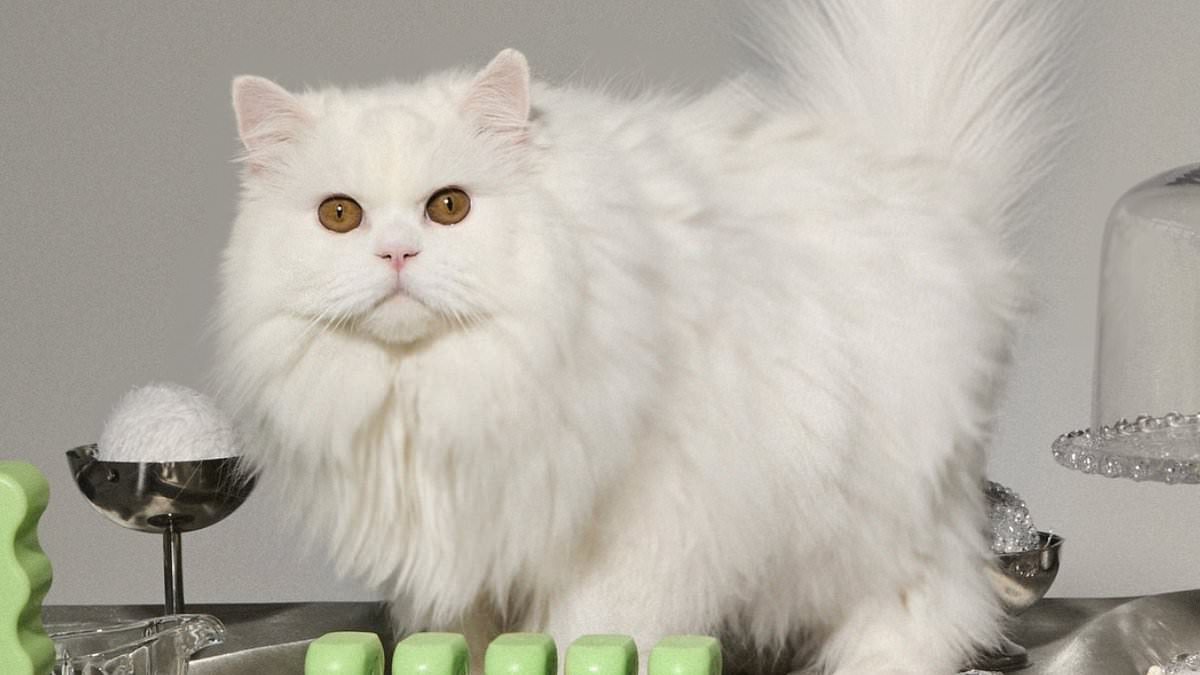
Social media has become a tempting escape route for white collar professionals desperate to break away from the corporate grind.But as the creator economy becomes increasingly crowded, some online niches stand out more than others – and pet influencers have become arguably the biggest winners in the space.From cats with millions of views to dogs commanding five-figure brand deals, pet influencers are big business, with account owners turning their four-legged stars into lucrative online personalities.For Caelin Smith, what began as sharing videos of her white doll face Persian cat, Cleo, eventually became the business that allowed her to walk away from her marketing job.Smith adopted Cleo in 2020 and began posting videos of her online. One early TikTok took off, bringing in 25,000 followers almost overnight.But as Smith posted sporadically, the initial momentum eventually fizzled. It wasn't until 2023, when another video of Cleo went viral, that she realized the account could become something bigger.The clip showed Cleo meowing at the door at Smith's now-husband and racked up more than 30 million views on TikTok and 20 million on Instagram.Smith began taking content creation seriously, waking up at 5am to post before heading to her full-time marketing job. Cleo, a white Doll Face Persian, cat has become a brand of her own after her owner Caelin Smith had multiple videos of her go viral Smith pivoted to fulltime content creator for Cleo's page after losing her social media marketing job in early 2025She had already seen the money-making potential of the influencer industry while working with brands.'I was working with influencers who were making my entire salary just with one post,' Smith told the Daily Mail.By 2024, she says she was earning as much from her creator business as she was from her full-time job.Then, in early 2025, her employer laid off around half its workforce, a move she attributed to tariffs. Rather than look for another office job, Smith decided to go all in on Cleo.'I remember like, probably an hour after I got laid off, I just went full force into this,' she said.Smith has since built an audience of nearly 600,000 across Instagram, TikTok, Facebook and YouTube. Instagram is her strongest platform for engagement and the main source of commercial opportunities.She has worked with major pet brands including Temptations and Whisker, the company behind the Litter-Robot. Repeat partnerships have become an important part of her business.The sums involved can be eye-watering. Jane Peh, founder of The Woof Agency, which connects pet creators with brands, says one dog influencer with between one and two million TikTok followers was charging between $30,000 and $40,000 for a single video, without usage rights. Jane Peh, founder of The Woof Agency (first right),revealed some content creators with big platforms have been offered between 30-40,000 for one video featuring a brand's produc Peh shared behind the scenes content of famous pets at a Loveabowl event'They're paying their rent,' Peh said.She has also seen brands set aside budgets of $150,000 for creator campaigns.Peh says the industry has developed well beyond cute videos and novelty accounts, with brands increasingly treating pet creators as a distinct category of influencer.'It's no longer just something that's cute and funny, like it's really becoming like its segment by itself, like the beauty and the lifestyle and, you know, like parents and kids,' she said.The biggest followings do not necessarily secure the best deals, either.'A lot of brands, they don't really look at your follower count anymore. They look at the type of content that you are able to produce,' Peh said.Brands are also interested in videos that can be used in their own advertising, sometimes paying extra for the rights to repurpose a creator's work.Smith's marketing background has helped her understand what companies expect from a campaign, although she says it took time to learn how to negotiate on her own behalf. Smith said the work behind sponsored posts is often completed under tight deadlines, with some brands giving creators as little as two days to develop concepts, write scripts, storyboard, film, record voiceovers, edit the content and secure company approval After working with two management companies, she realized she had initially been undercharging. The managers were able to negotiate better prices, but Smith eventually decided to handle deals herself so she could stay in control of her emails and relationships with brands.She says sponsored posts can involve far more work than followers might expect, with some brands giving creators as little as two days to develop concepts, write scripts, storyboard, film, record voiceovers, edit the content and secure company approval.Yet the videos that perform best are often the ones that require the least planning.'My overproduced content performs worse than the natural content,' Smith said.A casual clip involving a Trader Joe's yogurt, for example, attracted around three million views.Smith says people are drawn to Cleo's personality and the unscripted moments that make the cat feel familiar.'People just see through that,' she said of videos that feel too staged.Peh believes that is a big part of what makes animals so appealing to audiences and brands.'When it comes to a dog or a cat, it's very hard for them to lie,' she said. Meagan Licari, who runs rescue group Puppy Kitty NYC, said the organization's use of social media is vital for running operations. In 2025, they earned $220,000 and almost double that in 2026 with a take home of $400,000 just from social media Videos capturing the realities of rescue work – from animals being saved and kittens meowing to cats getting baths – resonate with viewers, who also want to follow their journeys from arriving in care to finding a permanent homeAn animal cannot pretend to enjoy a product it does not like, she explained, which can make its reaction feel more genuine to viewers.Meagan Licari has seen the same appetite for spontaneous animal videos while running Puppy Kitty NYC, a rescue group that takes in abandoned, injured and sick animals across New York City.Licari started volunteering with the organization in 2017 after discovering cat rescue accounts on Instagram. She initially helped transport animals before eventually taking over the group.Its Instagram following has since grown from around 40,000 to 172,000, while its TikTok account has attracted 64,000 followers. A separate account for Tegerau, a special-needs cat, has grown to 287,000.One of the organization's biggest viral moments came when Licari was on her way to an event in an Uber and spotted a possum stranded on a fence in broad daylight.She noticed a group of men looking up at the animal and immediately told her driver to stop.Licari approached a man waiting at a bus stop and asked him to film what happened. She then recruited the men nearby to help make sure she did not fall while trying to reach the possum, telling them to keep recording.The footage of the rescue went on to attract 7.2 million views. One of the organization's biggest viral moments came when Licari was on her way to an event in an Uber and spotted a possum stranded on a fence in broad daylightVideos showing the realities of rescue work – from animals being saved and kittens meowing to cats getting baths – are what Licari says resonate with viewers. Audiences also want to see the animals' progress, from their first moments in care to finding a permanent home.To make sure those moments are captured, she has made filming a requirement for volunteers and fosters.'I beat it into people's heads. You gotta take a video,' she said.The footage can have a direct impact on the organization's finances. Licari estimates that around half of Puppy Kitty NYC's revenue comes from online fundraising, with particularly urgent rescue cases sometimes bringing in thousands of dollars within minutes.'We could raise thousands of dollars in minutes sometimes,' she said.The cost of caring for animals quickly adds up. Licari puts the average cost of looking after a healthy cat at around $700, including basic veterinary care, food and litter. More complicated medical cases can run into thousands.She said a cat needing a $1,500 dental procedure may struggle to attract the same attention as an animal with a severe injury, showing how much fundraising can depend on the story being told.Social media is also crucial for finding foster carers, recruiting volunteers and getting harder-to-place animals adopted. Licari said some cats with special needs or lengthy medical histories have found homes after their stories were shared online. Smith has also introduced a second cat, Clemmy, a British longhair, and is considering how to keep the account fresh as her business evolvesThe rescue does not rely heavily on paid sponsorships. Instead, it has built relationships with companies that provide supplies in exchange for exposure.World's Best Cat Litter donates litter, while Hartz supplies Delectables squeeze-up treats and pee pads. Food company Aruva has also donated pallets of food.Licari manages the organization's social media herself, and says it takes up around half her working day.'I'm doing all the social media myself,' she said. 'It's probably like, I would say 50% of what I'm doing every day, taking videos, and, you know, creating content.'Smith knows how demanding that schedule can become. She aims to post four or five times a week, but says keeping up with content and brand commitments can be exhausting.'You definitely get content fatigue. I get it all the time,' she said. 'There's a ton of pressure because this is like my full-time job.'Her follower growth has plateaued over the past year, but she says the business itself is better than ever.She has also introduced a second cat, Clemmy, a British longhair, and is considering how to keep the account fresh as her business evolves.Peh says creators whose livelihoods depend on one animal eventually have to think about what happens as their pets get older. Some introduce another pet to their accounts, while others begin featuring themselves more prominently.She describes it as a form of legacy planning, given the financial value that can become attached to an animal's online following.For Smith, the unpredictable nature of social media remains part of the appeal.'Any post can change your life,' she said. 'You can gain 30,000 followers, $50,000 from one post, and then that changes everything.'
Paws for profit: Inside the booming business of internet-famous pets and the influencers earning thousands for every post
Full Article
Original Source
Read the full article at Dailymail →KhanList aggregates and links to publicly available news content. We do not host full articles from third-party sources. Always verify important information with original sources.