
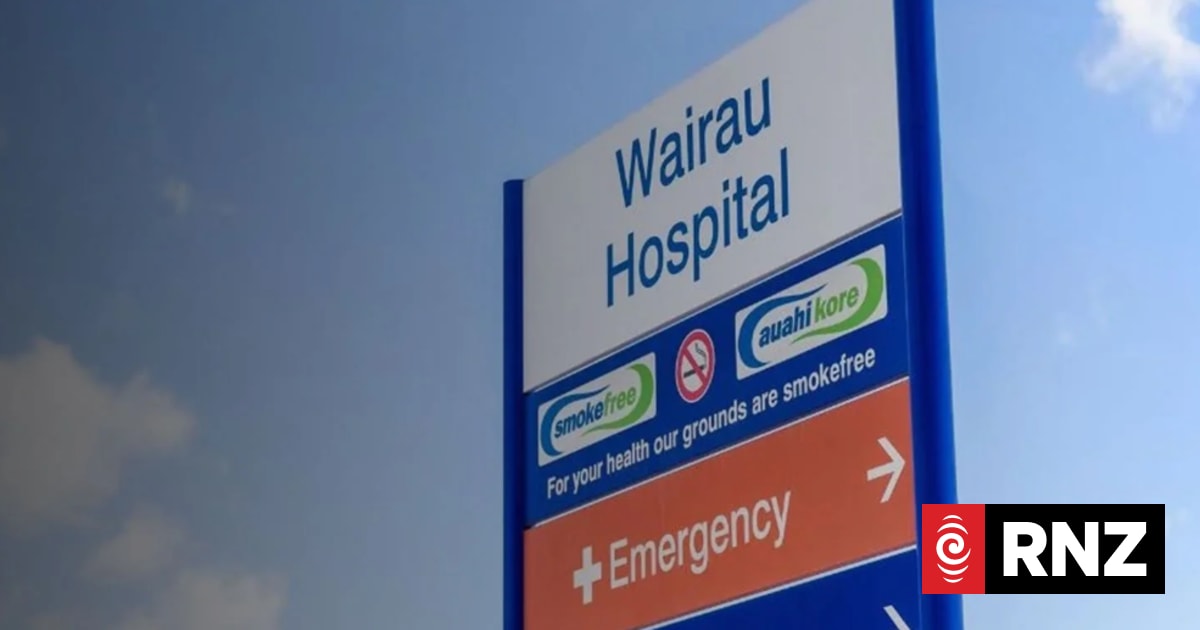
Patients are being put at risk by chronic understaffing at Blenheim's Wairau Hospital, where the emergency department is on the brink of collapse, doctors say.Emergency specialist Dr Nikki Rolton said the ED was at least three doctors short and had too few staff to care for a growing number of patients.Health New Zealand rejected assertions the department was at risk of collapse but said staff concerns were being taken seriously and recruitment was underway to increase the number of permanent staff.Rolton said staff were seeing an estimated 17,000 patients per year when she started working at the hospital in 2018, but that number had grown to about 22,000 annually.Shortages meant shifts were either filled by a locum, a doctor working an extra shift, or went unfilled, with the most vulnerable time handing over to a junior doctor at midnight."We can't just leave our shift when it finishes at midnight. We have to stay and make sure the department is under control," she said.And doctors could be called back to the hospital after they had gone home, Rolton said."Sometimes we do end up staying for most of the night and that can be up to 17 hours, which as you can imagine, is not very safe for our patients and not very safe for us and our longevity and working," she said.A junior doctor was expected to see usually 10 to 15 patients per night, Rolton said, which was a challenge for a doctor of any experience level when a doctor used to see five to six patients on a busy night in 2018."It's putting the patients who present overnight potentially in danger because you can't adequately see that number of patients, especially sick patients, and give them the amount of adequate treatment they need overnight," she said.Rolton said the hospital was geographically isolated and helicopters sometimes could not fly, causing difficulties transferring patients.A helicopter crew was recently on stand-by at the hospital at a cost of $60,000 so that pregnant women could be transferred, because of a shortage of obstetricians."It's terrifying for the women in Marlborough who potentially don't have an emergency service available within an acceptable timeframe," Rolton said.Rolton urged Health NZ to hire more staff, particularly by diverting more funding earmarked for locums to full-time, permanent staff and more funding for junior doctors overnight."We need to be trying to attract staff so that we cannot have to work these hours and to be able to survive and make good clinical decisions," she said.Association of Salaried Medical Specialists executive director Sarah Dalton said the hospital's emergency department had eight doctors when it should have at least 12."Those doctors are really concerned that it's at a bit of a tipping point. If they were to lose one more doctor, it would be entirely unsafe," Dalton said."They feel like so far they've been lucky but it's like they're playing the odds. They are trying to cover services that don't have enough staff in them."At some point, you get that Swiss cheese thing, where if all of the holes line up you're going to have a disaster."Dalton said planned leave was not being appropriately covered by Health NZ and she was concerned the conditions would push clinicians to leave multiple departments."It's just a complete failure to resource, a complete failure of care on their part," she said.Health New Zealand Nelson Marlborough operations group director Phil Wheble said he had heard from staff about the considerable pressure they were under since he took on the role in August."We are taking their concerns seriously and are progressing permanent recruitment to strengthen the workforce and reduce our reliance on locums," he said."Our focus remains on supporting our staff by building a stronger permanent workforce and ensuring the people of Marlborough continue to have access to safe emergency care when they need it."Wheble said the ED was not at risk of collapse and people should still go to hospital if they need emergency care.Wairau ED had 5819 presentations between 1 June and 31 August this year, which was comparable to similar sized hospitals across the country, Wheble said."We recognise that sustained workforce pressure has a real impact on our staff, which is why we are continuing to strengthen the permanent workforce," he said.The ED was currently budgeted for 9.2 full time equivalent workers."The department currently has a 0.8 FTE (full time equivalent) vacancy, with a total permanent medical headcount of 10," Wheble said."The vacancy had been covered by a long-term locum until August and permanent recruitment is underway, with interviews taking place this week. Locum funding can also be redirected to permanent roles as recruitment opportunities arise."He commended the professionalism and commitment of Wairau Hospital ED staff through a challenging and busy winter."While pressure across the health system remains elevated, demand is continuing to ease from the exceptionally high levels recorded," he said.
Patients 'in danger' from understaffed emergency department, doctors say
Full Article
Original Source
Read the full article at Rnz →KhanList aggregates and links to publicly available news content. We do not host full articles from third-party sources. Always verify important information with original sources.