
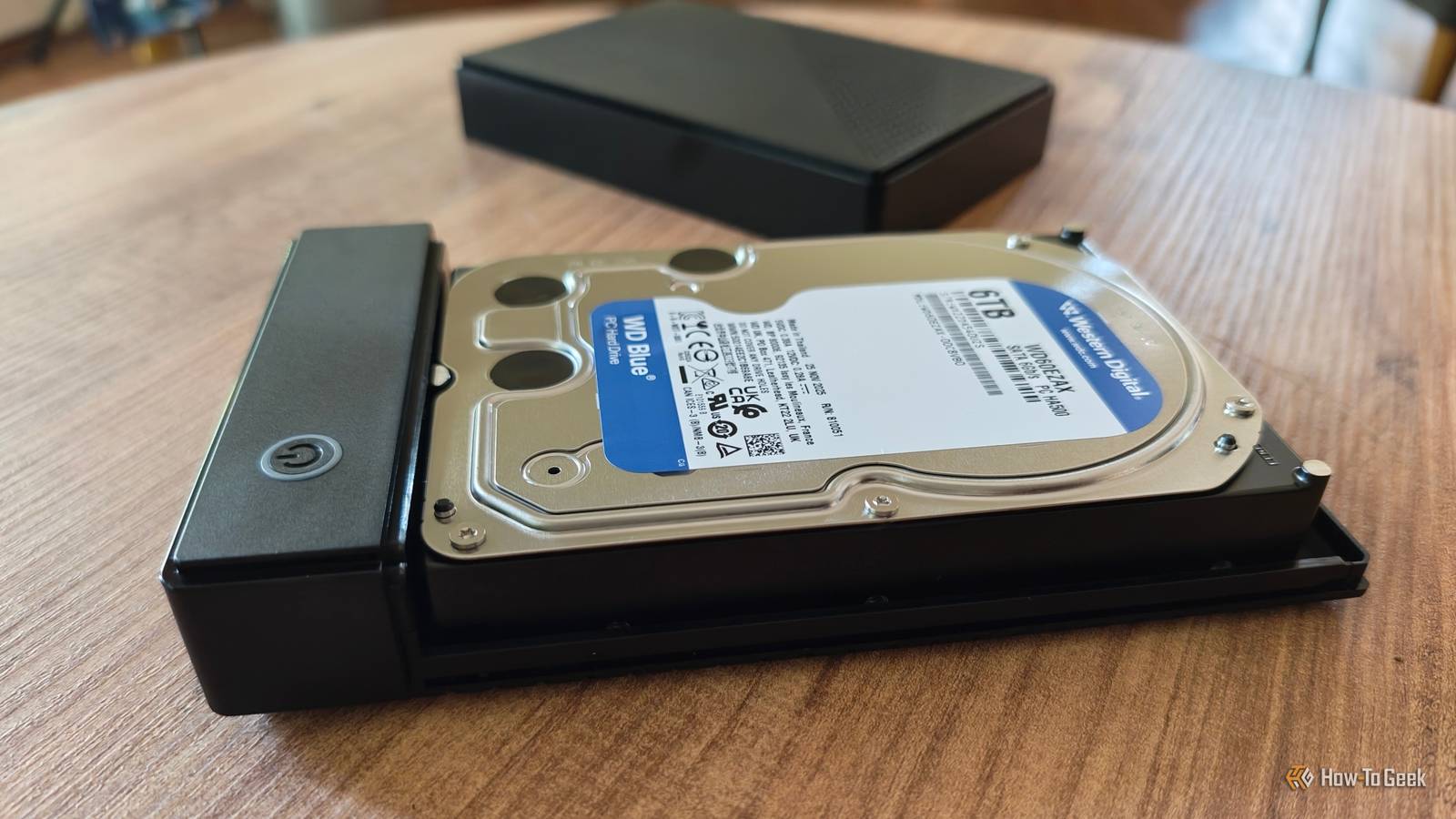
Published Nov 20, 2026, 7:30 AM EST Monica J. White is a journalist with over a decade of experience in covering technology. She built her first PC nearly 20 years ago, and she has since built and tested dozens of PCs. PC hardware is her main beat, and graphics cards and the GPU market at large are her main area of interest, but she has written thousands of articles covering everything related to PCs, laptops, handhelds, and peripherals. From GPUs and CPUs to headsets and software, Monica's always willing to geek out over all things related to computing. Outside of her work with How-To Geek, Monica contributes to TechRadar, PC Gamer, Tom's Guide, Laptop Mag, SlashGear, Whop, and Digital Trends, among others. Her ultimate goal is to make PC gaming and computing approachable and fun to any audience. Monica spends a lot of time elbow-deep in her PC case, as she's always making upgrades, testing something, or plotting out her next build. She's the go-to tech support person in her immediate circle, so she's never out of things to do. Whenever she has spare time, you'll find her gaming until the early hours and hanging out with her dog. HDDs used to be the super-affordable alternative to SSDs. They still are, but the level of "affordable" is growing more questionable by the minute. Although the RAM-pocalypse and the resulting SSD prices get a lot of coverage, HDD prices are going up, too. But why? They don't suffer from the same shortages as SSD do, do they? Well, it's easy to blame AI companies for this, but it turns out there's more to it than just that. It comes down to helium. Yes, the same gas used in balloons. Your high-capacity HDD is actually filled with helium No, it's not there to make your hard drive lighter If you're scratching your head and wondering how helium is related to HDD shortages, let me explain. Many modern HDDs are actually filled with helium instead of ordinary air. (Shame they don't float like balloons, right?) And no, it's not because manufacturers want them to be lighter, or indeed, capable of floating. Helium is roughly seven times less dense than air, which means there's less resistance and turbulence inside the drive as its platters spin at thousands of revolutions per minute. This lets manufacturers squeeze more platters into the same 3.5-inch enclosure, increasing storage capacity while also reducing power consumption and heat. Pretty clever, right? The problem is that helium doesn't exactly grow on trees (although that's an interesting mental image). And, according to a recent report from Secure Data Recovery, its increasingly limited availability is becoming another headache for HDD manufacturers. These drives are hermetically sealed to keep the helium inside, so you don't need to worry about your existing HDD running out of gas. But manufacturers still do need a reliable supply to keep producing new ones, and that's getting complicated. Not every HDD uses helium, either. So, even if you're planning to build a NAS from an old PC, you might be able to avoid helium-filled models altogether. Unfortunately, that doesn't exactly guarantee you won't have to pony up some extra cash for the HDD, helium or not. The global helium shortage is worse than you might think The crisis started far away from the PC hardware industry Credit: Patrick Campanale / How-To Geek Unfortunately, helium isn't exactly something we can just conjure up at the drop of a hat. Most commercial helium is recovered as a byproduct of natural gas processing, and only a handful of countries produce significant amounts of it. One of the biggest suppliers is Qatar, which accounts for roughly a third of global helium production. However, in March 2026, Iranian strikes severely damaged the Ras Laffan industrial complex, disrupting helium production alongside natural gas operations (via Reuters). QatarEnergy warned that repairing the damaged infrastructure could take years, and shipping disruptions only make this worse. As if that wasn't enough, there are new restrictions on helium exports, adding even more pressure to an already struggling supply chain. And it's not like HDD manufacturers are the only ones desperate for this gas. Helium is also essential for semiconductor manufacturing, MRI machines, and various other industrial applications. We've already seen how vulnerable the tech industry is to supply disruptions with the RAM-pocalypse, and shockingly, this is shaping up to be similar, even though the subject in question is gas most people associate with birthday parties. AI companies have already bought up years of HDD production The helium shortage couldn't have come at a worse time As if the helium shortage wasn't disastrous enough, there's another problem, and this one has a familiar face: AI. It turns out that the very same companies responsible for making RAM and SSDs ridiculously expensive are also buying enormous amounts of HDD storage. And I really do mean enormous. According to Seagate's October 2026 earnings call, the vast majority of its high-capacity nearline storage supply is already allocated through 2028, with some cloud customer agreements extending into 2030. These commitments mainly concern enterprise drives, but they still put pressure on the wider HDD market. Manufacturers have limited production capacity, and when hyperscalers are lining up to secure hundreds of exabytes of storage, ordinary consumers like you and me are left forgotten. Even ordinary consumer hard drives are getting more expensive You don't need a helium-filled HDD to feel the impact You don't need to be buying one of those fancy recertified massive HDDs to still feel the brunt of the helium shortage. HDD makers aren't exactly swimming in unlimited production capacity, and when their biggest customers have nothing to do with ordinary users, we all have a problem. Consumer drives, including the smaller 2TB and 4TB models you'd normally buy for backups or extra storage, are becoming harder to find at reasonable prices. And the price increases are pretty shocking. According to the figures cited by Secure Data Recovery, a 30TB enterprise HDD that used to cost $495 in Q3 2025 was selling for $1,216 by Q3 2026. Oof, that's a nearly 146% increase in just one year. There's no easy escape from overpriced storage right now How do you escape this situation, where everything costs a fortune and nothing seems to be improving in that regard? Bad news: you don't. You can try to buy used storage as a workaround, but even that has picked up in price lately. Your best bet is trying to use cloud storage or making the most of what you have, including tiny 120GB SATA drives.
Party balloon gas is now making your hard drives more expensive
Full Article
Original Source
Read the full article at Howtogeek →KhanList aggregates and links to publicly available news content. We do not host full articles from third-party sources. Always verify important information with original sources.