
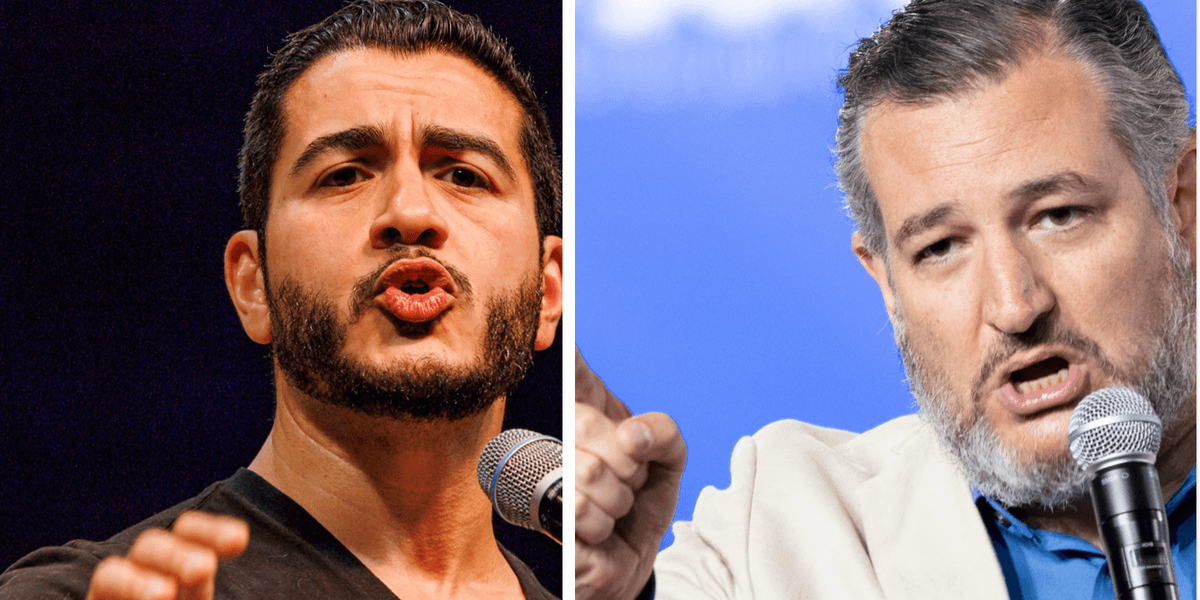
Sen. Ted Cruz (R-Texas) had a dire warning for Michigan voters last Wednesday: Electing Democrat Abdul El-Sayed to the Senate could cost American lives.Speaking at a GOP campaign event in Grosse Pointe Woods, Cruz accused El-Sayed of being a “passionate supporter of the Muslim Brotherhood,” warning that if he were elected and given a seat on the Senate Intelligence Committee, “there is a very real risk that Americans will die as a result.”Several Republicans on next week’s midterm ballot spoke at the event, but Cruz reserved most of his time for El-Sayed, who is facing former Rep. Mike Rogers in the race for an open Senate seat in Michigan.Cruz’s remarks are among the harshest in an escalating campaign of attacks on El-Sayed, who could become the first Muslim to serve in the U.S. Senate. From President Donald Trump to prominent Republican lawmakers like Cruz, conservative commentators are portraying the Democratic nominee as not only a political opponent, but as a potential threat to American national security. The attacks revive a familiar strain of fear-mongering post-9/11 politics, where Muslim candidates — even non- Muslim candidates — were accused of supporting Islamist extremism and described as potential dangers to the country. This escalating barrage of criticism comes as El-Sayed and Rogers are locked in a tight race for what could prove to be a decisive Senate seat. The latest RealClearPolitics average shows the Democratic leading by 3.5 percentage points. The attacks started as soon as El-Sayed won the nomination in August, when Sen. Tommy Tuberville (R-Ala.) called him “a TERRORIST” and “a RADICAL ISLAMIST who will do everything he can to destroy America.”Since then, the rhetoric has only intensified. Trump has targeted him frequently, calling El-Sayed a “jihadist, who would be “the only senator that will have to go through a metal detector.” After introducing the father of a man who died on Flight 93 on Sept. 11, 2001, at a recent event, the president compared the Michigan Democrat to the 9/11 hijackers. A number of Republicans, including Trump and the GOP-aligned Senate Leadership Fund PAC, have said El-Sayed wants to bring “Sharia law” to the United States, recycling another common talking point from the early 2010s. (El-Sayed is not the only Muslim politicians to face similar attacks based on their religion; Tuberville’s pinned tweet highlights an image of New York City Mayor Zohran Mamdani next to the Twin Towers blowing up, with the caption “The enemy is inside the gates.”) One Republican Senator said El-Sayed “can be nowhere near Washington, D.C.” because he does not understand that “Jesus came here for our salvation.” Two hawkish Republican columnists took to the pages of the Daily Signal and the Wall Street Journal to emphasize Cruz's point that, unlike appointed government officials, El-Sayed, if elected, will not have to pass a background check in order to access classified materials. “Rumor has it that El-Sayed covets a seat on the Senate Foreign Relations Committee,” wrote Republican commentator Josh Hammer. “That’s a perfect perch for a senatorial fifth column.”The critics offer little explanation of how El-Sayed's election would pose a threat to national security. Republicans making the accusations have not presented evidence that he has engaged in extremist activity or would misuse access to classified information.They have largely pointed to El-Sayed’s past statements supporting Egyptian protesters against the 30-year dictatorship of President Hosni Mubarak and Egypt's democratic transition in 2011 and 2012. At the time, El-Sayed argued that the U.S. should support the protesters despite the possibility of the Muslim Brotherhood taking power, which, he said, contrary to some Americans’ fears, would “look nothing like Iran.” That position was well within the mainstream at the time. The late Sen. John McCain (R-Ariz.), for example, urged the Obama administration to do a “better job of encouraging democracy" in the Middle East, despite the “influence” of groups like Muslim Brotherhood, because “the “status quo” was destined to lead to “much more violence.” Though he remained critical of the group, McCain also met with members of the Muslim Brotherhood in Egypt on at least two occasions and called for the release of members of the group’s leadership after they were removed from power. Critics have also cited allegations that his family has historical ties to the organization, a once-popular group in Egypt that promoted governance based on Islamic principles. Mohamed Morsi, who was the leader of the Muslim Brotherhood’s political wing, briefly served as the first democratically-elected president of Egypt before his ouster in a military coup. In a recent ad, Rogers declared that “Abdul El-Sayed’s radical ideology is a threat to our national security” and has repeatedly accused him of being “connected to” the Muslim Brotherhood. During Morsi’s presidency, Rogers, then a member of the House of Representatives, said there were “moderate Muslim Brotherhood individuals we are going to have to reach out to and talk to” and voted to continue sending aid to Cairo during Morsi's presidency. Critics of this approach say framing El-Sayed, who has spent most his career as a public health administrator, as a threat to national security is an attempt to redirect attention away from the issues voters actually care about, like the economy, health care, or the ongoing war in Iran, which appear to be losing electoral issues for the Republican Party as the midterms near. As the journalist Ken Klippenstein recently wrote on his Substack, “It’s a ploy to shift the debate from concerns that the public has to that of think tank ‘experts’ and the professional commentators.”As the campaign entered its final weekend, the tendency to cast Muslims as national security risks and the desire to revive the peak of post-9/11 threat inflation had reached a new extreme. Speaking to the New York Post on Saturday, Republican National Committee press secretary Natalie Baldassarre invoked one of that era’s most recognizable symbols.“He’s a better fit for Guantanamo Bay than the halls of Congress,” she said, adding that “Michiganders should keep this jihadist as far away from power as possible.”
Panic over El-Sayed has GOP resurrecting toxic 9/11-era tropes
Full Article
Original Source
Read the full article at Responsiblestatecraft →KhanList aggregates and links to publicly available news content. We do not host full articles from third-party sources. Always verify important information with original sources.