
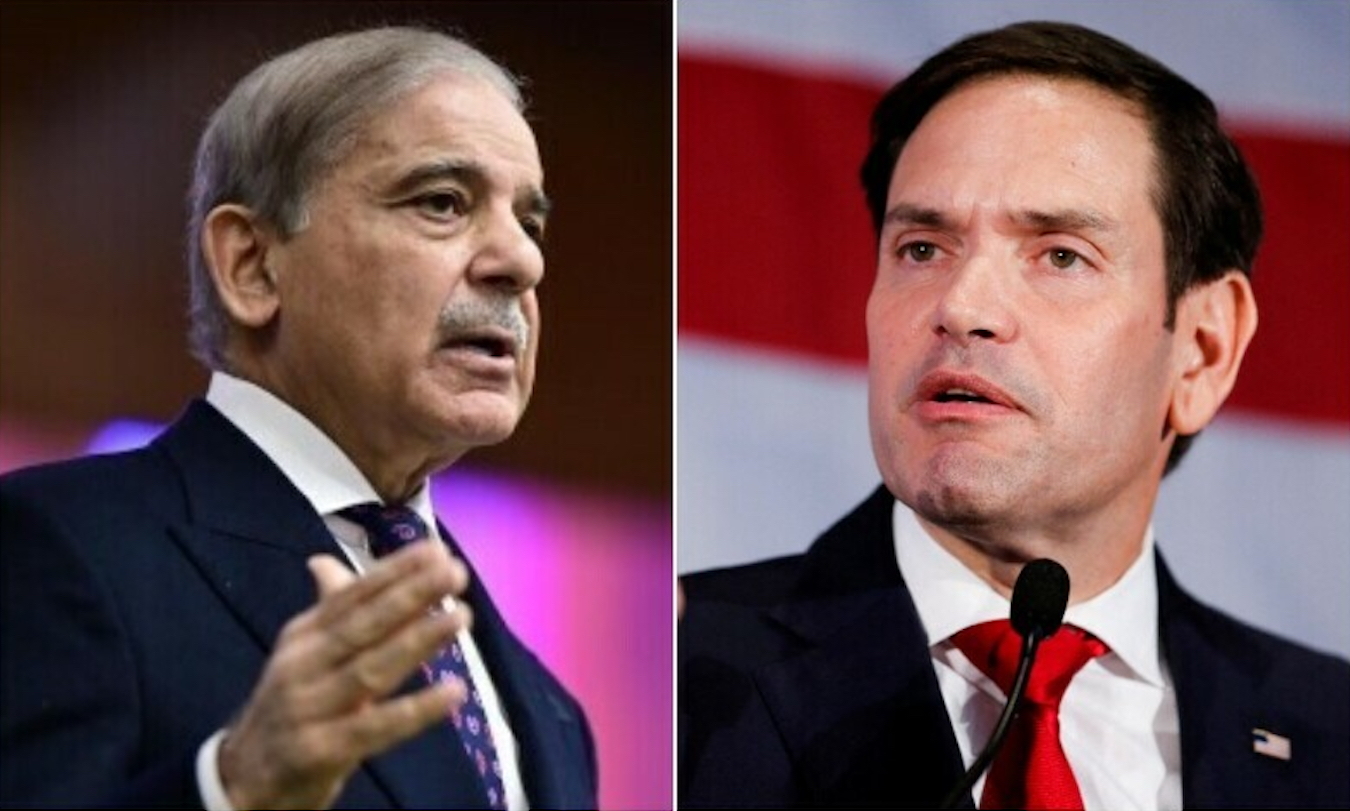
Prime Minister Shehbaz Sharif is expected to meet Secretary of State Marco Rubio in New York on September 22, on the sidelines of the United Nations General Assembly. Trade, investment, counterterrorism and regional diplomacy are likely to feature, alongside Pakistan’s efforts to encourage dialogue amid continuing tensions in the Middle East. The meeting comes at a pivotal moment in US-Pakistan relations. The agenda is broader than it has been in years, extending beyond the security concerns that traditionally defined the bilateral relationship. Pakistan has occupied an important place in US strategy before. During the Cold War, the anti-Soviet campaign in Afghanistan and the post-9/11 era, bilateral cooperation expanded whenever Washington needed Pakistan’s geography, intelligence or security support. As those strategic priorities shifted, so did the scope and intensity of the two sides’ engagement. The emerging model looks different than past collaborations. Rather than resting on one overriding strategic problem, it increasingly draws on several narrower interests, including finance, trade, technology, energy, critical minerals and counterterrorism. Economics moves closer to the center The clearest shift is financial. Pakistan recently requested a US$10 billion exchange-stabilization facility from Washington, and Finance Minister Muhammad Aurangzeb said on September 17 that Islamabad expects a US response within roughly two months. Pakistan is also discussing financing with the US Export-Import Bank and the US International Development Finance Corporation, including possible support for aircraft purchases and a planned refinery-upgrade program. At the same time, Islamabad plans to seek an expansion of its 30-billion-yuan currency-swap arrangement with China when it comes up for renewal in 2027. The current facility has been fully drawn down. The parallel negotiations illustrate Pakistan’s balancing act: deepening economic ties with Washington while preserving its long-standing strategic and economic partnership with Beijing. US goods-and-services trade with Pakistan reached an estimated US$11.5 billion in 2025, up 14% from the previous year, while Pakistan’s ICT-services exports rose 18.3% to $3.8 billion in fiscal 2025. With roughly 255 million people and an economy exceeding $400 billion, the country offers a substantial consumer, labor and services market. Its position between China, Afghanistan, Iran and the Arabian Sea — with access toward Central Asian and Gulf markets — lends commercial significance to geography more often viewed through a security lens. Technology offers perhaps the clearest example of bilateral cooperation that requires no geopolitical emergency to sustain. Software, digital services, fintech and business-to-business investment are growing because firms see commercial value, even when Washington and Islamabad differ on other regional questions. Energy could become another practical area of cooperation. Prospective US financing for refinery upgrades would place energy infrastructure alongside trade and technology while supporting a sector central to Pakistan’s long-term growth and energy security. Minerals offer opportunity — and a test Critical minerals could add another economic-security dimension. Washington is placing greater emphasis on resilient mineral supply chains, while Pakistan is seeking foreign investment in copper, gold and other resources. The Reko Diq mine in Balochistan illustrates both Pakistan’s mineral promise and complexity. The copper-gold project could eventually generate substantial activity in mining, engineering, transport and processing, but Barrick said in April that it was slowing development and extending its review until mid-2027 while reassessing security conditions, financing, capital requirements, project scope and timing. The broader lesson is that mineral resources deliver the greatest strategic value when infrastructure, financing, regulatory frameworks, security arrangements and investor confidence all support long-term development. Pakistan’s case therefore rests not only on the scale of its resources, but on whether major projects can become bankable, secure and integrated into global supply chains. That all said, counterterrorism is still crucial to US-Pakistan relations. On September 16, Mohammad Sharifullah, an ISIS-K operative involved in planning the 2021 Abbey Gate bombing in Kabul, was sentenced in the United States to 20 years in prison. The attack killed 13 US service members and scores of Afghan civilians; Sharifullah was apprehended in 2025 before being transferred to the United States for prosecution. His case offered a concrete example of cooperation against a threat of direct concern to Washington. Pakistan also continues to bear a high domestic cost from militancy: its Foreign Ministry said in August that more than 90,000 Pakistanis have been killed and economic losses have exceeded $150 billion in the country’s fight against terrorism. The fourth US-Pakistan Counterterrorism Dialogue in August addressed border security, terrorist-facilitation networks and threats from ISIS-K, al-Qaeda, Tehreek-e-Taliban Pakistan (TTP), and the Balochistan Liberation Army (BLA) and its affiliates. From access to staying power High-level diplomacy has also grown more regular. Sharif and Rubio met in Washington in February and agreed to expand trade, economic activity and counterterrorism cooperation. In May, Deputy Prime Minister and Foreign Minister Ishaq Dar met Rubio again to discuss economic ties, cultural cooperation and security. Pakistan’s official account said Rubio also acknowledged Islamabad’s diplomatic and mediatory efforts. Those contacts matter, but the deeper measure of progress will be whether they produce durable economic and institutional outcomes. More telling indicators will be long-term US private investment, economic dialogue that survives political disagreements, mineral and technology projects that move from announcement to implementation and counterterrorism coordination that continues even when no immediate emergency dominates Washington’s agenda. Education, professional exchanges, business networks and technology partnerships provide another, quieter layer of continuity. These channels rarely draw the attention of summit diplomacy, but they can sustain links between the two countries when official relations grow more difficult. Pakistan’s simultaneous engagement with China reinforces this broader logic. Beijing remains a long-term strategic partner in infrastructure, finance and trade. Washington offers different advantages: access to the dollar-centered financial system, American capital, technology and global commercial networks. Gulf states add energy, investment, remittances and security ties. These relationships all serve different purposes. Diversification widens Islamabad’s room to maneuver, giving Pakistan greater flexibility in pursuing its economic and strategic interests across multiple partnerships. Pakistan does not need to recreate the sweeping US partnerships of the Cold War or Afghanistan era. A narrower arrangement may prove more sustainable precisely because neither side must depend on a single strategic bargain. But what’s clear as Sharif heads to New York is that Pakistan has Washington’s attention again. Saima Afzal is a researcher specializing in South Asian security, counterterrorism and broader geopolitical dynamics across the Middle East, Afghanistan and the Indo-Pacific. She is currently a research scholar at Justus Liebig University, Germany.
Pakistan’s US opening looks well beyond the next crisis
Full Article
Original Source
Read the full article at Asiatimes →KhanList aggregates and links to publicly available news content. We do not host full articles from third-party sources. Always verify important information with original sources.