
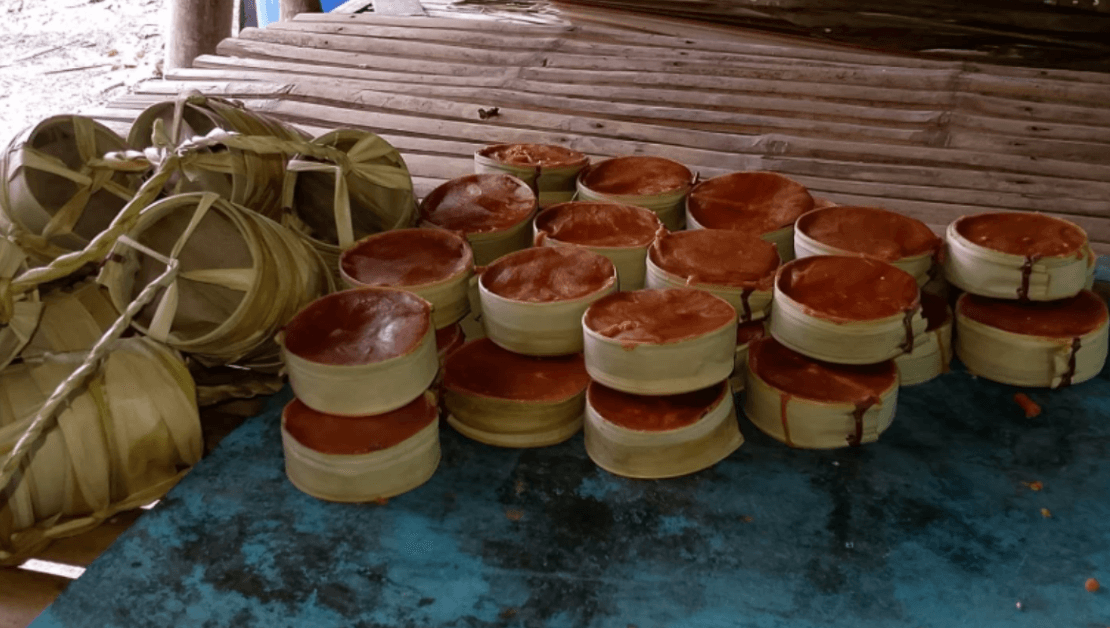
Pakaskas is a traditional sweet treat from Isla Verde, made from the boiled sap of the buri palm tree, reflecting the island's cultural heritage. The labor-intensive process of making pakaskas relies on skilled artisans, but the tradition faces challenges due to an aging workforce and a lack of interest from younger generations. To sustain the tradition, artisans have innovated by creating pakaskas cubes, making the delicacy more appealing and accessible while preserving its cultural significance. This is AI-generated. Read the article for full context. Report any errors. BATANGAS, Philippines – An heirloom tradition in Isla Verde is fighting to live against the tide of changing times. According to John Sherwin Felix, a Filipino food heritage advocate, pakaskas is a traditional Filipino sweet treat considered native only to Isla Verde, and is made from the boiled and caramelized sap of the buri palm tree. However, behind its simple sweetness lies a demanding and increasingly fragile tradition — one that depends not only on the availability of buri sap, but also on the time, labor, and specialized knowledge required to transform it into the delicacy. In Sitio Bayanan, Barangay San Agapito, home to most of the island’s seasoned pakaskas makers, master artisans continue to enrich the culture despite the constant evolution of food preferences and food production in the modern world. Decades of preserving the heritage While there are no historical records showing when pakaskas started, Fernando Catoy, 53, one of the oldest artisans in Isla Verde, remembers how the sweet delicacy has always been a part of the island’s identity and communal work. “We inherited the tradition of making pakaskas from our parents and ancestors, and we continue to preserve it as part of our cultural heritage,” Catoy said. INHERITED TRADITION. Fernando Catoy stirs and blends the buri sap in a cauldron. Contributed photo The name of the delicacy is derived from the Tagalog root word kaskas, which means to scrape, referring to the process of scraping the thick, sticky sugar off the sides of the cooking cauldron (kawa) after hours of boiling over an open fire. Once cooked, the warm caramel is poured into small, round containers called kasitas, which are meticulously hand-woven from dried buri palm leaves. Artisans need to wait approximately 24 hours to collect enough tubâ (buri sap) from the buri palm to fill one cauldron. The process also requires considerable time, partnered with physical effort and traditional knowledge. “You have to gather the sap, prepare the fire, monitor the boiling, continuously stir and scrape the kawa, and finally pour the caramel into the handmade kasitas,” Catoy added. The process of making pakaskas is also organized, following a structured schedule among the artisans. They do not produce the delicacy at the same time, with one family assigned to make a batch one week, then another the following week. “What makes pakaskas special is that every part of it is connected to Isla Verde. From the buri palm to the cooking process, up to the handwoven kasitas, it reflects the culture and resourcefulness of the community,” he added. There are also weeks when no family produces pakaskas, with production resuming the following week. According to Catoy, this scheduling system is practiced to prevent the depletion or overexploitation of their natural resources. BOILS DOWN TO HISTORY. The preparation of Batangas’ traditional pakaskas includes boiling the buri sap in a kawa, a crucial step that develops its distinct sweetness and texture. Contributed photo However, the survival of this tradition is not guaranteed. Its labor-intensive process, reliance on natural resources, and the limited number of experienced artisans create a tension between preserving pakaskas as a cultural tradition and sustaining the resources and people needed to keep its production alive. “As the craft grows harder to sustain, the challenge lies in ensuring that the tradition continues without losing the people and resources behind it,” Catoy said. “The future of pakaskas rests not only on passing down its methods, but on keeping the craft possible for those who come next,” he added. The artisans age with the craft For Catoy, the challenge is not only preserving the recipe, but also ensuring that there are people who will continue making pakaskas in the years to come. As the tradition continues, the people who carry the knowledge of making pakaskas are also growing older. Many of the island’s experienced makers have spent decades learning and practicing the craft, but fewer younger people are taking up the work. “The demanding process discourages the younger generation from continuing the tradition,” Catoy said. The physically demanding work, coupled with the time required to produce the sweet treat, has made it increasingly difficult to attract younger people to the craft. Innovation meets tradition To innovate the traditional Batangueño delicacy, the artisans created pakaskas cubes, a modern and creative version of the original recipe. Since drying kasitas is a difficult and time-consuming process, they came up with the idea of making pakaskas cubes as an alternative way to prepare and present the delicacy. By presenting it in cube-shaped portions, they aim to make the product more unique, appealing, and convenient for customers. “Innovation is the key to preserving tradition,” Catoy said. This innovation preserves the traditional flavor and cultural value of pakaskas, while introducing a fresh presentation that can attract younger generations and new customers. For now, the tradition remains in the hands of those who continue to make it despite the demanding work and uncertain income. But each maker who teaches the process to another person keeps the knowledge moving forward — and gives pakaskas another chance to remain part of the island’s story. By combining tradition with innovation, pakaskas can continue to be appreciated as an important part of Batangueño culture and heritage. “Pakaskas is something that was passed down to us, and we want it to be passed down to the next generation,” Catoy added. – Rappler.com Quotes are translated into English for brevity. Christian F. Patulot is a poet-journalist, essayist, researcher, and a Mover based in Batangas. He writes about culture, language, and the everyday experiences of Filipinos.
Pakaskas makers preserve taste of Batangueño heritage
Full Article
Original Source
Read the full article at Rappler →KhanList aggregates and links to publicly available news content. We do not host full articles from third-party sources. Always verify important information with original sources.