
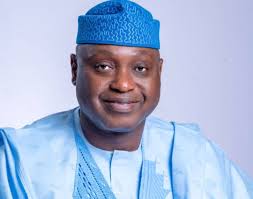
Gbenga Sodeinde in Ado-Ekiti Ekiti State Governor, Mr. Biodun Oyebanji, has unveiled an ambitious industrialisation blueprint for his second term in office, declaring that his administration will shift from building infrastructure to driving industrial growth, expanding local value addition and supporting small businesses as part of efforts to transform the state’s economy. The governor said the next phase of his administration would focus on ensuring that agricultural produce grown in Ekiti is processed locally into finished products capable of generating higher economic value, creating jobs and stimulating private sector-led development. Speaking on his second-term agenda during an interview in Ado Ekiti, Oyebanji said the foundation for economic expansion had already been laid through massive investments in roads, electricity, agriculture and other critical infrastructure during his first term. According to him, the priority now is to convert those investments into productivity and shared prosperity through industrialisation. “Our next major focus is industrialisation and support for small businesses. That is the only way we can deepen our shared prosperity agenda,” the governor said. He explained that while infrastructure development would continue, greater attention would now be devoted to empowering small and medium-scale enterprises by improving access to affordable financing for welders, tailors, hairdressers, barbers, artisans and other entrepreneurs to expand their businesses and create employment. Oyebanji said his administration would also strengthen agricultural value chains by ensuring that farmers produce at scale and are linked to reliable off-takers and processing companies that would convert raw agricultural products into finished goods for local consumption and export. To attract investment into the state, the governor said the government was implementing reforms to improve the ease of doing business through simplified approval processes, streamlined taxation, reforms in land administration and the establishment of a one-stop investment centre for investors. The governor noted that these initiatives had already begun attracting significant private investment into the state’s agriculture sector, particularly within the Special Agro-Industrial Processing Zone, where investors have committed billions of naira to agribusiness projects. Oyebanji cited Agbeyewa Farms, described as one of the world’s largest cassava farms, alongside Arog Agro-Allied and other agribusinesses as evidence of growing investor confidence in Ekiti’s economy. He added that the African Development Bank’s selection of Ekiti as a Tier-2 State under the Special Agro-Industrial Processing Zone Programme would further strengthen the state’s industrial ambitions through irrigation development and expanded agricultural production. The governor stressed that the government’s responsibility was not to establish industries but to create the right environment for businesses to flourish. “Capital flows to places where it is treated well. Our responsibility is to provide infrastructure, guarantee security, improve the business environment and create policies that encourage investors to establish industries and create jobs,” he said. Beyond industrialisation, Oyebanji disclosed that his administration was accelerating efforts to position the Ekiti Agro-Allied International Cargo Airport as a 24-hour facility through the installation of an Instrument Landing System, airfield lighting and a privately developed aviation fuel depot. According to him, the airport would become a strategic hub for investment, cargo movement and agricultural exports once the ongoing projects are completed. He also revealed plans to expand the state’s transportation system through the deployment of Compressed Natural Gas (CNG)-powered and electric vehicles, saying the initiative would reduce transportation costs, improve mobility and support economic activities without disrupting existing transport operators. Oyebanji said the industrialisation agenda would be reflected prominently in the 2027 budget, expressing confidence that the strategy would accelerate productivity, create sustainable jobs and position Ekiti State as the leading destination for investment, agro-processing and manufacturing in Nigeria. “Our central objective in this second term is to catalyse productivity and ensure that our economy becomes more productive. Everything we are doing is geared towards creating opportunities for businesses to thrive and for our people to enjoy greater prosperity,” the governor said.
Oyebanji Unveils Industrialisation Blueprint, Targets Small Businesses Growth
Full Article
Original Source
Read the full article at Thisdaylive →KhanList aggregates and links to publicly available news content. We do not host full articles from third-party sources. Always verify important information with original sources.