
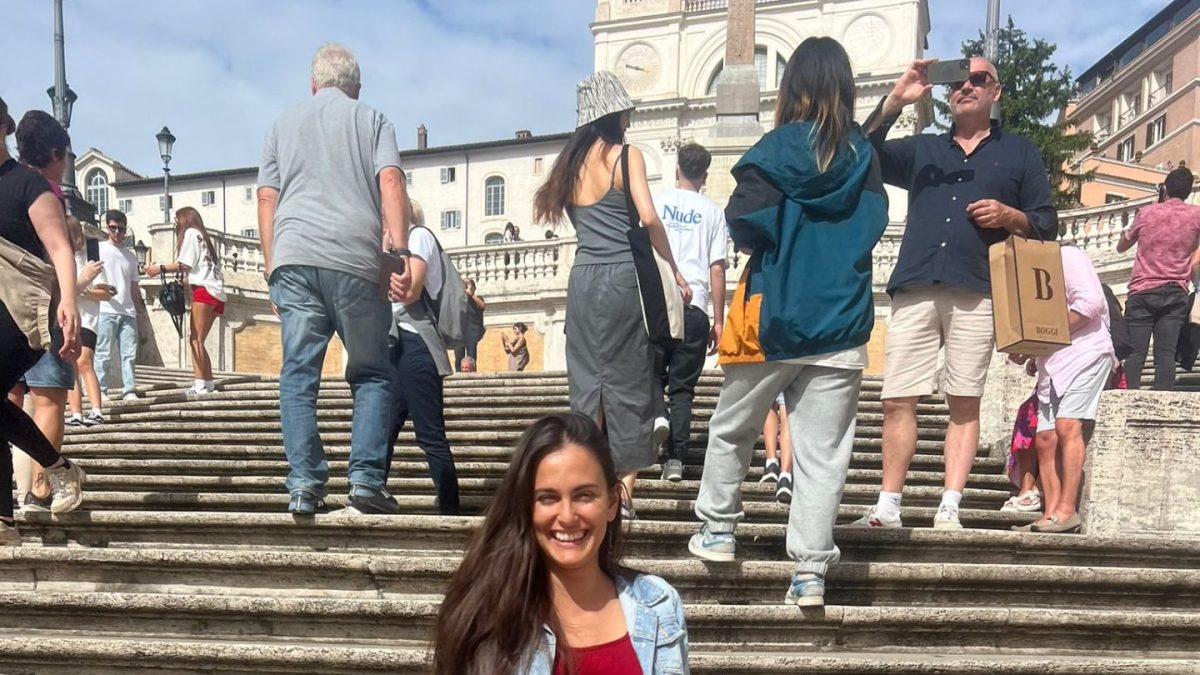
I don’t think I’ll ever forget the first time I saw the Colosseum. I emerged from the metro into the December sunshine, the four-storey facade glowing in the afternoon light in front of me. Sitting on a bench near the entrance, I took it all in: the history, the scale and the significance of one of the ancient world’s greatest monuments. That was in 2018, the year I moved to the Eternal City. Leaving northern Italy for Rome was an easy decision. While art and history were obvious draws, it was the capital’s energy and abundance of green space – more than a quarter of the city – that won me over. Since then, Rome has become noticeably more crowded and expensive. Rents have risen sharply, T-Rex-sized seagulls patrol the streets, and spontaneous trips to the Vatican museums are a no-go. Navigating the areas around these landmarks and the Spanish Steps means shuffling through a sea of tourists. Shorts That peaceful moment at the Colosseum eight years ago couldn’t happen now, even in the off-season. Tourism is booming. Last year, driven in part by the 2025 Vatican Jubilee, Rome welcomed 22.9 million visitors, dwarfing its three million residents. Local reports suggest numbers will continue to rise, prompting strategies to manage the pressure such as timed €2 tickets to access the Trevi Fountain – more than a quarter of a million entries were recorded in the first month of operation at the start of this year. Frustrated by inconsistent public transport and strained waste management, I recently moved to Frascati just outside the capital, but I still commute in to work. Yet, despite the crowds, Rome still has plenty of pockets where its slower, authentic character endures, and where I fall in love with it again. The Roman aqueduct in Parco degli Acquedotti (Photo: StockSeller_ukr/Getty Images) Rome’s limestone and marble antiquities are pleasingly enveloped by remarkable parks, particularly in the southern districts. Take Parco degli Acquedotti. Named after the six ancient Roman aqueducts crossing its 240 hectares, the park is a golden-hour favourite of mine. The sinking sun catches the gigantic stone waterways in a way that makes you wonder what life was like when they carried water all those years ago. Nearby is Caffarella Park, where sheep graze and wild rabbits hop around the vast, wildflower-dotted fields, feeling more like the countryside than a suburban enclave. On one of my more adventurous visits, I followed signs from the park to the old Appian Way, the ancient road that connected Rome to Brindisi in Puglia as far back as 312 BC. At one point, I found myself in a spot where no modern buildings were visible, only greenery and ruins, such as the second century Tomb of Annia Regilla and the grotto-like Nymphaeum of Egeria, a homage to the ancient Roman water nymph. It’s still possible to walk on the ancient Appian Way (Photo: Renata Tyburczy/Getty Images) In a brief moment of isolation, I had to check Google Maps to see whether I had walked out of the city. As I merged onto the cobblestoned Appian Way, it was hard not to imagine the countless feet that have walked over the same basoli throughout the millennia. Ruins of places of worship and tombs line the road, and the Catacomb of Saint Callistus and that of Saint Sebastian offer an interesting glimpse into early Christian history. After all the walking, L’Archeologia was the perfect place to pause. The restaurant has been serving diners since 1804, complete with an underground tomb turned wine cellar from the first century. In a sharp contrast to the Appian Way, EUR (Esposizione Universale Roma), a neighbourhood on the Tiber on the southern fringes of the city, is somewhere I appreciate for its modernity. The ‘Square Colosseum’ is part of the modern EUR district (Photo: Atlantide Phototravel/Getty Images) Founded in 1937 as part of Mussolini’s expansion of the capital, it is now the financial district and notable for its monumental, rationalist architecture such as the Palazzo della Civilta del Lavoro, known as the “Square Colosseum”, the Palazzo dei Congressi and the the enormous travertine Basilica of Saints Peter and Paul. In spring, the trees around the rectangular artificial lake at the centre of the district burst with pink blossom. Two stops on the metro from EUR is Basilica San Paolo. I lived in the area for a short while; it’s a quiet neighbourhood without much going on, but it is home to one of Rome’s four major basilicas: the Papal Basilica of Saint Paul Outside the Walls. The Basilica di San Paolo is a quiet beauty (Photo: Jessica Lionnel) Far less crowded than the other three (St Peter’s in the Vatican, St John Lateran’s, and Saint Mary Major’s), this is one that you won’t have to queue for. Once through security, you enter a palm tree- and marble-filled cloister, with a golden mosaic depicting prominent biblical figures. The interior is just as impressive – a coffered ceiling spans the nave. I was just as impressed the first time I looked up as the first time I visited the Basilica of Saint Peter. A 10-minute walk away is Garbatella. This once working-class neighbourhood was where Italian Premier Giorgia Meloni grew up. Though it’s turned into a bohemian quarter, it still retains its strong sense of community; children play out on the central piazza, social centres attract youngsters, and families sit out in their gardens – a rarity in apartment-packed Rome. Dar Moschino is the perfect place to sit and slurp up a carbonara, while taking it all in. The Garbatella quarter offers a slower pace than central Rome (Photo: ValerioMei/Getty Images) I may avoid the historic centre during peak season now, but come October and November when starling murmurations pulsate in the skies and tourist swarms are thinner, I find myself drawn back in. But Rome’s appeal was never confined to its most famous landmarks. It is in the silence of the Appian Way in the late afternoon, in the cloisters of St Paul Outside the Walls, and in neighbourhoods like Garbatella, where the city feels lived in rather than performed.
Overtourism pushed me out of Rome, but these are the places I go back for
Full Article
Original Source
Read the full article at Inews →KhanList aggregates and links to publicly available news content. We do not host full articles from third-party sources. Always verify important information with original sources.