
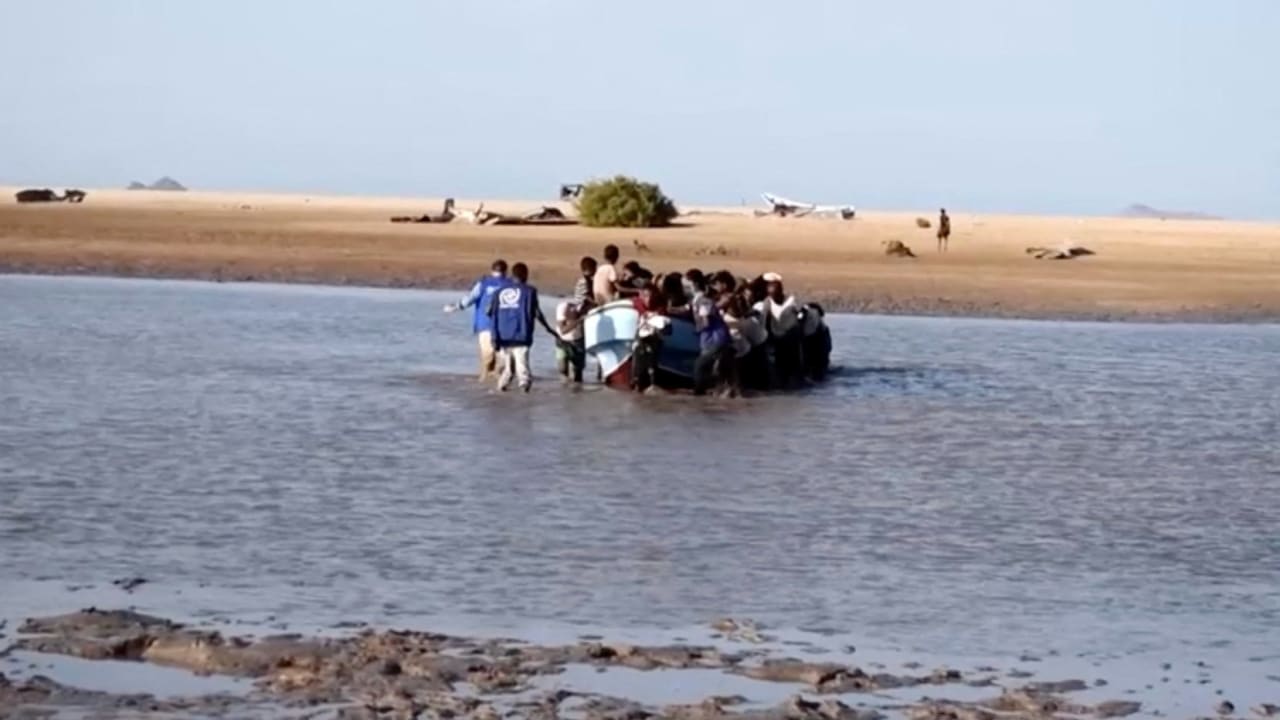
Jerusalem Post/Middle East"Humanitarian access remains a major challenge. Insecurity, damaged roads, telecommunications disruptions and movement restrictions are affecting operations," UNHCR said in a statement.Follow us on GoogleStaff walk towards a boat carrying refugees from Yemen, fleeing clashes between Houthi fighters and Saudi-backed Yemeni government forces, after arriving in Djibouti, September 12, 2026, in this screen grab taken from a video. (photo credit: International Organization for Migration/Handout via REUTERS)SEPTEMBER 15, 2026 16:36Over 100,000 people have been internally displaced as fighting continues to escalate along the West Coast between Iran-backed Houthi militia and Yemen’s Saudi-backed, internationally recognized government, the Office of the United Nations High Commissioner for Refugees announced on Tuesday.“Humanitarian access remains a major challenge. Insecurity, damaged roads, telecommunications disruptions, and movement restrictions are affecting operations,” UNHCR said in a statement.The latest escalation comes as the Houthis seek to seize control of the strategic Bab al-Mandeb Strait, a vital chokepoint for global oil and commodities shipping, and after the Houthis launched a number of attacks on Saudi Arabia and its assets. The attempt follows Iran’s efforts to assert control over the vital Strait of Hormuz.The International Organization for Migration (IOM) already warned on Sunday that over 85,000 people had been displaced in Yemen, including 82,164 since the beginning of September alone, according to the Displacement Tracking Matrix (DTM).More than 2,400 people fleeing Yemen’s escalating civil war have reached the northern shores of Djibouti so far, according to the UNHCR, as the civil war, which erupted after the Houthis seized Sanaa in 2014, continues to intensify. More than 60% of those fleeing are women, children, or elderly men.Refugees from Yemen, fleeing clashes between Houthi fighters and Saudi-backed Yemeni government forces, gather under a shade after arriving in Djibouti, September 12, 2026, in this screen grab taken from a video. (credit: International Organization for Migration/Handout via REUTERS)Djibouti struggling with influx of displaced individualsIOM and other UN partners have provided support to Djiboutian authorities, who have mobilized the Navy, army, police, and health services for the displaced masses. However, despite the support, Djibouti’s finance minister, Ilyas Dawaleh, said on Sunday that the situation was “becoming increasingly difficult for our country, despite our unwavering commitment to humanitarian resources.”UNHCR Representative in Djibouti Sandrine Desamours said, “People are arriving after a difficult sea journey, many exhausted, distressed, and carrying what little they could take with them.”She added: “The response is already under pressure. We urgently need more support before more families arrive and needs outpace our capacity to assist them.”The IOM confirmed that new arrivals were being transported to the Markazi site in Obock, where they receive food and water, though Desamours warned that the site only has room for around 5,000 more refugees. The UN official said they were expecting in excess of 10,000 arrivals in the coming days and weeks.IOM director-general calls for donor support for refugees“Behind every number is a family who’s lost everything,” IOM Director General Amy Pope said. “Many have been displaced multiple times. People are crossing the sea with nothing because they have no other choice left. Yemen is a country torn by poverty and conflict, and it cannot carry this crisis alone. I call on donors to scale up support now, for those arriving in Djibouti and for the communities in Obock receiving them.”Taiz, a province near the port city of Mocha on the Red Sea, remains the hardest hit, with 9,280 households, or nearly 56,000 people, displaced from its districts. Lahj follows, with 19,000 of its residents forced to flee, the majority from Al-Mudharibah district. Follow us on Google
Over 100,000 displaced by Houthis as escalation with Saudi-backed Yemeni government continues
Full Article
Original Source
Read the full article at Jpost →KhanList aggregates and links to publicly available news content. We do not host full articles from third-party sources. Always verify important information with original sources.