
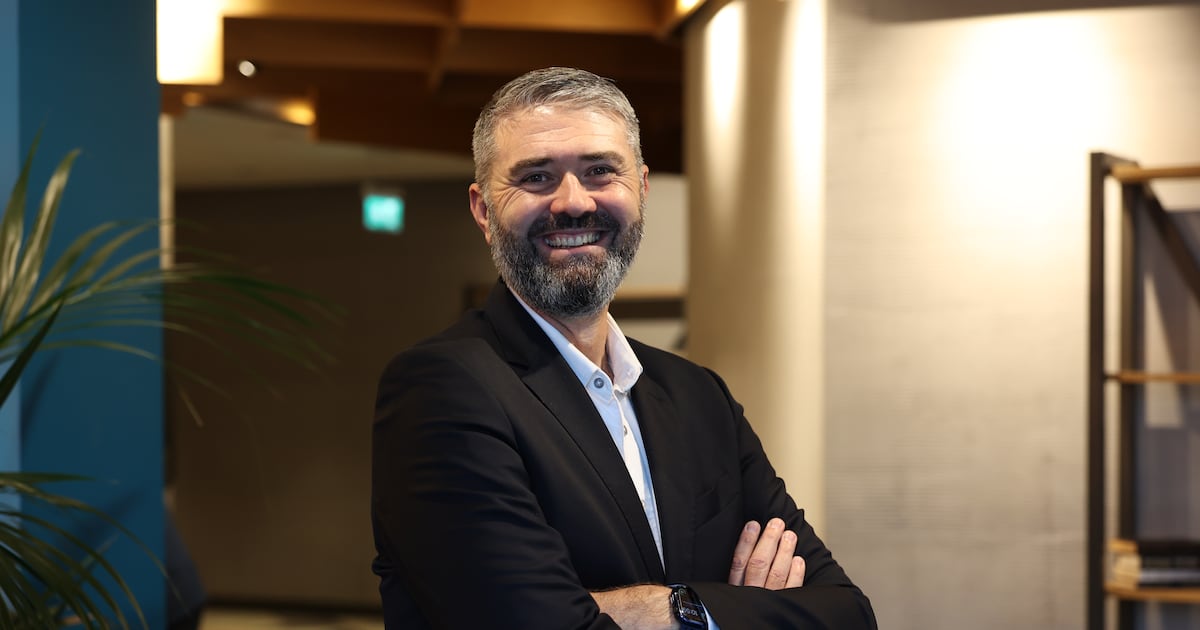
Peter Broome spent the summer holidaying in Ireland. As well as enjoying the exceptionally dry and sunny period, the Brisbane native used his time to take up fly fishing.“I got all the gear and had no idea and just started,” he says. “I’ve been fishing with different guides around the country and meeting people and it’s enjoyable.”The boss of Outsurance’s Irish insurance arm has also been casting out for new customers.The fly-fishing trips have proven to be inadvertent market research opportunities.READ MORE“I tend to find if you’re in a pub talking to people because you’re travelling and they find out you’re in insurance, they always want to have a chat,” he says.“They all want to tell you that it’s too expensive.”Broome laughs as he recalls some encounters. He says he enjoys “educating” people on why insurance premiums work the way they do - but also that Irish customers are among the savviest in the world. It is that cohort his business has been trying to win over for the past two years.From its Irish base in Cherrywood, south Co Dublin, Outsurance has employed more than 200 people and has concentrated on cracking the Irish motor insurance market.Its TV ads and online media spots have sought to use “real” customer testimonies and feature a distinctive paper-man character who consists of random sheets of paper and bundled-together office supplies.Broome is under no illusion about the challenge. “I can say to you, probably tens of thousands of customers have now joined us. We’re still very small.”With the considerable backing of its parent group – the multinational Outsurance Group in South Africa - Broome says the Irish business should begin to make proper inroads.“We’re still going to be well in the lowest, lower single digits when it comes to market share at this stage of the game,” he adds. “And, and you know, that’s fine because it takes time to build trust with consumers.“You can’t just come in overnight and think you’re going to run some ads and get a big book. Because I mean, the Irish have got long memories as well and so they’ve seen in the past where insurers have come and then gone.“You need to build a little bit of confidence with the market that you’re here to stay for the long run. As we earn those stripes, they’ll join us at much higher rates.”Broome is alluding to the troubled past of Ireland’s insurance market.Quinn Insurance’s collapse in 2010 still haunts the minds of Irish consumers. Until this year, every non-life insurance customer here was paying a 2 per cent levy that essentially covered the cost of the Quinn administration. It was reduced this year to 1 per cent.In the years that followed the Quinn debacle, more than one international insurance brand looked at Ireland and turned its nose up.ArrivalOutsurance’s arrival proper in 2024 was welcomed by the Government as a watershed moment - and recognition that the fundamentals underpinning the insurance sector had been significantly improved.A new Book of Quantum had been established, which was designed to bring down the high cost of personal injury payments, and moves were made towards a more efficient and less costly way of dealing with claims. Reform of the Personal Injuries Assessment Board sought to increase the use of mediation and ultimately bring down insurance premiums by limiting the use of solicitors and the need to go to court.This was “all very positive”, says Broome, but more needs to be done.“There’s plenty of data out there, as you’ve seen around the quantum of bodily injury payout, in comparison to the UK it is still higher. So I think there’s still probably work to do there.“We need to drive as much through the Injuries Resolutions Board [formerly PIAB] as we can. I think in terms of mediation, you want a fair outcome for the customer – that’s a must.“Sometimes the legal route can take you years, whereas if we can try and keep that process with the Injuries Resolution Board to a shorter process, it costs less and still ends up with a very fair outcome for the consumer.“The more those numbers look the same, the more people will transition towards the resolution board.”While the insurance market is arguably more attractive now than it was a few years ago – offering the promise perhaps of cheaper premiums in the future – there are new trends that may mitigate any big reduction in costs.The increase of more technologically-advanced electric vehicles on the road poses new types of claims for the industry.“With the ADAS [driver assistance] systems that were coming in and more automation of vehicles coming through, that always comes with increased technology, which inevitably comes with more costs in repair,” says Broome.“The other side of that coin is it can come with lower frequency of accidents because the alarm systems are telling you you’re about to back into something, rather than the old days where we had to just use the mirrors.“So it can help reduce your frequency, but it does tend to lead to it being a more expensive repair in the long run.”Key to bringing down the costs of repairs, he says, is an increase in the availability of parts. With more of these cars on the road the pressure on new parts should lessen over the next few years.For now, it is the motor insurance market that Broome is largely occupied with.The company has yet to venture seriously into home insurance. According to Broome, this is to be expected.“When you’re a new entrant into the market, consumers will try you with their car and give you an opportunity to price on that and to cover them for a year and they’ll see how your service is,” says Broome. “And if they can trust you and then as that trust builds, they’ll then trust you with their larger assets. So that’s not an unusual thing.”WeatherHe has watched as severe weather events in Ireland have begun to change the reckonings for many customers and their insurance providers. It was a horrendous winter for many homeowners around the country due to flooding. The Central Bank of Ireland estimates that around one-in-20 homes struggle to get cover due to being located in an area that has already flooded or is deemed to be at risk of flooding. Just last month the industry’s representative body, Insurance Ireland, published proposals to close what it called Ireland’s “flood insurance protection gap”.Among them, the establishment of a “sustainable” flood insurance fund that would extend cover to vulnerable properties.Broome says Outsurance has been part of drawing these up. “The house that was built in a spot decades or hundreds of years ago, is now exposed in a way that it never was back then,” he says.“They could never have imagined at that point in time that that home would be exposed to consistent weather events. And it’s exactly the same worldwide.”He refers back to his home country where severe weather is now a simple fact of life. As an example, he talks about houses on the Brisbane river in Queensland that are now expected to be flooded-out every “seven to 10 years”. “It’s very hard to insure your way out of that because the cost of it is massive,” he says. He says the insurance gap in Ireland isn’t as large as some other countries, and he is optimistic that it will be addressed. No conversation with a senior business person these days would be complete without the inevitable mention of artificial intelligence.Surely the insurance industry would be well placed to take advantage of what AI offers - particularly when it comes to automating claims and detecting fraud?Broome adopts a cautious stance.“We take a softly, softly approach with AI,” he says. “It could be an excellent tool for assisting humans in doing their job. But I think it’s quite important for us to be a bit slower in adoption in terms of making sure that it’s not making decisions.”The company has not, he says, deployed AI when it comes to pricing risk or new policies.“There’s a million companies that would be quite happy to sell us their AI model tomorrow,” he says. ”We certainly don’t think that at this stage it’s costing us anything from a competition point of view.”But at the same time it is watching this area “quite closely”. Might this mean, in future, a reduced headcount in Cherrywood?“We don’t want to replace people,” he replies. “Irish consumers, if there’s something going on and they want to pick up the phone and ring somebody, they want to get you on the phone and have it sorted out fairly quickly.”He says the 240 staff there are part of a “service level commitment” to answer 95 per cent of all calls in 20 seconds. “And that’s by a human being, not by the IVR (Interactive Voice Response) or an automated message saying, yes, you’re in the queue. That’s actually picked up by a human who can help you.“That, to us, is quite a pivotal piece.”Broome saysOutsurance aims to have 300 people on the payroll by the end of the year. The Irish market, he believes, is different to others in that customers here want to talk about their policies with other human beings.“You need to be there to take that call. And that’s why chatbots and things like that, those [things] can be quite frustrating. We’re still a bit old school in our service offering.”In terms of pricing, it has been a tough decade or so for consumers here - with persistent claims of price gouging on premiums.The Competition and Consumer Protection Commission (CCPC) has instigated investigations in the past into “price signalling” - a practice where providers make public statements about what they intend on doing with their premiums, allowing the rest of the industry to price accordingly.Understandably, Broom says he has to “keep his cards close to his chest”.“We are constantly monitoring on a daily basis … as to how the numbers track and we have brought prices down quite intentionally,” he says.“My team put through another base rate decrease here just in the last couple of weeks. Which again, I shouldn’t be telling you. But you know we are proactively looking at price and trying to make sure that we’re matching as much [of] those numbers [that] will add up to stay competitive.”Ultimately, he says, the business has to be profitable. And how is that working out?“[There’s] ... always a long tail in insurance,” he says. “So when you start out, it’s always going to be a costly exercise to set up the business.“We’re lucky to have such a supportive group in Outsurance that’s very committed to the business and stumped up the capital for us to get started. We’re well capitalised and in a very good position and the business plan is going quite well.”Broome plans to see more of Ireland over the coming years having already taken in “Malin to Mizen”. The increasingly “savvy” Irish customers he encounters on his travels are likely to provide more real-world research and selling opportunities.“That’s why the chats are always quite interesting, depending on how many pints I’ve had.”
Outsurance’s Irish chief: ‘In Ireland everyone wants to tell you insurance is too expensive’
Full Article
Original Source
Read the full article at Irishtimes →KhanList aggregates and links to publicly available news content. We do not host full articles from third-party sources. Always verify important information with original sources.