
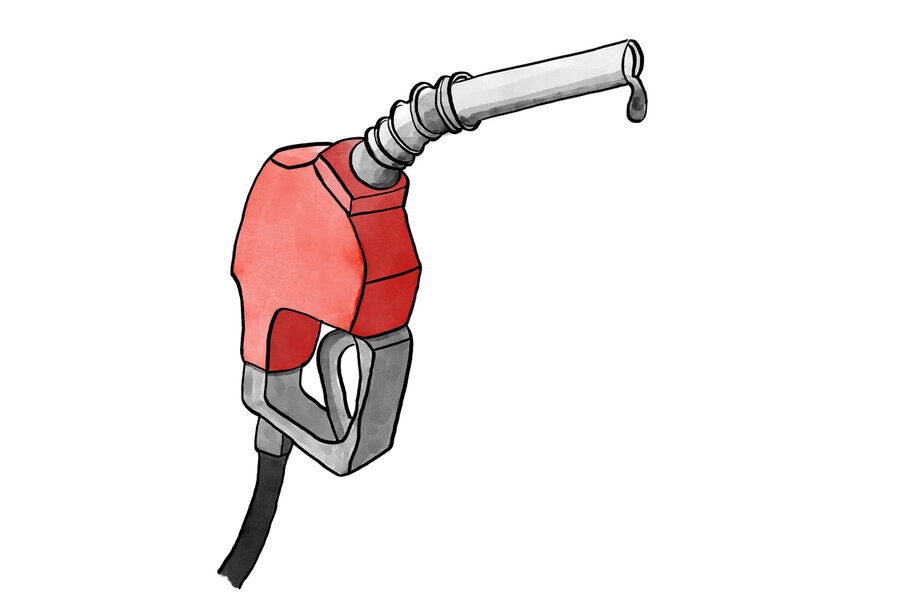
“Governments are trying to ... ease the pain.” That’s Paasha Mahdavi, director of the energy governance and political economy lab at the University of California, Santa Barbara, describing to the Financial Times the pressure that countries are under to combat high fuel prices exacerbated by war in the Middle East. A total of 94 countries have initiated some kind of consumer assistance, as of late September – that’s up from 56 countries in late April. For example, 57 governments have decreased their energy taxes. – Matthew Bell China opens new shipping route to Southeast AsiaChina has opened a new, southbound canal to connect its inland markets to Southeast Asia – the region that has surpassed North America and Europe in recent years to become China’s biggest trading partner. Only four years after construction began, the $11 billion Pinglu Canal runs 134 kilometers (83 miles) south from the Xi River to the Gulf of Tonkin. It shortens the time for cargo ships carrying goods such as grain, coal, and minerals to travel between China’s less-developed region of Guangxi and surrounding provinces to markets in Southeast Asia. The waterway expands China’s extensive network of canals, some of them 1,000 years old. – Ann Scott Tyson “I cannot ignore the reports of xenophobic violence.”That’s Malian musician Salif Keita, explaining his decision to cancel a September concert in South Africa. As protests against migrants continue to swell in South Africa, African musicians and fans are making their voices heard, reports The New York Times. South African singer Tyla quietly removed Lagos from her upcoming tour dates after a boycott petition in Nigeria, whose foreign nationals have been among the migrants targeted, while organizers of a July festival in Zimbabwe dropped Musa Keys, a South African amapiano star. – Ryan Lenora BrownRare plant gets a second potting in ScotlandSeeds from what’s believed to be the last dendroseris neriifolia still growing in the wild have been taken to Logan Botanic Garden in southwestern Scotland as part of an international effort to save a species “pushed to the brink,” the BBC reports. The seeds were collected from the lone tree daisy, a type of flowering plant, on Chile’s Robinson Crusoe Island. “This is the start of an exciting new period,” says Richard Baines, the curator at Logan, where the conditions are said to be particularly suitable for rare Chilean plants. – Tim Backshall Deepen your worldviewwith Monitor Highlights.Politics with respectGet political stories with respectful analysis.There‘s a world of new ideas in everyBooks newsletter.There‘s more to life, enrich yours withCulture & Learning weekly.Follow humanity‘s discoveries withScience & Nature stories in your inbox.Gain a spiritual perspectivefrom the stories in your inbox.Want to understand the deeper impact of critical events? Learn the Monitor‘s insight.Already a subscriber? Log in to hide ads. ALREADY A SUBSCRIBER? LoginReal news can be honest, hopeful, credible, constructive.The Christian Science Monitor was founded in 1908 to lift the standard of journalism and uplift humanity. We aim to “speak the truth in love.” Our goal is not to tell you what to think, but to give you the essential knowledge and understanding to come to your own intelligent conclusions. Join us in this mission by subscribing.
Our World: The week of Oct. 12, 2026
Full Article
Original Source
Read the full article at Csmonitor →KhanList aggregates and links to publicly available news content. We do not host full articles from third-party sources. Always verify important information with original sources.