
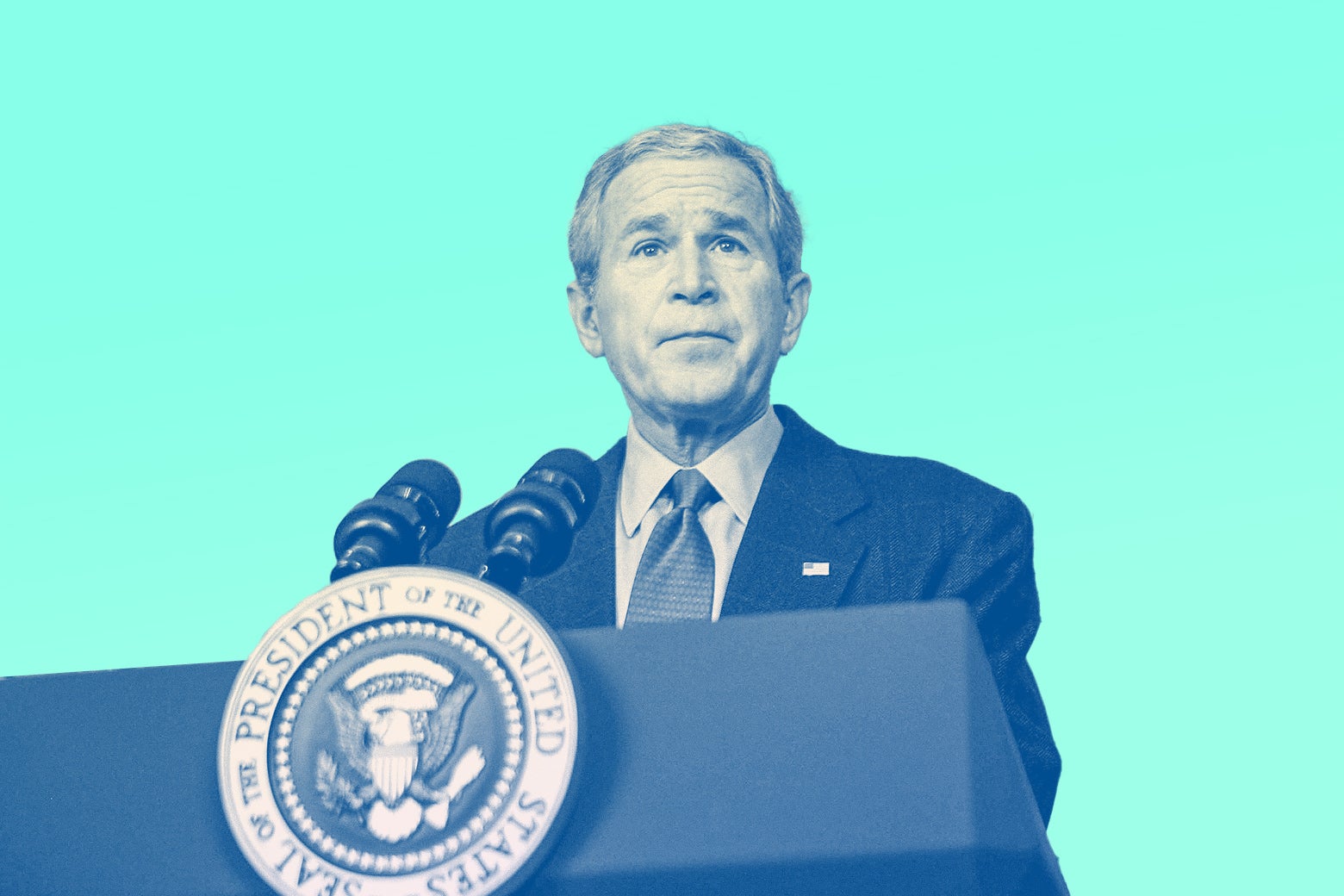
The Slatest It’s Beginning to Look a Lot Like 2006 Low-rise skinny jeans may be out—but the political conditions are familiar. Photo illustration by Slate. Photo by Dennis Brack-Pool/Getty images. This story is adapted from the Slatest newsletter. You can sign up here to get it in your inbox every day. Who’s going to win next month’s midterm elections? Polls, ads, and interviews with voters can only tell us so much, so some political observers have gone in search of historical parallels. Low-rise skinny jeans may be out and High School Musical may no longer top the charts, but 2006 may be a portent nevertheless. That year, an unpopular Republican president embroiled in a Middle Eastern war helped Democrats win back Congress. How strong is the analogy, really? Let’s explore. OK, I’m casting my mind back to that Pirates of the Caribbean sequel where Bill Nighy had an octopus for a face. But how similar was the political landscape? The parallels write themselves. In 2006, George W. Bush was in the second year of his second term. He’d led the country into an intractable war of choice that spiked gas prices. Americans were unhappy, giving Bush approval marks in the 30s. And because Republicans had unified control of Congress, the political blame fell squarely on them. Each of those things is true of Donald Trump today, which has some Republicans fretting. “There’s an argument, if you look at history, that 2026 feels a lot like 2006,” Sen. Steve Daines of Montana said this week. How well did Democrats do that year? In some tellings, it was the original “blue wave.” Republicans lost 30 House seats and their majority. Democrats also picked up six Senate seats, six governors’ mansions, and hundreds of state legislative seats around the country. Today, those fond memories have some Democrats sounding upbeat about November. “The analogy is amazing,” Sen. Chuck Schumer, who led the Senate Dems’ campaign arm in 2006, recently told the New York Times. What’s different between now and 2006? Besides the tiny computers we all carry around constantly, if the two years end up looking substantially different, political polarization may be why. Partisanship has hardened and gerrymandering has worsened, which makes elections less swingy. In 2006, the Cook Political Report classified more than 100 congressional districts as competitive. Today, even as the political landscapes look similar, Cook rates just 43 House seats as competitive. This trip down memory lane is entertaining, but does it really matter if 2006 and 2026 wind up being similar? Sometimes inflection points only become apparent in retrospect. The 2006 midterms laid the groundwork for some of the forces that have dominated American politics since. It swelled congressional Democrats’ ranks, helping the party gain a Senate supermajority three years later and, ultimately, pass the Affordable Care Act. (Even some of the players are familiar; Bernie Sanders won his Senate seat that year and Democrats’ House gains made Nancy Pelosi the first female speaker, a position she held off and on for the next 16 years.) For Republicans, as Jacob Weisberg argued in a prescient but arguably too optimistic story for Slate, the 2006 drubbing augured the end of the Reaganite conservatism that had dominated the GOP for decades. The collapse of that consensus created a vacuum that Trumpism eventually filled. So just as they did for Bush, the midterms carry immediate stakes for the future of Trump’s presidency, how Democrats might retake control of Washington, and what the party might achieve if it does. But this year may also illuminate broader forces that continue to resonate long after votes are counted. In another two decades, we could all be looking back at 2026 for clues. Tolga Akdoğan Who doesn’t love a pre-weekend blast from the past? To keep the theme going, my colleagues rooted around for some of Slate’s best stories from the mid-aughts midterm year that’s on everyone’s lips. Contemplate life’s mysteries: The Explainer was a longtime Slate column that answered readers’ burning questions about the world. In 2006, readers learned how to properly transport snakes on a plane, and whether George W. Bush was shrinking. But readers had many questions that the Explainer couldn’t tackle. Take a look back at the memorable unsolved queries that Slate readers were pondering 20 years ago. Rethink religion: “What happens when an ignoramus reads the Good Book?” That’s the premise behind the Slate series Blogging the Bible, in which David Plotz spent a year reading his religion’s founding text in its entirety and reflecting on what he learned. Learn from the Human Guinea Pig: In the aughts, Emily Yoffe bravely put herself in all sorts of weird situations as Slate’s Human Guinea Pig, subjecting herself to things that many of us have wondered about, but didn’t want to try ourselves. In 2006, she memorably performed as a kids’ birthday party entertainer—and bombed. Celebrate Slate’s first decade: Slate began as one of the first online-only news publications. For its 10th anniversary, Bryan Curtis evaluated the magazine’s “gawky adolescence.” Now, on the occasion of our 30th (!) anniversary, see how Slate has grown over the years. 30 years of Slate is as good a reason as any to shift back to the present—and just in time to enjoy the weekend, too. See you Monday!
Our Unpopular President Leads an Unpopular War. Remember What Dems Got the Last Time That Happened?
Full Article
Original Source
Read the full article at Slate →KhanList aggregates and links to publicly available news content. We do not host full articles from third-party sources. Always verify important information with original sources.