
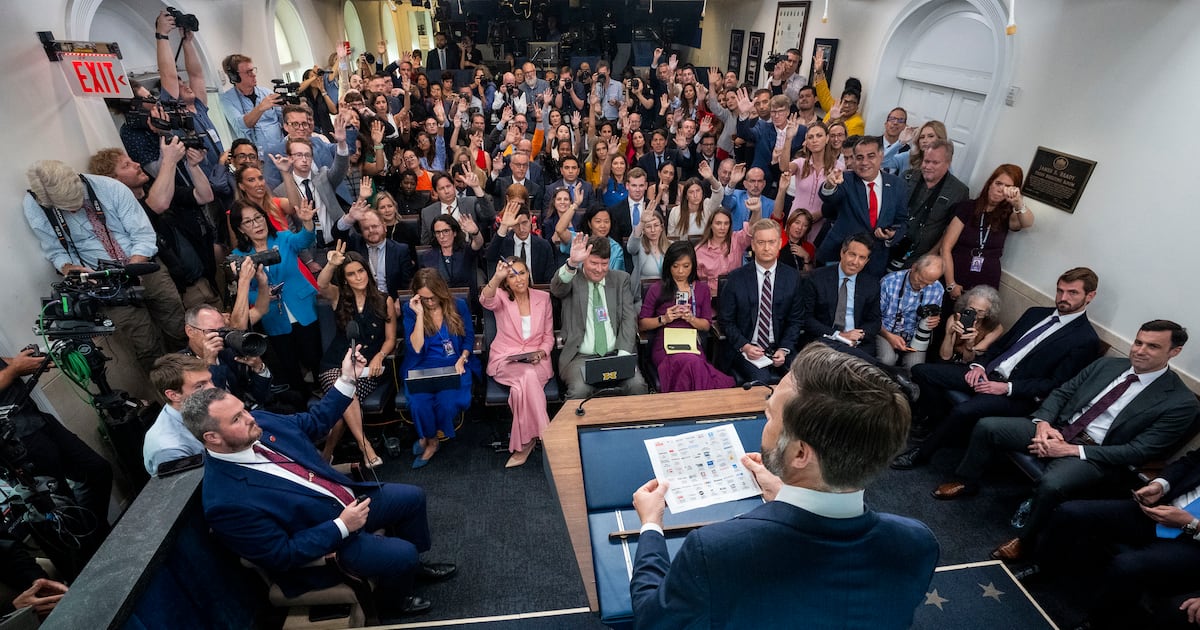
Donald Trump is not the first US president to go to war with the press. George Washington in private lamented the “arrows of malevolence” aimed at him by the media. John Adams was so incensed by the yellow journalism of his rivals that he tried to have them prosecuted. Most of the press loathed FDR, engaging in a decade-long campaign against him. Even the sainted Eisenhower raged against the “sensation-seeking columnists and commentators”.Richard Nixon spent his entire career in a cold war with the media, which he regarded, unfairly, as being universally against him. In fact, 78 per cent of papers had endorsed him in 1960, and 93 per cent in 1972. He blamed the press for almost costing him the vice-presidency in 1952 over a slush-fund scandal. When Nixon lost a race for California governor in 1962, he castigated the media, saying they would be sad not to “have Nixon to kick around any more”. As president, Nixon initially bullied the media into submission. His vice-president, Spiro Agnew, said that TV networks were controlled by “an unelected elite” and it was “time that the networks were made more responsive to the views of the nation and more responsible to the people they serve”. Nixon had journalists surveilled, wiretapped and harassed for daring to question him.Coming from the world of television, Trump understood how to bend the medium to his will. Initially, the media loved covering Trump, because he would always give an outrageous quote on which a piece could be hung. His complaints with the media were petty; weeks of assaults followed the reporting of crowd sizes at his first inauguration. In 2018, then-CNN reporter Jim Acosta was briefly banned from the White House for attempting to do some mild journalism. There was some unfortunate precedent: the Secret Service under LBJ banned journalist Robert Sherrill for “posing a physical threat to the president”, a charge which he fought in court. Journalists from the big outlets also surrendered their Pentagon press credentials in 2025 in protest at extremely restrictive new rules.In a significant escalation this week, the administration banned journalists of three outlets – CNN, MS Now and Politico – from the White House press corps. In retaliation, other outlets like Fox, CBS, ABC and NBC are boycotting the White House press pool, the smaller gang of reporters who follow the president closely and share material for wide dissemination. When you see Trump descend the staircase of Air Force One, this is the product of the press pool. READ MOREThe stated reason for the ban was vague, an accumulation of negative stories over the previous two years. Deep in the second Trump term, we are still hearing the same tired, shopworn phrases that so animated the culture in 2016: fake news, lying news media, enemies of the people. There is an air of profound exhaustion to the administration, which is deeply unpopular and, critics say, out of ideas, invested only in tending its own grievances. The White House press corps is like anything faintly traditional in Washington, DC, a city obsessed with its own meagre history. No one is really sure when or why the pool started but, having achieved some kind of age, it is now ascribed reverence beyond all reason. Consequential news stories seldom emerge from the pool, which typically produces something more akin to shareable content than investigative journalism. Every year they host the White House Correspondents’ Dinner, an institution that has come in for criticism for breaching the thin walls between journalists and the people they are supposed to be covering. The common complaint is not that they are too hostile to power, but too accommodating of it. Even in the glory days of print journalism, only 14 of 2,200 journalists in the Washington press corps put serious effort into investigating the Watergate break-ins, until it became too big a scandal to ignore. The networks and Politico are suing to restore their access on First Amendment grounds, a case which they will likely win. Ultimately, it is Trump who stands to lose the most from any boycott. He is a creature of media attention, and without it, he withers. This week we were treated to a clip of a ribbon-cutting ceremony for the new White House helipad broadcast on YouTube and in which, with no press pool, there was also no sound. On Reddit’s popular r/Politics board, there was untrammelled delight at seeing Trump finally silenced. [ Trump and the media are in a shared nightmare after he inadvertently bans himself from TVOpens in new window ]The threat to free speech on this particular issue is overblown. But the ongoing war on journalism has had serious effects outside the grounds of the White House. Congress eliminated more than $1 billion in funding for public broadcasting. Over the years, Trump has sued ABC, CNN, CBS, the New York Times, the Washington Post, Meta, YouTube, Twitter, and the publishers Penguin Random House and Simon & Schuster. This cynical use of lawfare has had a chilling effect on the media, and the second Trump administration is more notable for the kind of stories that rarely get written as the sort that do. At the same time, right-wing propagandists are fed advance information about the Iran war, sometimes even before Congress. The administration is leveraging its antitrust powers to consolidate media under Trump-friendly owners, mostly notably the ongoing Paramount-Warner Bros merger, which will put both CBS and CNN under the control of David Ellison. At the same time, it has rarely been a more dangerous time to be an investigative or war correspondent. Gaza remains under an unprecedented three-year media blockade, with no external journalists allowed inside except under military escort. More than 250 Palestinian journalists have been killed by Israeli forces, with evidence of systematic targeting. While there may be journalist solidarity within the White House press pool, little of that has been extended to their colleagues in real danger. Jack Sheehan is a freelance writer based in New York
Opinion: Trump media boycott will hurt him most of all. There are bigger threats to press freedom
Full Article
Original Source
Read the full article at Irishtimes →KhanList aggregates and links to publicly available news content. We do not host full articles from third-party sources. Always verify important information with original sources.