
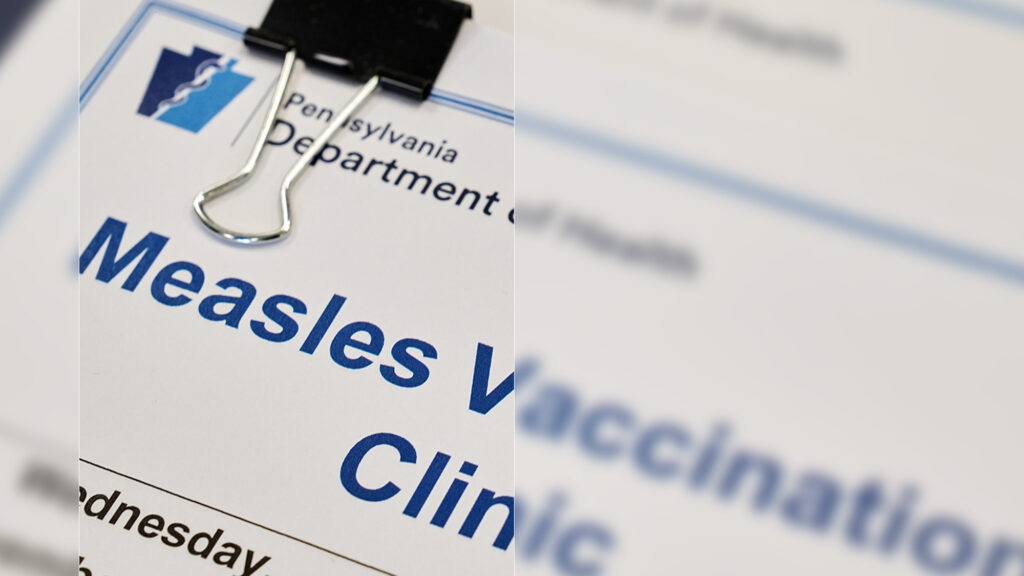
On Tuesday, the Pan American Health Organization (PAHO) announced that the United States had lost its measles elimination status, a distinction it had held for 26 years. The same lineage of the virus has spread from person to person in the United States for at least a year, meeting the criteria for measles transmission to be considered reestablished. In communities where measles is still spreading, children have more chances to be exposed, including infants too young for their first routine vaccine dose. The risk of exposure also rises for people who are immunocompromised, such as transplant recipients who take medications that suppress their immune systems. The deaths reported this November show how quickly a decade of progress can unravel. New York reported that a child in Lewis county had died, the state’s first known measles-associated death in more than 30 years. Wisconsin reported its first measles death since 1990, an infant, and announced the death of a second child eight days later. In Pennsylvania, two deaths reported earlier in November brought the state’s tally to seven for the year. A day after PAHO announced that the United States had lost its measles elimination status, Pennsylvania confirmed its eighth measles-associated death this year, an unvaccinated resident of Clinton county. When the current administration took office in January 2025, the United States had gone nearly a decade without a reported measles death. A month later, in February 2025, an unvaccinated child died in the West Texas outbreak. As cases mounted last year, my colleague and I wrote in The Lancet that the Texas outbreak showed how quickly gaps in vaccination coverage could jeopardize the country’s measles elimination status. We called for sustained investment in routine immunization with targeted vaccination campaigns, strengthening public health communication and community engagement to build vaccine confidence, and resources for health departments to detect cases and contain outbreaks before they spread. As of Nov. 13, the Centers for Disease Control and Prevention had recorded more than 5,400 cases, more than twice the total for all of 2025. This number reflects confirmed cases reported to the CDC and is likely an undercount. Pennsylvania, Wisconsin, and New York have reported a total of 11 measles-associated deaths this year. The CDC’s provisional national count is six. The agency now relies on national death certificate data, which can take time to process. State health departments can identify deaths through outbreak investigations and may use different criteria to determine whether measles contributed. The federal death count could rise as more records come in and reviews are completed. While the CDC works with state epidemiologists on a common definition, it should explain publicly why the counts differ. To regain elimination status, the United States must interrupt sustained transmission for at least 12 months and show, through reliable surveillance, that it has done so. That work starts in the schools and neighborhoods where children are missing doses of the measles, mumps, and rubella (MMR) vaccine. Two doses of the MMR vaccine are about 97% effective at preventing measles. Yet vaccination coverage among U.S. kindergartners fell from 95.2% in the 2019–20 school year to 92.4% in 2025–26, leaving an estimated 280,000 kindergarteners without the protection of both doses. Even in states with high overall coverage, measles can spread quickly in schools and communities where there are pockets of unvaccinated people. In its first funding bills, the new Congress should protect the Vaccines for Children program and provide multiyear funding for health departments to work with schools and pediatric practices in communities with the lowest vaccination coverage. It should pay for staff who can call families whose children are overdue, answer questions about vaccine side effects, help them find immunization records, and offer appointments after school or on Saturdays. By Nov. 13, Pennsylvania’s state health center staff had administered more than 7,100 MMR doses at pop-up clinics in affected communities. Health departments should be able to do that work before an outbreak. Congress can track whether the funding is reaching those communities by asking where coverage is improving, down to the county or school district where data allow. Some parents want to talk through their questions before making a vaccination appointment. When I helped lead Covid-19 vaccination efforts in South Carolina, and still in my practice today, I hear those questions firsthand. People want to know what the evidence shows, what we are still learning, what side effects to expect, and which recommendations have changed over time and why. They want enough information to make an empowered decision for themselves and their families. To help them do that, health workers and public health officials need reliable access to the scientific evidence behind vaccine recommendations and time to sit down with patients and meaningfully talk through their questions. In a nationally representative survey of U.S. adults that my colleagues and I presented at IDWeek 2026, more than half expressed confidence in the accuracy of the CDC’s vaccine information. When we asked whom they would trust if sources disagreed, only 30% chose the CDC. Respondents put the most trust in their own health care providers. That trust matters because a clinician who knows a patient’s medical history can explain what the evidence means for that person and address the questions that may shape their decision. The incoming House and Senate health committees should hold public hearings where Department of Health and Human Services leaders are asked to explain the evidence behind changes to vaccine recommendations made over the past two years. What evidence did they review? Whom did they consult? If they departed from their scientific advisers’ recommendations, why? Congress should require HHS to publish those answers when it announces a change. A pediatrician talking with a parent that afternoon should be able to explain the decision. The same health departments that help schools close vaccination gaps also have to respond when a clinician calls about a suspected case. They need someone to answer after hours, a lab that can test a specimen promptly, and staff who can reach exposed families while there’s still time to help. Congress should fund that capacity year-round and direct HHS and the CDC to publish a plan for regaining elimination status, with clear responsibilities and deadlines. Congress should also ask the CDC to report publicly each quarter on whether two-dose MMR coverage is rising in the communities with the largest gaps and if it is not increasing, to explain what the challenges are to vaccination. The agency should also provide information about how quickly suspect cases are investigated and where chains of transmission remain active. These reports would help Congress understand where more help is needed and build the record the U.S. needs to demonstrate at least 12 months without sustained measles transmission. I’ve spent much of my career responding to outbreaks after opportunities to prevent them had passed. In early 2025 when the measles outbreak emerged in Texas, I was worried that we were on the path to lose elimination status. Now I am reading reports of deaths in states that haven’t had one in decades. The next Congress should start with a hearing that puts HHS on the record about how it will regain elimination status. It should also make sure that its first funding bill allocates resources to ensure communities can vaccinate children and those at risk to stop outbreaks. Every month we wait leaves more families exposed to a deadly disease we know how to prevent. Krutika Kuppalli, M.D., is an infectious diseases physician with experience in frontline outbreak response, preparedness, and policy for emerging and re-emerging infectious diseases. She writes STAT’s ID Consult column. The views expressed here are her own and do not necessarily reflect those of any organization she is affiliated with.
Opinion: The U.S. lost measles elimination status. The next Congress should help restore it
Full Article
Original Source
Read the full article at Statnews →KhanList aggregates and links to publicly available news content. We do not host full articles from third-party sources. Always verify important information with original sources.