
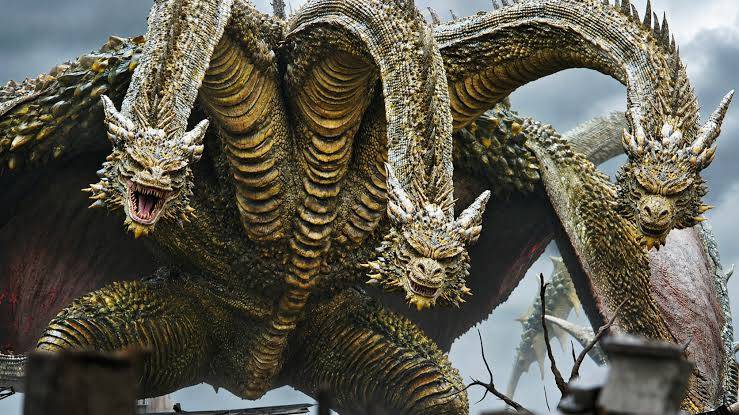
Life is all about the choices you make. On Nov. 19, I chose to go to the cinema to watch Godzilla: Minus Zero instead of playing GTA 6. I regret it. I expected a sequel to Takashi Yamazaki’s somber, tragic reflection on loss, trauma, and violence in Godzilla: Minus One. Instead, I got the next entry in the Monsterverse franchise. Godzilla: Minus One is a masterpiece. Director Takashi Yamazaki won me over with his modern retelling of the King of the Monsters’ first appearance. And I’m a longtime Godzilla fan who loves Hideaki Anno’s Shin Godzilla and was resentful that the Evangelion creator didn’t get a chance to make a sequel (although I hope that might still happen). However, Godzilla: Minus Zero squandered all that goodwill by stepping into the pitfall that ruins every Godzilla sequel: It’s not a movie about Godzilla. Instead, most of the film focuses on Ghidorah, one of Godzilla’s most iconic foes but also a monster that has very little to offer to this sequel, besides a few spectacular action sequences. However, there is another character in Godzilla’s massive rogues' gallery that would have been a perfect fit for Godzilla: Minus Zero, given the themes that the movie tries to present to its audience: Biollante. Great Godzilla movies understand what makes their monsters interesting Image: Toho The reason why, 72 years after Godzilla’s roar first echoed on the silver screen, we are still talking about a giant lizard with an atomic breath, is that Godzilla is a monster in the true sense of the word. Like Dracula, Frankenstein’s monster, or the Xenomorph from Alien, Godzilla is a catalyst: an abhorrent presence that provokes a reaction in the humans around it. Through that reaction, good monster fiction can reveal and analyze the deepest aspects of human nature. In its first appearance, Godzilla was an allegory for post-World War II trauma in Japan. The bombing of Hiroshima and Nagasaki, American occupation, coming to grips with the past while struggling to build a future: all these themes and more come to life in a giant, walking disaster. Godzilla: Minus One was a fantastic movie because it went back to that original concept, making post-war Japan the real protagonist. The story of Koichi, a former kamikaze pilot who suffers from post-traumatic stress disorder and struggles to rebuild his life along with other survivors, is one of the two pillars of the movie. The other is Godzilla. Yamazaki shows the monster from the perspective of the tiny humans whose lives it’s destroying. Godzilla is always an imposing, almost impossible presence, majestic in the most dreadful way possible, something that the director achieves by shooting the monster from below in most of the city-destroying sequences. It felt like watching a god walk among mortals, with all the disaster that follows. Image: Toho In the first seconds of Godzilla: Minus Zero, a monster pops up on screen, but this time it’s Ghidorah. There is no dramatic tease of the creature’s arrival, no buildup, no mystique. The movie begins in the middle of the monster attacking a town, setting the tone for the rest of its runtime. Godzilla himself shows up mid-movie in the much overused ship-sinking sequence. The creature had supposedly been killed at the end of the first movie, but its return is treated as almost an afterthought because everyone is focused on the three-headed dragon spreading chaos and destruction all over Japan. As a result, Godzilla becomes completely demystified, undoing all the first movie's achievements. This becomes quite significant in the scene where Koichi learns of Godzilla’s return. The pilot had nearly given his life to kill the monster in the previous movie. Ryuunosuke Kamiki, who plays Koichi, perfectly portrays the anguish and desperation of the character in the 30 seconds he’s given to react to the news — and then the movie moves on. By the end, I even had the impression that Koichi and his wife Noriko looked at Godzilla with sympathetic eyes. Godzilla: Minus Zero should have been a Biollante movie Image: Lionsgate Home Entertainment Godzilla: Minus Zero isn't really about Godzilla at all. The movie spends most of its runtime showing Ghidorah’s progression from alien goo inside a meteorite into a dragon into an even scarier three-headed dragon, along with the efforts of the Large-Scale Disaster Response Bureau to kill the beast. However, Ghidorah bears no significance besides being a new, scary monster. It’s not a metaphor for anything (except maybe: if you find alien goo in a rock, destroy it immediately!), and its actions in the movie don't serve as a catalyst to reflect on human nature, as Godzilla originally did. The only glimpse we get of something more profound than “monster smash” is Professor Murakami, a survivor of the Hiroshima bombing who secretly plans to lure Godzilla to the U.S. to exact his revenge. While Yamazaki's visceral depictions of both the devastation of Hiroshima and Murakami's vengeful fantasy of annihilating New York City are remarkable for their raw violence (and earned the film a rare R-rating), the revenge itself is mostly squandered and reduced to a somewhat cringey sequence of Murakami laughing like a maniac in his study. This might have worked in a more absurdist Showa era Godzilla movie, but it's totally out of place in the grounded "Minus" movies. Still, the Murakami subplot made me realize Godzilla: Minus Zero would have worked much better if it had featured another, less famous monster from the franchise: Biollante. Making its debut in the 1989 Toho movie Godzilla vs. Biollante, Biollante is a plant-kaiju-human hybrid created by scientist Genshiro Shiragami. After his daughter was killed in a bombing sanctioned by an American corporation, Shiragami spliced her DNA with that of her favorite flowers (roses), creating a breed with latent telepathic abilities. When these roses were threatened by a volcano’s eruption, Shiragami spliced the plant with Godzilla’s DNA in the hope of granting it regenerative abilities. The plan worked, but the plant gained full sentience and the ability to evolve, ultimately becoming a giant monster. All the elements of this plot are present in Godzilla: Minus Zero, just in a different form. Murakami lost his wife, daughter, and niece in the Hiroshima bombing, and his desire for revenge against America is the only thing that keeps him going. Instead of Ghidorah, the movie could have featured Biollante, or any other kaiju created by a human scientist like Murakami as a consequence of the United States’ actions during the war. This would have tied together the movie’s various plotlines, thus making the featured monster a more meaningful presence. Unfortunately, Biollante isn’t nearly as popular as Ghidorah among franchise fans. Moreover, having Godzilla fight a giant plant, no matter how scary, wouldn’t have been nearly as cinematic as the clash with Ghidorah, which is probably the best part of the movie. Godzilla: Minus Zero struggles to deliver a message Image: Toho The first Godzilla movie told viewers about the danger of unregulated science. Shin Godzilla showed the dangers of bureaucracy and ineffective government. Godzilla: Minus One was about survivors’ guilt and finding hope under the rubble of disaster. What is Godzilla: Minus Zero trying to say? I have a hard time answering this question. At first, it seemed that the movie’s main theme could have been the American occupation of Japan after the war. In fact, the U.S. military's plan to use Godzilla as a weapon emerges at the end of the movie as the film’s big moral question, but it’s a rushed, poorly explained subplot, dragged down by paper-thin American characters. Overall, Godzilla: Minus Zero did what all the Godzilla sequels did: It turned into a monster movie. It’s an inevitable downturn in quality. One giant monster born of nuclear experiments can be a metaphor for humankind’s fears. Add a second one, and it becomes a spectacle. The seven Godzilla movies of the Heisei Era (1984–1995) are an exception. Coming after the franchise’s long Shōwa Era (1954–1975), which shifted the original movie’s dark tones into family-friendly monster team-ups, the Heisei Era movies felt like a return to form. Godzilla is back to being a destructive force of nature, and its monstrous foes, while still somewhat wacky, represent the dangers of unbridled science and the weapons race. Godzilla vs. Biollante is a great example of the Heisei Era, and I wish Yamazaki had drawn more inspiration from this underrated entry instead of falling victim to the biggest trap in kaiju cinema.
Opinion: 'Godzilla Minus Zero' Features the Wrong Godzilla Monster
Full Article
Original Source
Read the full article at Polygon →KhanList aggregates and links to publicly available news content. We do not host full articles from third-party sources. Always verify important information with original sources.