
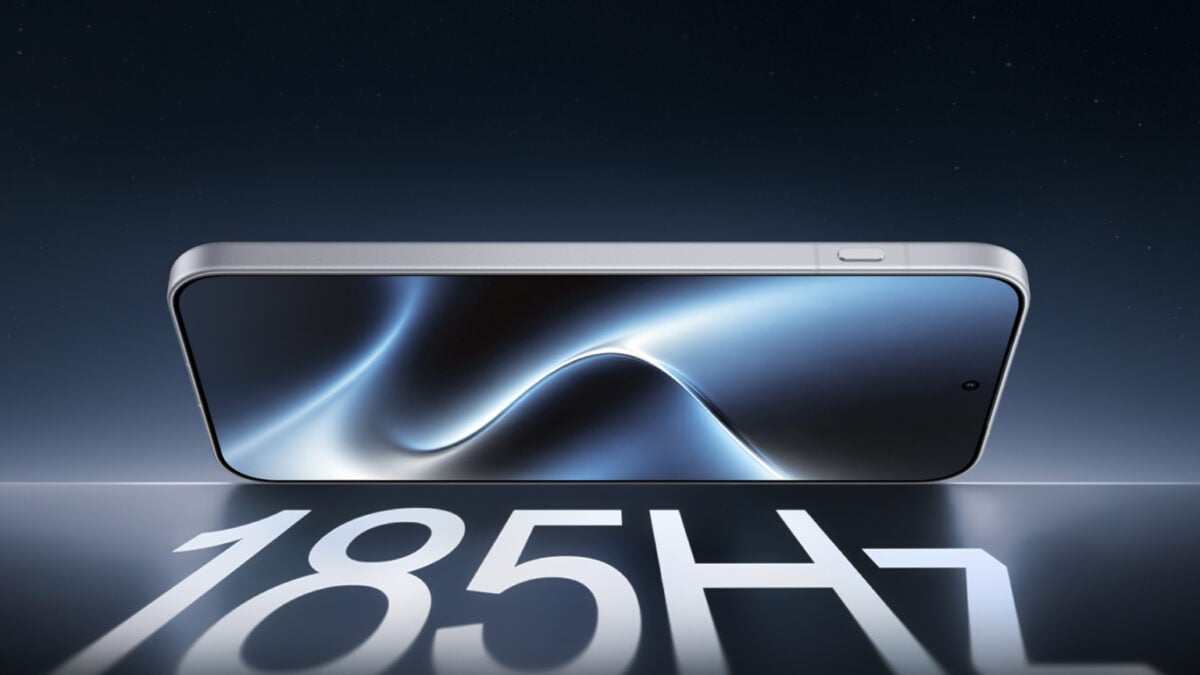
Today in “things that aren’t big Apple announcements,” we’ve got a smartphone release that’s both intriguing and infuriating. As legions of U.S. phone reporters descend on Cupertino to swim in infinity pools of spatial audio and unified memory while Siri sings a context-integrated lullaby (at least, that’s what I assume happens at these big Apple events—I’ve never been to one), OnePlus has dropped a real doozy of a flagship phone on the other side of the world. Oh, and it won’t be sold in Europe or the United States. At least, not officially. OnePlus called it quits on those two markets this summer in a fairly decisive and permanent-sounding fashion, so you’re unlikely to get your hands on this unless you’re willing to dig through some third-party listings and import the Chinese model, potentially forgoing things like warranty coverage, carrier compatibility, and local apps. The OnePlus 16 has one of the fanciest spec sheets in the world right now, and it’s clearly a feat of engineering, but it’s also a glimpse of the sorts of technological advances that we’re missing out on across this side of the planet—and may continue to miss out on now that one of China’s largest smartphone manufacturers has departed our shores. The most bonkers thing on OnePlus’s bonkers-down-the-line spec sheet is its battery: it’s one of the largest currently in a mainstream flagship, weighing in at 9,000mAh. Samsung’s Galaxy S26 Ultra sports 5,000mAh, for comparison, and Gizmodo basically couldn’t drain that thing. On its website, OnePlus claims that its new flagship can deliver up to 20.6 hours of short-form video playback, 13.6 hours of map navigation (which I sincerely hope was tested via an epic, harrowing, charger-free odyssey around Shenzhen), and 8.1 hours of “a popular MOBA game” at 120 fps and maximum graphics. These are all approximate measures, of course, and I am both intrigued by and deeply afraid for anyone who plans to regularly watch 24 straight hours of TikTok (sorry, RedNote) on their premium handset, but they would make me hopeful that I could get a couple days of regular-person use out of this thing if I were to purchase it. © OnePlus The size of a battery, of course, is just one of many factors that determine how long a device can actually stay awake. One confounding variable might be the very hungry 185Hz OLED panel that graces the front of this phone, which can muster up to 165Hz not only in games but also throughout the UI. And there’s the Snapdragon 8 Elite Extreme Gen 6 chipset, Qualcomm’s first 2nm flagship, which OnePlus touts as a workhorse capable of delivering “unmatched” performance. We haven’t (and likely won’t, unless OnePlus has a major about-face) independently verified any performance benchmarks from this device, but I imagine that pushing those gaming features to their limits could take a sizeable bite out of that gargantuan brick. My personal favorite aspect of this phone, however, is one that I’m convinced OnePlus is criminally underutilizing in its marketing material, because I had to scroll through its overwhelming website for approximately 34 years before I could even find a clear picture of it. Take a look at the back of the silver option’s chassis, and you’ll see a little LED 16, alongside the coordinates of…something, I never took geography. These LEDs will apparently flash when exciting events occur on your phone, such as when a notification arrives. Huh! I’m not saying this device is giving me war flashbacks to that couple of years when Asus was putting exploding LED heads on its products, but I am saying that having emerged alive from that weirdly psychedelic period of U.S. history, I can see why OnePlus may have felt the need to go ham on the battery. There’s plenty else to marvel at on this spec sheet. OnePlus has bumped up a previously so-so camera set to a 200MP main with a 1/1.4-inch-type sensor, a 50MP ultrawide and a 50MP periscope telephoto with 3× optical zoom. A revamped vapor chamber promises 40% better cooling. There’s 100W wired fast charging and 50W wireless charging, if you’re asking. Configs range from 12GB RAM/256GB storage to 16GB/1TB, and the base model’s launch price is 5,699 yuan, or just over $850. This is all very exciting, and kudos to OnePlus, which appears to be living its best life in the absence of this particular consumer base. Still, as a writer for a U.S.-based publication, I can’t help but feel a bit dreary about the whole thing. Exciting things are going on over in Shenzhen right now. We’re only a few months into a OnePlus-less future, and even though we can’t independently verify the company’s battery estimates, we’re clearly already missing out on a major advance in smartphone hardware. And I have a feeling that this won’t be the last time we have this kind of conversation.
OnePlus Just Dropped a Monstrous 9,000mAh Phone—And You Probably Can’t Buy It
Full Article
Original Source
Read the full article at Gizmodo →KhanList aggregates and links to publicly available news content. We do not host full articles from third-party sources. Always verify important information with original sources.