
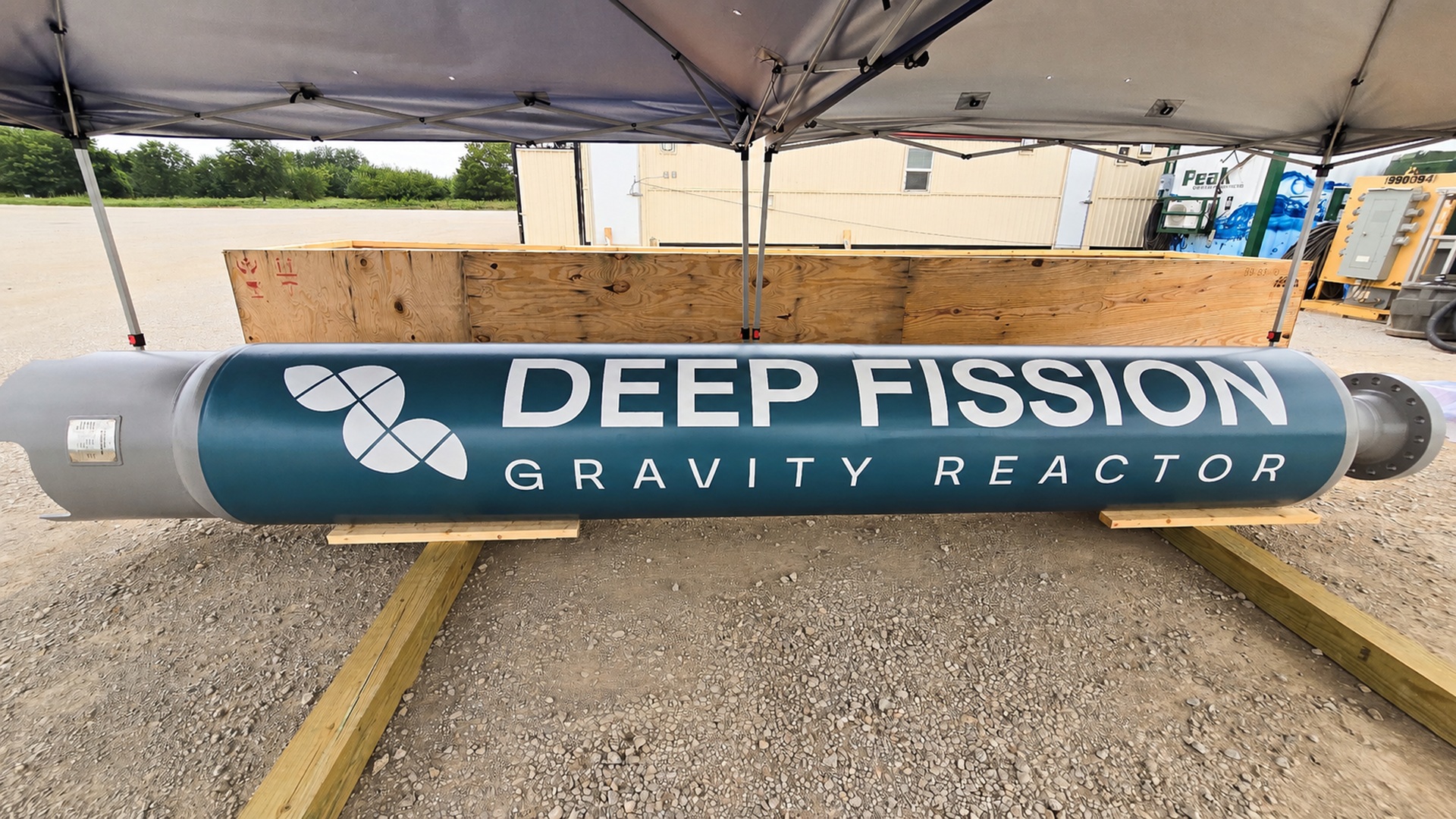
Nuclear startup Deep Fission has publicly released the full Nuclear Safety Design Agreement (NSDA) for its Gravity nuclear reactor, giving the public a detailed look at the safety framework for a small modular reactor planned to operate about one mile underground in Kansas. The company is the first participant in the US Department of Energy’s Reactor Pilot Program to release its complete NSDA. The agreement was approved by the DOE for Deep Fission’s pilot project in Parsons, Kansas. The NSDA sets out the design requirements, safety analysis approach and regulatory process that will guide the reactor’s development. DOE approval marks an initial stage of the safety review, rather than authorization to operate the reactor. Deep Fission said the document is being published voluntarily to provide visibility into how it plans to demonstrate the reactor’s safety. Some security-sensitive technical details have been redacted, while other aspects of the design may change as the project progresses through further reviews. One-mile reactor changes equation “We’re publishing our full NSDA because we think the public deserves to see the actual safety case behind this reactor, not just our word that DOE reviewed one,” said Liz Muller, CEO and co-founder of Deep Fission. “A project with this kind of ambition should be built in the open, and we hope more of the industry joins us in doing that.” The Gravity reactor uses conventional low-enriched uranium fuel and pressurized water reactor technology, a reactor design that has been used commercially for about 70 years. Deep Fission’s main departure is where it plans to put the reactor. Instead of constructing a large containment structure above ground, the company plans to place the reactor inside a borehole roughly one mile below the surface. The surrounding rock and a column of water above the reactor are intended to provide pressure control, cooling, and radiation shielding without relying primarily on a conventional above-ground containment building. The approach is designed around passive safety features, meaning the underground environment itself would form part of the reactor’s protection system. Pilot reactor could go commercial The Parsons project is also different from a conventional reactor demonstration. Deep Fission intends for the same reactor installed for the DOE pilot program to potentially transition into commercial power production after testing. That transition, however, is not guaranteed. The company must complete additional documentation and reviews before receiving potential DOE authorization for operations. Commercial operation would also require licensing from the US Nuclear Regulatory Commission. The Reactor Pilot Program was established under Executive Order 14301 and allows the DOE to oversee the design, construction, and initial testing of qualifying advanced reactors outside national laboratories, with the NRC observing the process. Deep Fission said the commercial reactor could eventually supply low-carbon baseload electricity to utilities, industrial customers and data centers. The company is developing the Parsons project with the aim of avoiding the need to dismantle the pilot reactor after initial testing. The release of the NSDA also gives regulators, industry observers and the public a clearer view of the safety case the company is developing as it moves toward construction and testing.The company said its safety case will continue to evolve as the project advances through DOE review and subsequent regulatory steps.Get the latest in engineering, tech, space & science - delivered daily to your inbox.With over a decade-long career in journalism, Neetika Walter has worked with The Economic Times, ANI, and Hindustan Times, covering politics, business, technology, and the clean energy sector. Passionate about contemporary culture, books, poetry, and storytelling, she brings depth and insight to her writing. When she isn’t chasing stories, she’s likely lost in a book or enjoying the company of her dogs.
One-mile underground nuclear reactor gets full safety blueprint for DOE pilot effort
Full Article
Original Source
Read the full article at Interestingengineering →KhanList aggregates and links to publicly available news content. We do not host full articles from third-party sources. Always verify important information with original sources.