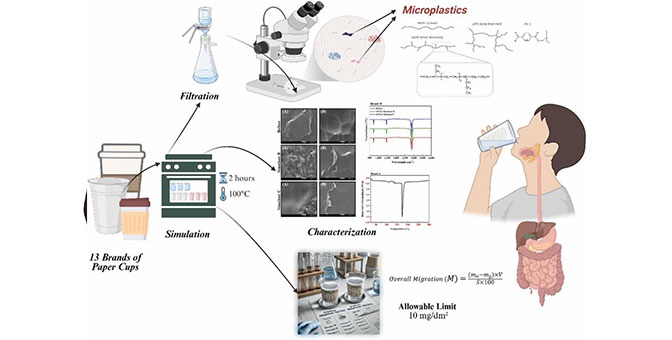
Muscat: A new study by Omani researchers has found that single-use paper cups sold in Oman comply with current food safety regulations but may release polymeric particles that are not covered by existing testing methods, prompting calls for updated food-contact material safety standards.The study, published in the peer-reviewed journal Food and Bioproducts Processing by Elsevier, was conducted by researchers from the Ministry of Agricultural, Fisheries Wealth and Water Resources, Sultan Qaboos University, Nottingham Trent University, and other research institutions. The researchers assessed 13 brands of paper cups available in the Omani market by combining conventional overall migration testing with advanced analyses of suspected polymeric particle release. Consumer usage patterns were also examined through a survey involving 868 participants.The survey found that 58 percent of respondents use one to three paper cups daily, while around 33 percent reported using at least one paper cup every day. Tea was the most commonly consumed beverage in paper cups, accounting for 72 percent of usage, followed by coffee at 13 percent.The study also found that paper cups are most frequently used in cafés (31.9 percent) and workplaces (26.9 percent). Convenience was identified as the primary reason for their use by 30 percent of respondents, followed by hygiene (26.5 percent) and easy availability (23.4 percent).Laboratory testing showed that all paper cup samples complied with the European regulatory limit for overall migration of food-contact materials, indicating that they are considered safe under current regulatory frameworks.However, the researchers found evidence that paper cups can release suspected polymeric particles, including microplastics, particularly under conditions simulating contact with hot beverages. The study noted that these particles are not currently evaluated under conventional migration tests, suggesting that existing regulations may not fully capture all potential exposure pathways.The researchers emphasised that no significant relationship was found between overall chemical migration and the release of polymeric particles, indicating that the two should be assessed independently in future food safety evaluations.Based on the findings, the study recommends encouraging consumers to use reusable cups whenever practical and improving the quality and consistency of the internal coatings used in paper cup manufacturing to reduce material degradation and potential particle release.The authors also called for the development of standardised methods to assess both chemical migration and particle emissions from food-contact materials, alongside expanding food safety regulations to include particle release assessments.In the longer term, the researchers recommended supporting research into safer coating materials and enhancing analytical techniques for identifying and accurately measuring polymeric particles, helping ensure that food-contact material regulations keep pace with emerging scientific evidence.
Omani study on paper cups safety calls for microplastic assessment
Full Article
📰 Original Source
Read full article at Timesofoman →KhanList aggregates and links to publicly available news content. We do not host full articles from third-party sources. Always verify important information with original sources.