
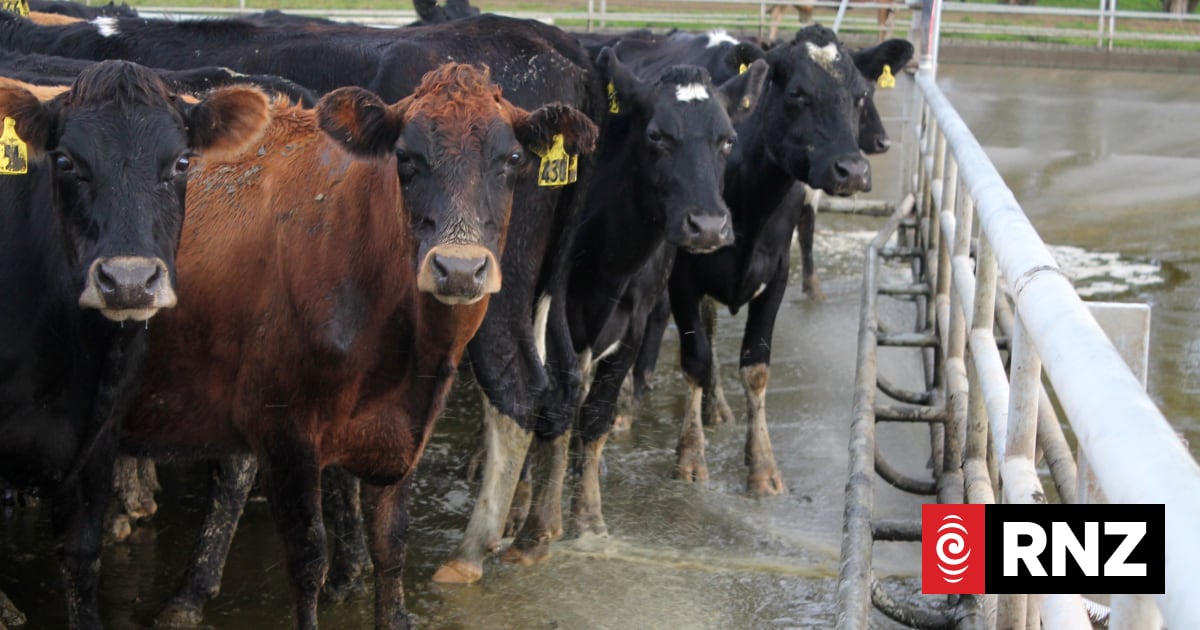
New Zealand will consider agriculture officials' recommendations to ban tethering dairy cattle, as well as investigating the use of electrified backing gates for moving cows into the milking shed.After years of development and consultation, the Government has announced the animal welfare code for the almost six million dairy cattle across Aotearoa.The code includes a new minimum standard around feeding calves twice a day for their first two weeks of life, and requiring veterinarian approval for thin calves with a body condition score below three (out of the 0-10 scale) to be sent off farm.The statutory review was led by the National Animal Welfare Advisory Committee (NAWAC) which advised the agriculture minister - who ultimately decided the final code - following consultation of a proposal in 2022.Chairman Dr Matthew Stone said there was "robust discussion" on important welfare issues in dairy farming within the committee."There's been intense discussion amongst the committee with the minister and with the stakeholders on quite a number of different matters, and these are matters that are important to the public as well."What do you think of the revised code of dairy animal welfare? Let us know monique.steele@rnz.co.nzStone said shade and shelter requirements, as well as calf rearing and pasture management during intensive winter grazing, were among them."In particular, there's been a general issue around use of electricity in animals, and in the dairy cattle code that plays out with electrified backing gates in the dairy parlour and the yards, and electro-mobilisation as well."So those are other matters where there's been specific recommendations made and some of those now the minister's decided that they should progress towards regulation."It also considered standards for wearable cow collar technologies that had grown in popularity in recent years.SAFE says the code "sends the wrong message to farmers".Minister parachuted inNicola Grigg was acting as minister, as Andrew Hoggard - who usually led animal welfare in the agriculture portfolio - was seen to have a conflict of interest in this area, his office said, due to the dairy farmer-turned-MP's previous role as Federated Farmers president.Grigg said New Zealand was one of the few countries globally that stipulated an animal's minimum body condition score in legislation."The industry has indicated that increasing the body condition score is good practice, and these changes are also in line with consumer expectations around animal welfare."She said developing new regulations she recommended would involve public consultation."The new code provides requirements and guidance that will leave farmers in no doubt about the standards of animal handling and care they must meet."Grigg no longer held the associate agriculture portfolio for horticulture, after a ministerial reshuffle in April.Livestock welfare codes sit under the Animal Welfare Act 1999Supplied / MPI'Diverse' opinions at NAWAC tableNAWAC featured veterinarians, experts and industry, including Federated Farmers' national vice president and a farming boss for major mixed dairy business Craigmore Sustainables.Stone, who started in 2022, said the committee faced changes as it worked through various livestock codes of welfare."The most important thing is that we all want the the same outcomes, basically. So there's a lot of goodwill towards those common objectives," he said."A challenging issue when codes of welfare reviews take this long is continuity, we've seen NAWAC's membership also evolve."He said it had to balance the significant diversity of opinions from veterinarians, DairyNZ and other sector representatives, farmers, SPCA and animal welfare advocates."There's all sorts of challenges associated with turnover on the committee, different viewpoints, different perspectives that we receive from different stakeholder groups as well."It's just a matter of respecting that diversity. But balancing those issues and coming out with something that is at the end of the day positions New Zealand domestically and internationally where we want it to be," he said."But it is also workable and doesn't have the sorts of economic or practical considerations that of course the Minister seeks to avoid."Minimum and best-practice standards, not lawsLivestock welfare codes sit under the Animal Welfare Act 1999 and set minimum and best-practice standard guidance for farmers. However, minimum standard breaches themselves were not offences, unless subject to further regulation.Several proposed standards consulted on from 2022 were omitted from the final dairy code, including intensive winter grazing rules, cull-cow transport standards and a requirement for farmers to have a working relationship with a veterinarian.Stone said some matters were "refined back" because they did not meet criteria under the Animal Welfare Act to be included in the code, so were removed."We've recognised that some of the terms or the statements that we wanted to make or the intensive winter grazing task force had recommended we make, had been picked up elsewhere or were defined elsewhere in ways that didn't quite match what the Animal Welfare Act required.""Of course, we also have had during this period quite a significant discussion about Farm Environment Management Plans, for instance."DairyNZ says the new code helps ensure animal welfare standards evolve alongside scientific evidence and on-farm realities.Geoff ReidFarmers, vets support improvementsDairy farmer industry group DairyNZ's Jenny Jago said the first major update to the code in more than a decade marked an important step in ensuring animal welfare standards evolved alongside scientific evidence and on-farm realities."DairyNZ has always advocated for strong animal welfare standards as these are critical to New Zealand's reputation as a supplier of premium, sustainable and ethically produced milk," she said.Federated Farmers welcomed the changes to further enhance New Zealand's strong reputation for high animal welfare standards in dairy.Kyle Kannan - a Rotorua-based dairy veterinarian - was also part of the New Zealand Veterinarian Association's Dairy Cattle Vet committee.Kannan said he was happy there was guidance for farmers to continue improving animal welfare, and the code was out."We're still making our way through it to check the exact wording," he said. "But overall, we just really like that this has progressed because it's been a four-year pretty intensive journey."Anything that's comes out about improving animal welfare, especially dairy cattle welfare, is going to be positive in our eyes."Meanwhile, animal welfare laws required shade and shelter on farms to protect animals from weather-related problems, like heat or cold stress or wading in mud.But Debra Ashton of animal welfare group SAFE said the code did not go far enough on these protections. She pointed to the recommended best practice to provide dry ground on calving paddocks, shelter and protection from adverse weather."Despite this... how can you enforce good animal welfare when these are just recommendations?"This sends the wrong message to farmers and means we are still likely to see animals having to withstand extreme weather and horrific scenes of cows being forced to give birth in mud, which is unacceptable for any animal."Ashton added that the code did not address millions of young calves being sent to slaughter at just a few days old.Meanwhile, the code applied to all dairy cattle including calves, dairy replacement stock, cull cows, lifestyle block cattle and bulls, but excluded those raised for beef production after weaning.The new code comes into effect in April next year.The next animal welfare codes to be released were sheep and beef, pigs and poultry.
NZ's revised dairy welfare code finally revealed
Full Article
Original Source
Read the full article at Rnz →KhanList aggregates and links to publicly available news content. We do not host full articles from third-party sources. Always verify important information with original sources.