
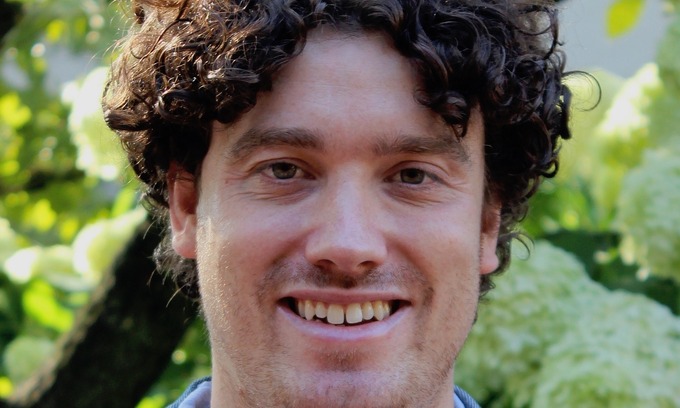
OpenAI announced earlier this month that its AI had solved the Navier-Stokes problem, but a New York University mathematician says the company raced to the answer after learning of his work. Tristan Buckmaster, a professor at NYU's Courant Institute of Mathematical Sciences, released results the night before the announcement on the Euler equations, a simpler relative of Navier-Stokes.He had reached them with Levent Alpöge, a mathematician at OpenAI rival Anthropic. The field widely saw the work as a step toward the full problem, Scientific American reported.In a statement released with the results, Buckmaster alleged that OpenAI had learned of their progress the previous week and adopted their method, an allegation OpenAI denies. "To go against a trillion-dollar company is super scary and frightening," he told The New York Times.The problem, set by the Clay Mathematics Institute in 2000 with a $1 million award, asks whether the equations describing fluid flow, used in weather forecasting and aircraft design, can break down and predict something impossible, such as a fluid reaching infinite speed.Buckmaster and Alpöge had worked on the problem for almost a year using AI models from both Anthropic and OpenAI, MIT Technology Review reported.They built on a strategy devised by Spanish mathematicians Diego Córdoba and Luis Martínez-Zoroa.On Sept. 3, as rumors of a possible solution spread on social media, Buckmaster emailed OpenAI to say the work was a personal collaboration, not an institutional project, Science reported. Mathematician Tristan Buckmaster. Photo courtesy of Clay Mathematics Institute OpenAI chief executive Sam Altman has since acknowledged that the company went after the problem because of rumors that Anthropic's models had solved a Millennium Problem, and it wanted to see whether its own could too.In a call on Sept. 6, OpenAI researchers told Buckmaster that an unreleased model had solved Navier-Stokes using the same line of attack he and Alpöge had pursued, Fortune reported.He learned the effort had begun only in the past week, involved a large team and consumed vast computing power.Buckmaster wrote that almost nobody else he knew was working on that route, and that it was "not the direction one arrives at in a few days" simply by giving a model the problem statement.He said he asked whether the model had been trained on the Codex sessions where he and Alpöge had kept all their drafts, and got no answer.According to Buckmaster, Sébastien Bubeck, the OpenAI researcher leading the effort, offered him options that included writing up OpenAI's result himself, but with Alpöge left off because he works at a rival lab.When Buckmaster said he would go public, he says, Bubeck asked, "Why would you ruin your career?"Bubeck has denied asking to remove Alpöge from authorship of the pair's own work, The Next Web reported. He says he only remarked that things would be simpler if Alpöge were not an Anthropic employee.He apologized for the career remark as an "extremely poor choice of words."OpenAI says its solution came from some 10,000 AI agents working for 88 hours, and that its researchers and agents saw none of the pair's work before it was published.Scientific American reported that while OpenAI solved the Euler problem by different means, its Navier-Stokes solution followed a method similar to the mathematicians'.OpenAI initially said it could not rule out that de-identified data from the pair's use of its products had helped improve its models.On Sept. 10, after an investigation, OpenAI said Buckmaster's Codex prompts "could not have influenced the system in any way, including through training."Buckmaster maintains that the main intellectual credit belongs to Córdoba and Martínez-Zoroa.Leaders of the American Mathematical Society traced the achievement from Navier and Stokes through Córdoba, Martínez-Zoroa, Alpöge and Buckmaster, "with the final steps taken by OpenAI mathematicians."OpenAI has said it will not claim the prize. On Sept. 11, the Clay Mathematics Institute said the problem had "apparently been settled" but that its review would be deliberately unhurried.The same day, 25 Fields Medal winners, including Vietnamese mathematician Ngo Bao Chau, published a declaration warning of a "severe misalignment" between the goals of AI companies and those of mathematics, Scientific American reported.Terence Tao, a UCLA mathematician and one of the signatories, had earlier warned on Mathstodon that "even the rumor of someone working on a problem" can now trigger a massive AI effort to flatten it.That, he wrote, could push researchers to stop sharing promising ideas, which "would reverse centuries of traditions of open science."
NYU mathematician accuses OpenAI of racing to solve $1M Millennium Prize problem after learning of his work
Full Article
Original Source
Read the full article at E →KhanList aggregates and links to publicly available news content. We do not host full articles from third-party sources. Always verify important information with original sources.